

Nuclear Energy Updates #2
Chronicling the nuclear renaissance

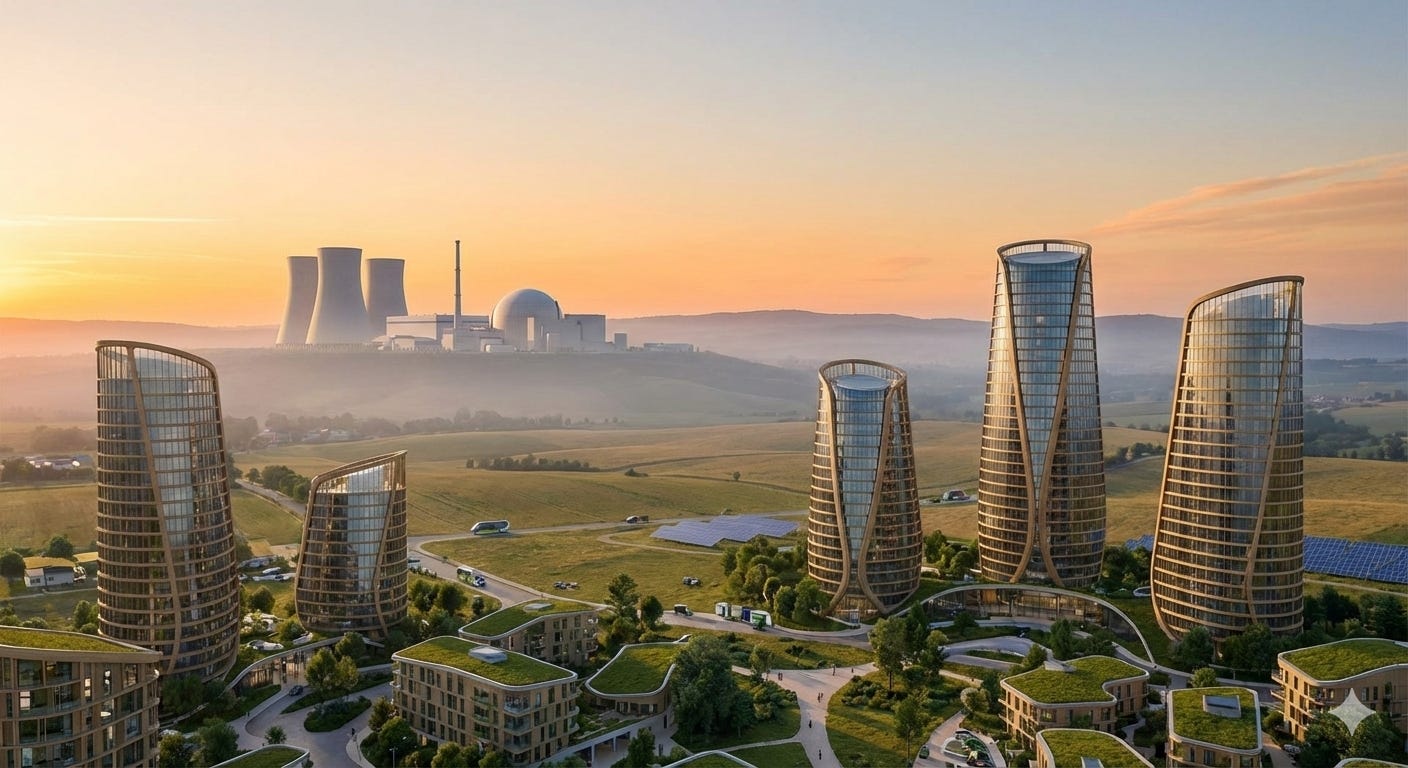
Welcome to Nuclear Energy Updates #2, your focused look at what’s new in nuclear energy, and how each development fits into the wider nuclear comeback.
I hope you all had a great Christmas and New Year. 2026 is already shaping up to be crazy—I don’t just mean politically (I always aim not to get into that too much on here), but technologically. The feeling of acceleration is real, but all of that AI and other advances need energy, and lots of it. I’ve always felt that nuclear—both fission and fusion—is the best way to supply our ever increasing demand, so I’m thrilled by the progress that has already been made and am looking forward to a lot more.
About today’s quote, obviously a bit of humor there drubbing on solar, which has its uses (especially in space!). But when it comes to reliable grid scale power here on Earth, Homer Simpson is absolutely right.
Alright, let’s dive in.
“And Lord, we’re especially thankful for nuclear power, the cleanest safest energy source there is. Except for solar, which is just a pipe dream.”
—Homer Simpson
Nuclear Fission
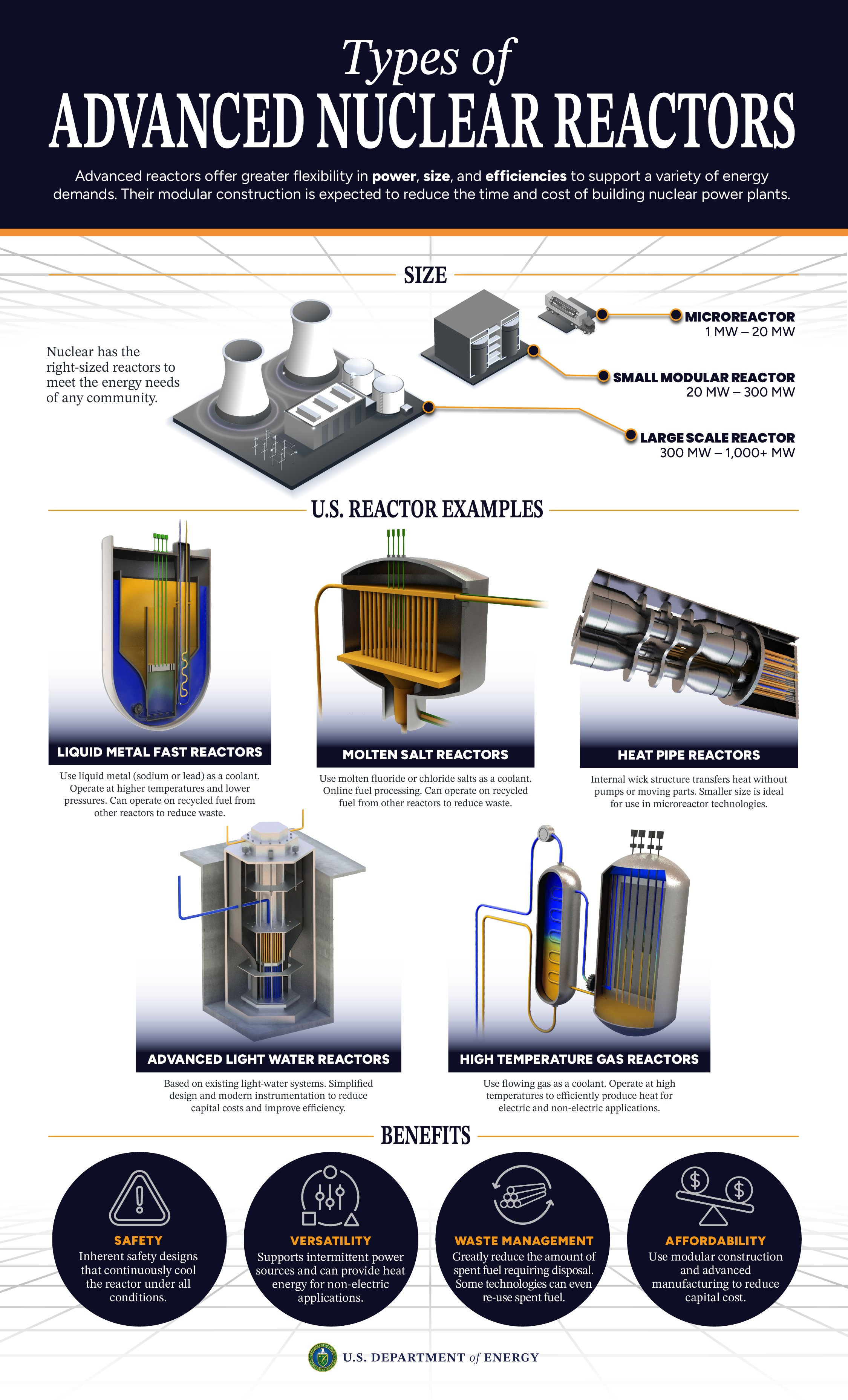
Let’s start out with this excellent little graphic that explains major types of advanced nuclear reactors.
Big news first: The U.S. Department of Energy (DOE) will be pumping $2.7 billion into domestic uranium enrichment over the next decade.
The historic investment expands U.S. capacity for low-enriched uranium (LEU) and jumpstarts new supply chains and innovations for high-assay low-enriched uranium (HALEU) to create American jobs and usher in the nation’s nuclear renaissance.
…
Developing this new domestic production capacity for LEU and HALEU ensures an adequate fuel supply is available to maintain operations of the nation’s 94 commercial reactors and builds a strong base to supply future deployments of advanced nuclear reactors.
Three companies will split the money, each being given $900 million “to provide enrichment services for LEU and HALEU.”
American Centrifuge Operating will help create domestic HALEU enrichment capacity. General Matter will also work on domestic HALEU enrichment capacity, and Orano Federal Services will be expanding U.S. domestic LEU enrichment capacity. “The DOE also awarded an additional $28 million today to Global Laser Enrichment to continue advancing next generation uranium enrichment technology for the nuclear fuel cycle.”
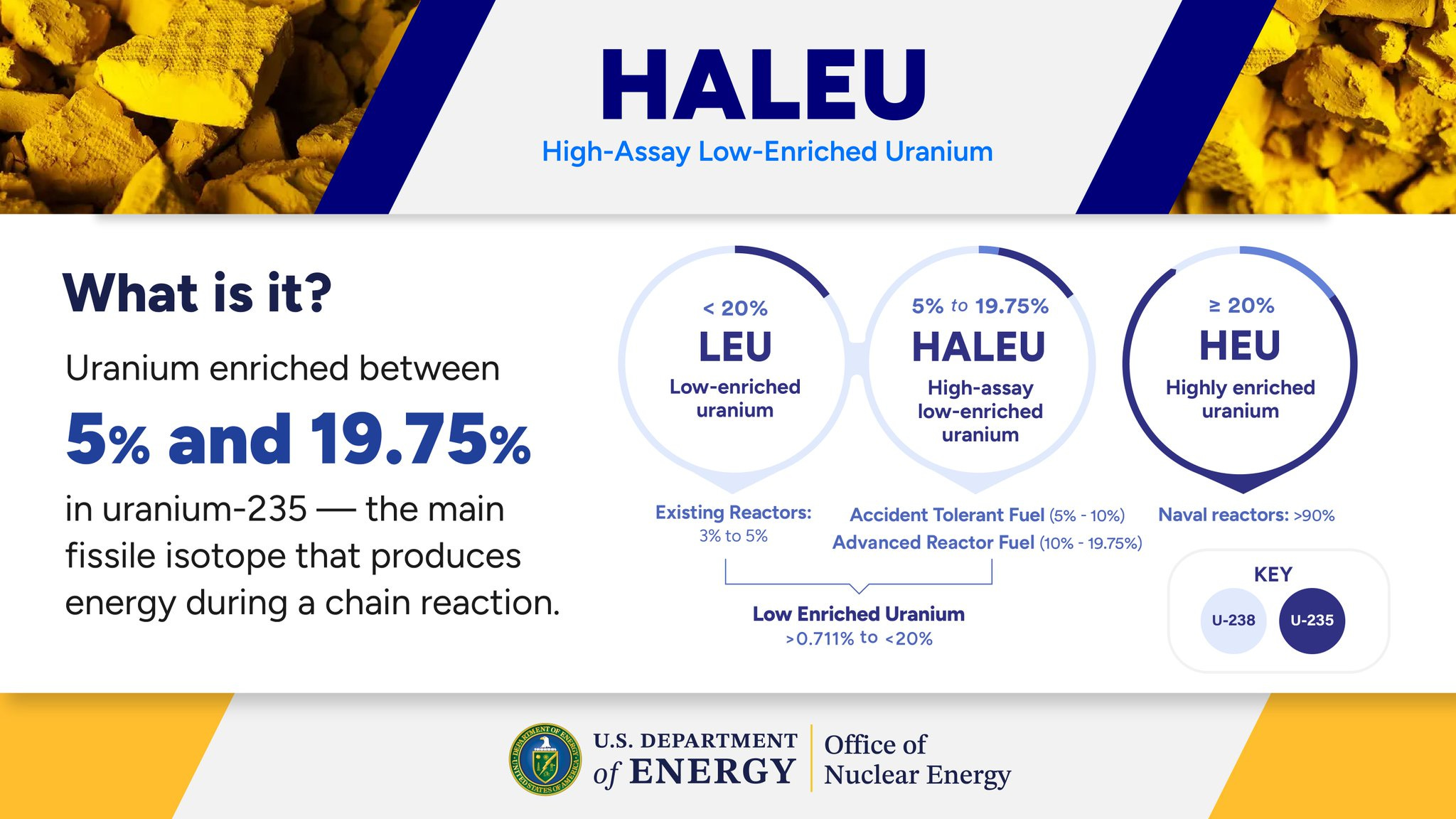
Just in case you’re wondering what the difference is between LEU and HALEU fuels.
The provincial government of Ontario, Canada has announced “a $1 billion investment to build the G7’s first Small Modular Reactors at Darlington, securing Ontario’s clean energy future, and creating thousands of well-paying jobs.” For context, there are already traditional, large scale nuclear power plants at Darlington, making approval and building of new ones a much easier prospect. Ontario isn’t the only Canadian province going nuclear, with private company Alberta Energy partnering with Westinghouse to explore deploying “an advanced AP1000 modular reactor in Alberta.” While it is a modular reactor, it won’t be small, producing between 1.1 and 1.2 GW of electricity.
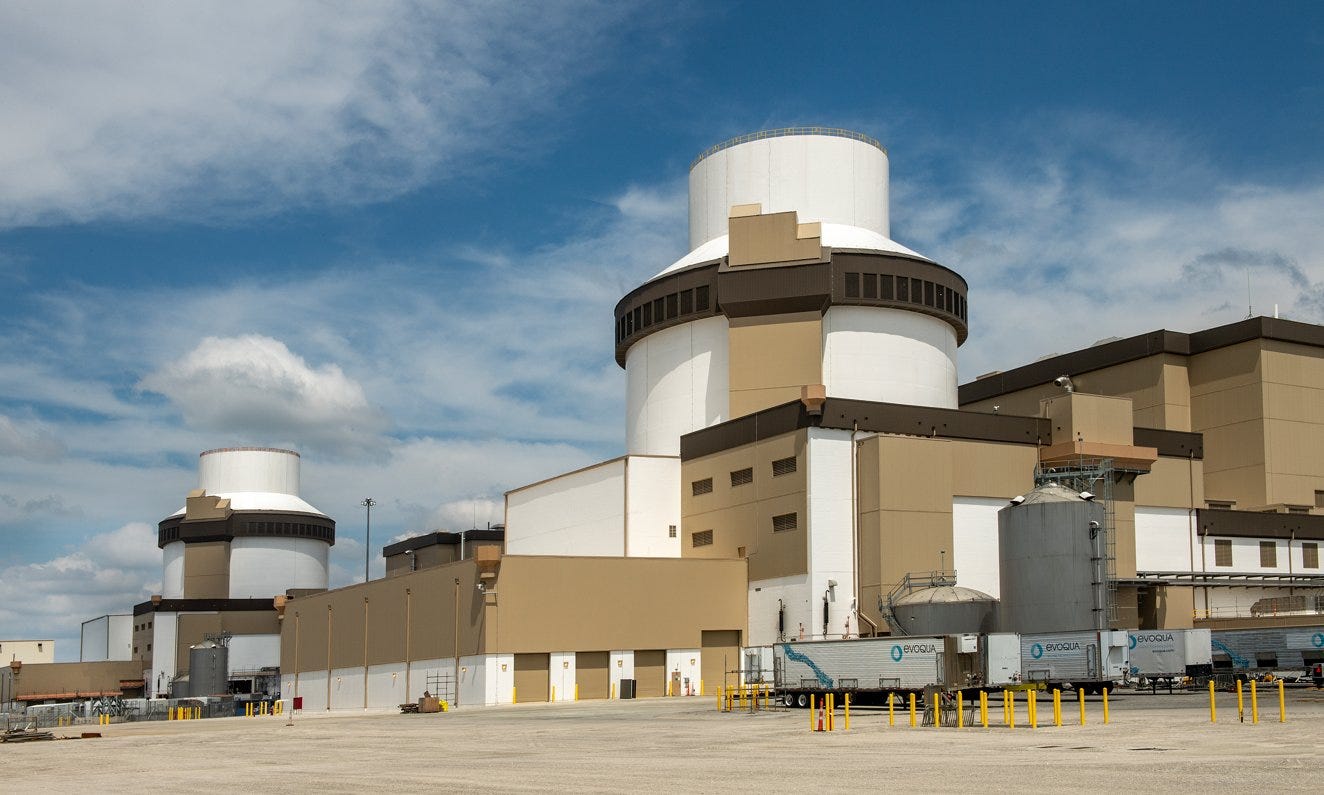
While that’s great news for Canada, it’s small potatoes for Westinghouse, which is now in a strategic partnership for “at least $80 billion in new reactors to be constructed across the U.S. using Westinghouse AP1000 and AP300 nuclear reactor technologies.” Those plants will produce around 1.2GW and 300MW of electricity respectively.
All those plants will need a lot of uranium, and the timing couldn’t be better for the start of work on an “advanced nuclear fuel fabrication facility in Oak Ridge, Tennessee, which will be the first plant of its kind in the USA.” It will make TRISO fuel specifically for SMRs.
$2 billion will be invested by France-based Newclear in a project with US-based Oklo to “develop advanced fuel fabrication and manufacturing infrastructure in the USA, with Sweden’s Blykalla also considering investing in the project.”
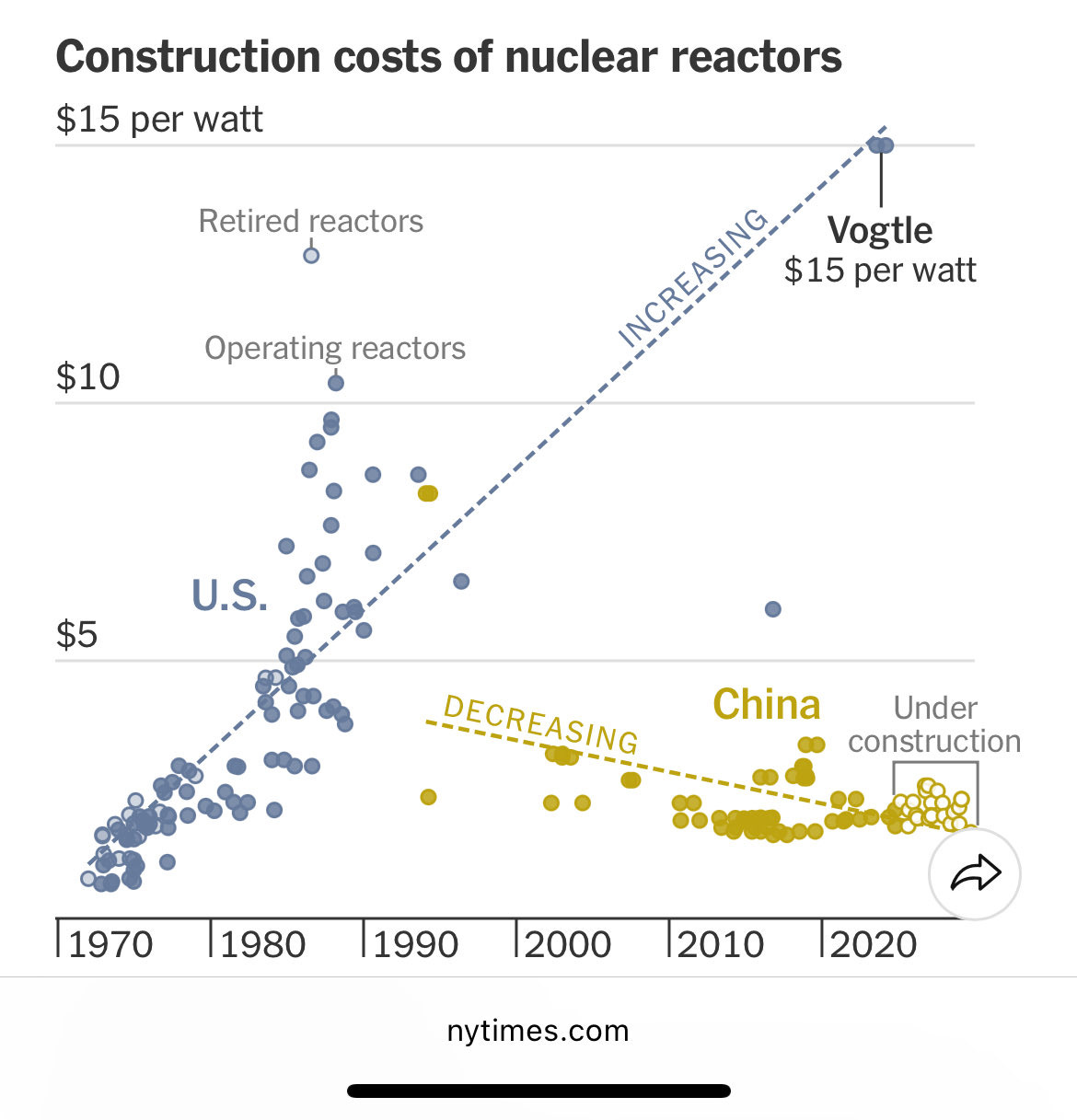
Lots of great news, but I think it’s important to point out the in terms of construction costs for nuclear power plants, the U.S. is very much behind China. The hope is that new rules and investment will change this, but we aren’t there yet and have a long ways to go. China is moving full steam ahead on nuclear power, with Unit 2 of its Zhangzhou nuclear power plant just having entered commercial operation. It also just started construction on two new power plants, with the concrete being poured “for the nuclear islands of unit 1 of the Bailong nuclear power plant in China’s Guangxi Zhuang Autonomous Region and of unit 2 at the Lufeng plant in Guangdong province.” Honestly, good for China. Nuclear is the way to go. I just hope we can catch our rate of construction up.
On the bright side though, private American company Valar Atomics just became the first fully private company in history to split the atom. Their Project Nova went critical (that’s a good thing for nuclear power plants) for the first time on November 17th, 2025. They also just finished raising a $130 million Series A. Valar weren’t the only ones raising capital either, with X-energy (also building SMRs) raising a $700 million Series D.
I think that AI is going to help meaningfully bring down the cost of new power plant construction too. Aalo Atomics recently announced a “collaboration with Microsoft on using AI to accelerate permitting.” The idea is to greatly speed things up and reduce costs for the company, and maybe eventually even cut some bureaucracy (haha).
Oklo and Meta (the parent company of Facebook) have “signed an agreement to advance the development of a nuclear energy campus in Pike County, Ohio, designed to scale up to 1.2 gigawatts. The agreement includes a binding prepayment to support fuel procurement, enabling Oklo to advance early project work and secure fuel—adding new, clean, reliable power to the grid without shifting infrastructure costs to existing residents or businesses.” Meta is desperately trying to catch up in the AI race, and to do that it needs power, and a lot of it. This is a big step in that direction.
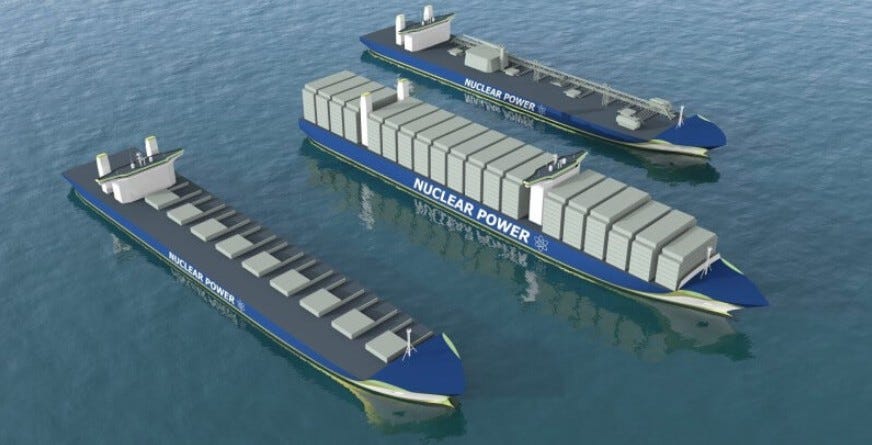
Nuclear powered shipping is really the way to go. India is looking to develop 55 MW and 200 MW SMRs specifically for powering large cargo ships. India isn’t the only one interested in this either, with a Norwegian group pointing out that nuclear propulsion is the “long-term solution for maritime decarbonization.” Silly reason imo, but I’ll take it no matter the reasoning behind it.
Fusion Energy
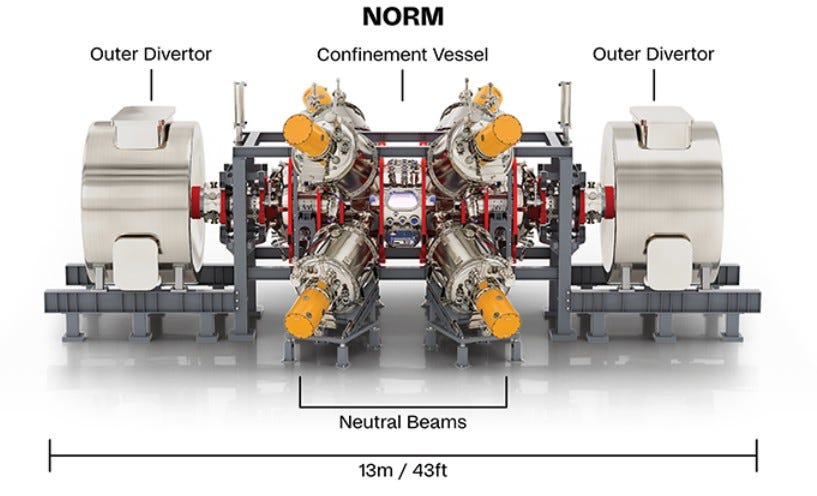
A lot of big news for TAE, starting with an announcement that their “current research reactor, Norm, has produced record performance in plasma temperature and stability – and we’re shortening our commercial roadmap as a result. After Norm, TAE will skip a planned sixth machine, Copernicus, and will move directly into the development of its first of a kind fusion power plant, Da Vinci.” The plan is to deliver commercial fusion power by the early 2030s (maybe 2031 if all goes well). I saved the big news till last:

Trump Media & Technology Group and TAE have announced a $6 billion all stock merger, creating one of the world’s first publicly traded fusion companies, with shareholders of each company owning approximately 50% of the combined entity. The merged company plans to begin constructing the world’s first utility scale fusion power plant (50 MWe) this year, with future plants scaled to 350-500 MWe. Trump Media CEO Devin Nunes and TAE CEO Michl Binderbauer will serve as co-CEOs, with Trump Media providing up to $200 million in cash to TAE at signing. Site selection is already underway. With this merger and added cash TAE just jumped up in my rankings for who’s going to be an early winner in the race to fusion energy.
If you’re curious who the biggest players in fusion energy are, TechCrunch has a great list for you of all the companies that have raised over $100 million. In order (now including the news for TAE) it’s TAE Technologies, Commonwealth Fusion Systems, Helion, Pacific Fusion, SHINE Technologies, General Fusion, Tokamak Energy, Zap Energy, Proxima Fusion, Kyoto Engineering (not building their own fusion power plant), Marvel Fusion, First Light Fusion (also not building their own power plant), and Xcimer.
UK Atomic Energy Authority researchers have developed GyroSwin—an AI tool that can simulate complex fusion plasma turbulence in seconds instead of the hours or days required by traditional supercomputers. The system learns plasma dynamics using AI, creating models that preserve crucial physical information like turbulence fluctuations and sheared flows while running up to 1,000 times faster than conventional simulations. “Designing, developing, and operating a fusion power plant will involve millions of plasma simulations,” said Rob Akers, UKAEA’s Director of Computing Programmes, noting that reducing runtimes “from hours or days to minutes or seconds” will be “genuinely transformative around time-to-solution and cost.”
Nor are they the only one, with NVIDIA and General Atomics delivering “the first AI-enabled digital twin to accelerate fusion energy research…this cuts plasma prediction time from weeks to seconds, accelerating the path to limitless clean energy.”
The States is making the right move here with a bipartisan announcement of a plan to extend advanced manufacturing tax credits to fusion companies under the existing framework of the (hilariously named) Inflation Reduction Act previously passed by the Biden Administration. The Department of Energy also announced “the creation of a new, dedicated ‘Office of Fusion (OF).’”
Ontario is investing $19.5 million CAD (~$14 million USD) alongside the federal government’s $33 million (~$24 million USD) and Stellarex’s $39 million (~28 million USD) to establish a Centre for Fusion Energy that will create a national platform for Canada. Ontario, through Ontario Power Generation, is home to almost all of the world’s commercial tritium—a by product of CANDU reactors—which serves as the key fusion fuel for most fusion reactor designs. The centre will advance fusion energy research and commercialization while facilitating academic and industry partnerships across Ontario.
Some more good news for the Canadian fusion industry: Kyoto Fusioneering and Canadian Nuclear Laboratories have begun construction of UNITY-2, the world’s first integrated tritium fuel cycle test facility at Chalk River, Ontario. The facility will continuously circulate up to 30 grams of tritium in 24-hour operational cycles, integrating all key fuel cycle technologies—from fuel injection and exhaust to impurity removal, isotope separation, and tritium storage—under fusion relevant conditions. Commissioning is scheduled for late 2026.
Japan is going to get a fusion power plant called FAST (Fusion by Advanced Superconducting Tokamak), with a plan to produce 50 MW of power sometime in the 2030s. Japan is moving along at a good pace on fusion, with Japanese company Helical Fusion signing a power purchase agreement (PPA) with Aoki Super Co, a large supermarket chain in Japan. It’s the first PPA for fusion energy in that country, and points to growing confidence in the ultimate success of fusion.
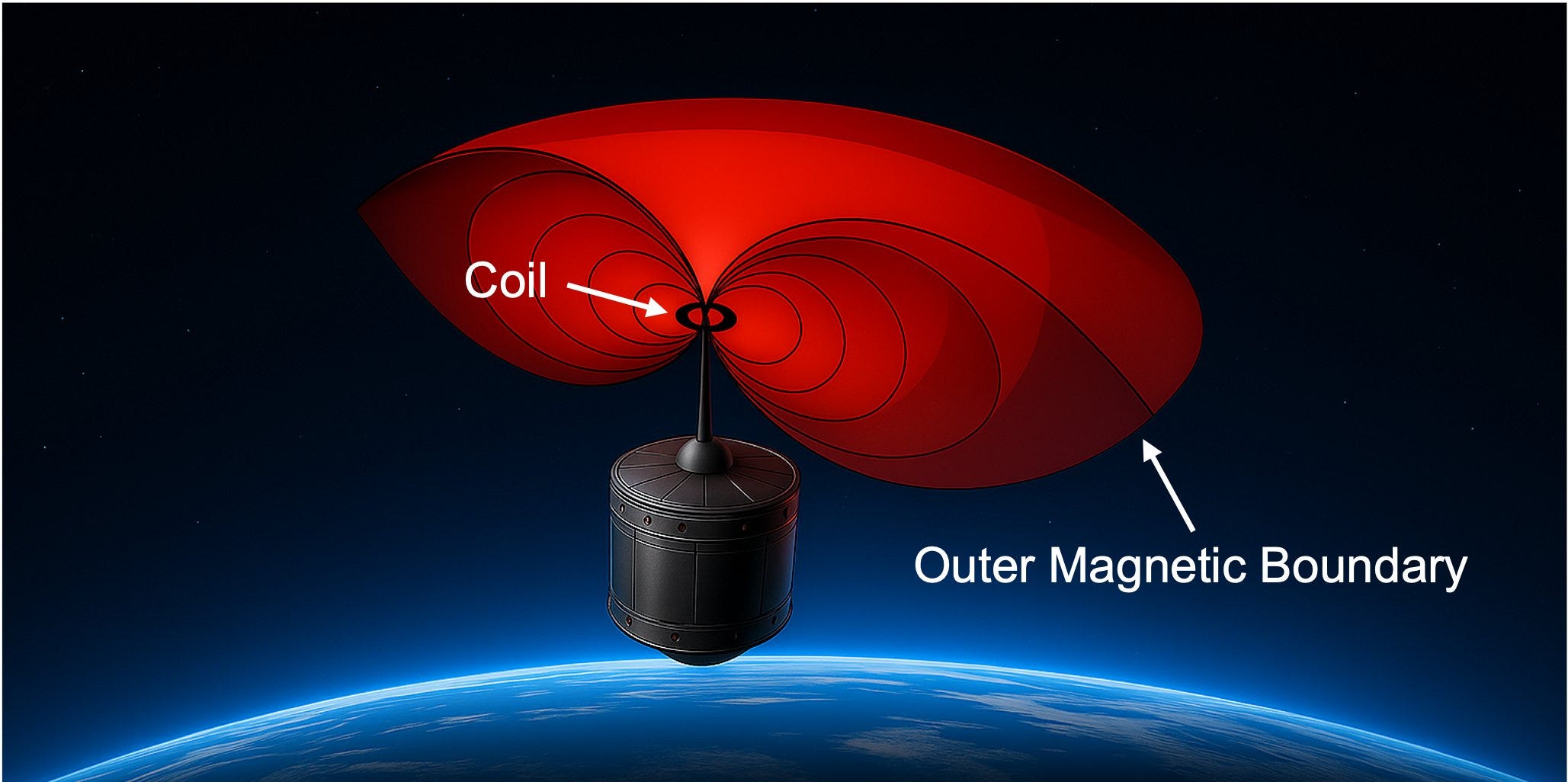
Zephyr Fusion, founded by two fusion physicists from Oak Ridge and Lawrence Livermore National Labs, is developing compact megawatt class fusion reactors designed specifically for orbit. Most satellites are limited to kilowatt scale solar power (about the power equivalent of a toaster or two), while scaling solar beyond 10 kW rapidly becomes mass and cost prohibitive—but compact megawatt scale orbital fusion power changes that. The founders say this could unlock an industrial space economy by providing the kind of power required for massive orbital data centers, manufacturing, and complex robotics that current satellites can’t support.
In the fission section I’d mentioned how we’re moving towards nuclear powered cargo ships (there are already a number of nuclear powered navy ships). Now, a fusion startup called Maritime Fusion wants to join in. “The first Maritime tokamak will be about eight meters across, and the startup is projecting it will be operational in 2032 and will cost around $1.1 billion.”

Fusion startup Thea Energy has unveiled Helios, their design for a stellarator power plant that uses 324 identical small magnets arranged like pixels on a screen, with AI powered software compensating for manufacturing imperfections that would cause problems in traditional fusion reactors. “It doesn’t have to be as good to begin with. We have a way to tune out imperfections on the back end,” said their CEO Brian Berzin. During virtual tests, the AI successfully corrected for magnets deliberately misaligned by over a centimeter without human intervention—a tolerance for sloppiness that could slash construction costs threatening fusion’s competitiveness against renewables. Helios will generate 1.1 gigawatts of heat converted into 390 megawatts of electricity with an 88% capacity factor matching nuclear plants, with electricity costs starting below $150 per megawatt-hour and dropping to $60 after several plants are built.
Commonwealth Fusion is making great progress on SPARC, their fusion power plant that should be turned on (and generate net energy!) sometime next year. They’ve now moved in the first of 18 magnets, each weighing 24 tons, and welded it into place. I have to say, it’s exciting watching this happen on the scale of months, versus ITER (also a tokamak) where it takes years to decades.
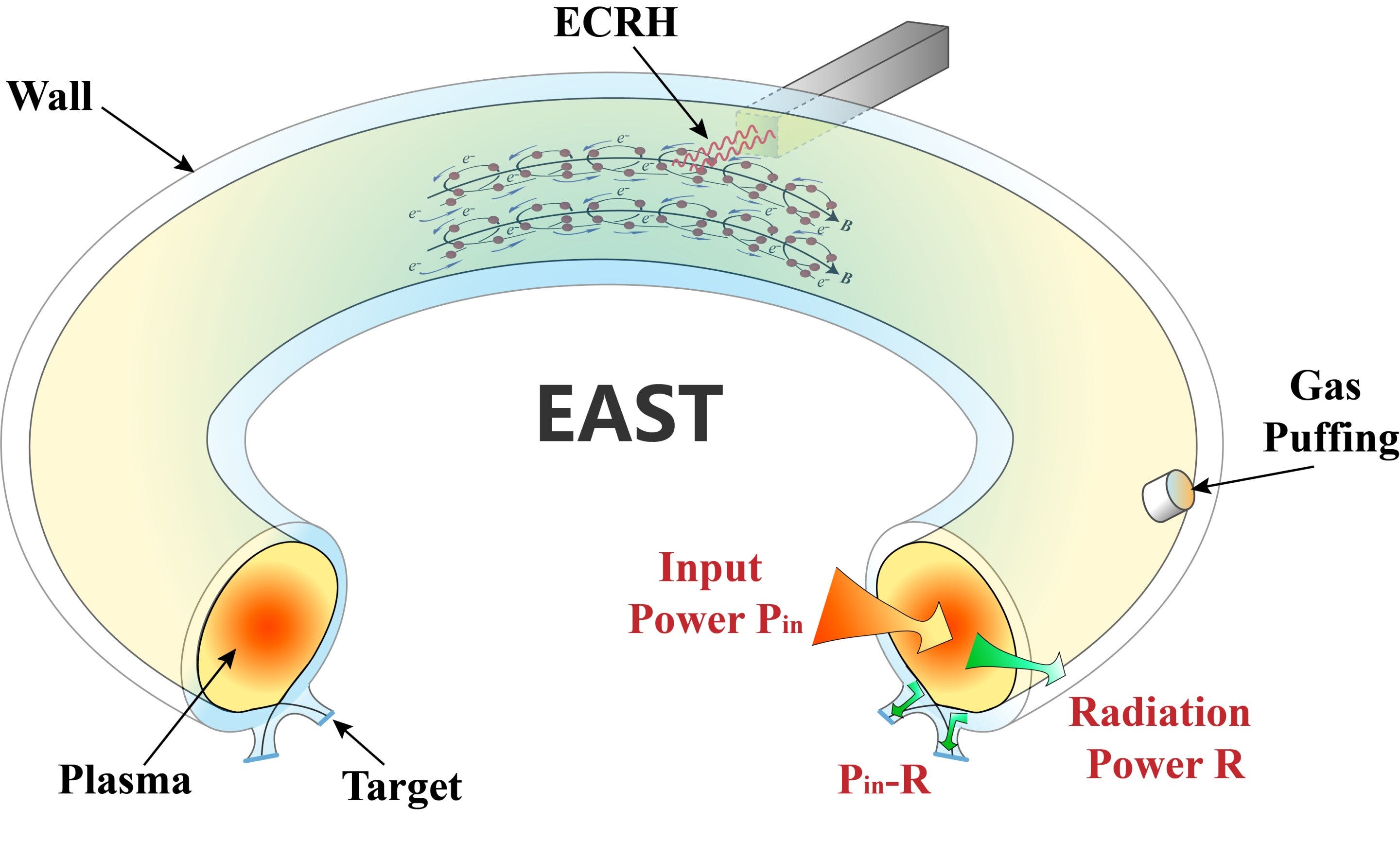
Researchers working on China’s EAST tokamak have achieved stable plasma operation at densities far beyond conventional limits by accessing a theorized “density free regime,” potentially overcoming one of fusion’s most persistent obstacles. The team demonstrated that plasma density, long constrained by empirical limits in tokamak operation, can be substantially increased without triggering disruptive instabilities by optimizing plasma-wall interactions during startup to reduce impurity accumulation and energy losses. The breakthrough relies on a theory called plasma-wall self-organization, which predicts that achieving a delicate balance between plasma and metallic walls dominated by physical sputtering can eliminate density restrictions entirely. For deuterium-tritium fusion, power scales with the square of fuel density, making higher densities importantfor achieving energy breakeven—but exceeding density limits traditionally causes instabilities that disrupt plasma confinement and endanger tokamak operation, a challenge that may now have a practical solution. In a nutshell, this means that tokamaks could pump out a lot more power than previously thought.
The IAEA (International Atomic Energy Agency) put out their World Fusion Outlook 2025 towards the end of last year. “The report, now in its 3rd edition, is the global reference on the latest in fusion research and development, fusion plants concepts and commercialization pathways — for both the private and public sectors.” It highlights “how fusion energy is entering a new phase of implementation as it becomes a cornerstone of national energy strategies and industrial planning.” You can read it here.
That’s it for now, but Nuclear Energy Updates will be back four weeks from now. In the meantime, check your inboxes next Saturday for the 35th edition of Techno-Optimist!
Thank you all for reading — and until next time, keep your eyes on the horizon.
-Owen
That graphic comparing nuclear construction costs in USA and China is pretty stunning… and depressing. I would be curious to see South Korea on the same graphic.
Imagine there is table on which 1000 balls are placed. 997 of them are red and 3 are green. You have one tiny white ball on your hand, with which you can hit any of those 1000 balls. If you hit a red ball with the tiny white ball, nothing happens. Only the tiny white ball gets deflected with a reduced speed. But if you hit any of those 3 green balls with the tiny white ball at a right speed (neither too fast, nor too slow), the green ball disintegrates into 2 smaller black balls, and 2 more tiny white balls are produced. If any of these 2 tiny white balls, after attaining the right speed (neither too fast, nor too slow) hits another green ball, the same process gets repeated. The red ball stands for Uranium-238, the green ball stands for Uranium-235 and the white ball stands for neutron. The process of disintegration of the green ball into 2 black balls is called fission. Mass of the 2 black balls together is lesser than that of the green ball. This mass difference gets converted into energy. The green ball, which gets disintegrated on being hit by a white ball is called fissile material.
Natural Thorium (Th-232) is not fissile. Sustained controlled fission chain, where one fission reaction leads to another fission reaction and so on, is not possible with Th-232. Therefore, it is not possible to build natural Thorium based nuclear reactors.
In order to use the vast Thorium reserve, enough Plutonium based reactors are needed. These reactors are also called fast breeder reactors (FBRs). We do not have any operational Fast Breeder Reactor yet. One 500 MW plant is under construction. http://bhavini.nic.in/Userpages/ViewProject.aspx
Natural Uranium contains two isotopes, U-235 (0.7%) and U-238 (99.3%). Out of these two isotopes, only U-235 is useful for nuclear reactors, as it is fissile. U-238 is not fissile, similar to Th-232. However, this U-238 gets converted into Plutonium (Pu-239) during its stay inside the Uranium reactors by absorbing one neutron. This Pu-239 can then be extracted and used as fuel in Fast Breeder reactors. Therefore to sustain the Fast Breeder Reactors, enough Plutonium from Uranium based reactors is necessary. The only way it can be done is to have enough operational Uranium based reactors. This is why India is importing Uranium to sustain Uranium based reactors.
As mentioned above, Pu-239 will be used in Fast Breeder Reactors as fuel, but a blanket, or coating of Th-232 will be placed over Pu-239 (the fuel). This Th-232, during its stay inside the Fast Breeder Reactor, will get converted into Uranium-233 by absorbing one neutron. Uranium-233 is fissile but is not naturally occurring.
This Uranium-233 can then be extracted from the spent-fuel, and used as fuel in another type of reactors. Now, if you place a blanket of Th-232 over this Uranium-233 fuel, that blanket will again get converted into Uranium-233 during its stay inside the reactor by absorbing one neutron, and we will have a process where fuel can be re-generated inside the reactor! Though Uranium-233 is the fuel in these reactors, they are also termed as Thorium based reactors.
Thus in order to reach the Thorium based energy generation, building enough Plutonium stock for fast breeder reactors is necessary, which can only be done by having enough Uranium based electricity generation.