

Prehistoric Roundup

An early Happy Thanksgiving to everyone in America reading this. I hope you all enjoy reading this mini newsletter on some interesting dinosaur discoveries.
Let’s get to it.
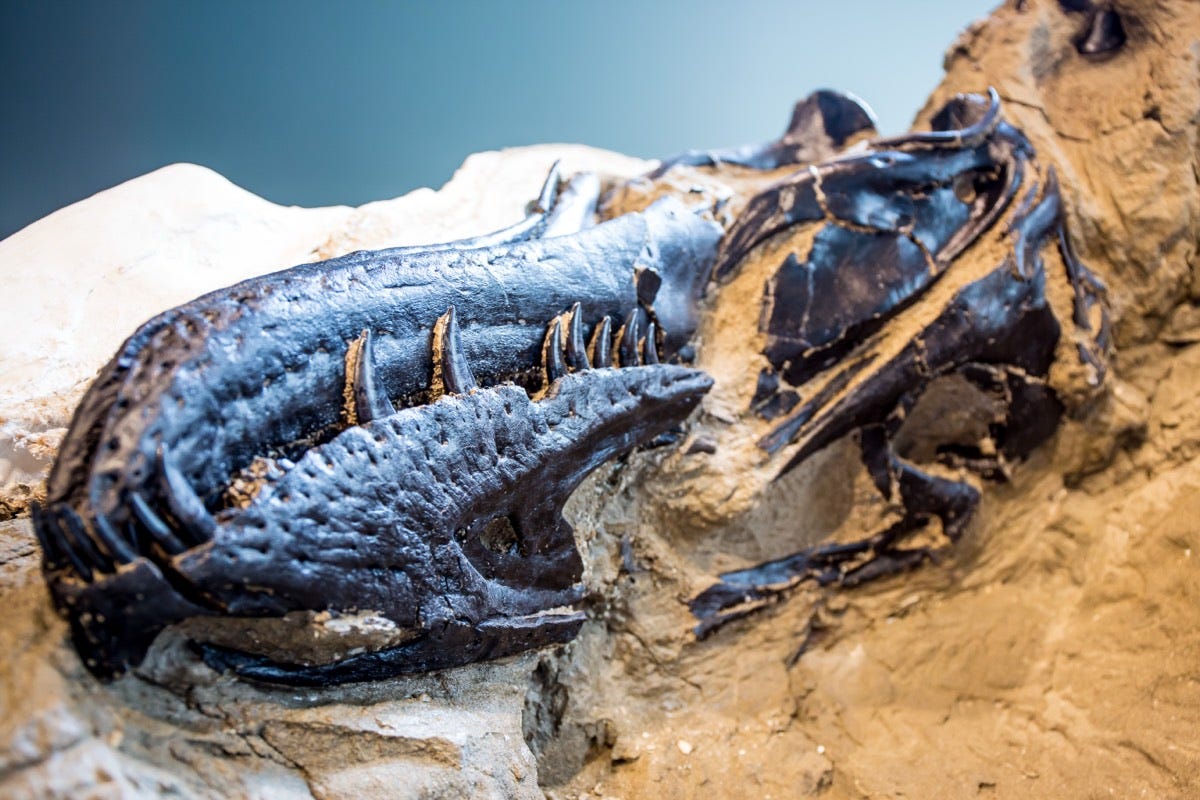
The decades long debate over whether Nanotyrannus was a separate species or just a teenage T. rex has finally been settled—it’s a distinct dinosaur. Analysis of the famous “Dueling Dinosaurs” fossil from Montana revealed the first complete adult Nanotyrannus lancensis skeleton, showing it was fully grown at around 20 years old when it died. The skeleton has more teeth, larger forelimbs, fewer tail vertebrae, and different skull nerve patterns than T. rex; features that form early in embryonic development and don’t change with age. Researchers also identified a second species, Nanotyrannus lethaeus, from another fossil previously thought to be a juvenile T. rex. Where T. rex was a massive, bone crushing predator weighing 18,000 pounds, Nanotyrannus was a lean, agile hunter tipping the scales at just 1,500 pounds—built for speed rather than raw power. (Ars Technica)
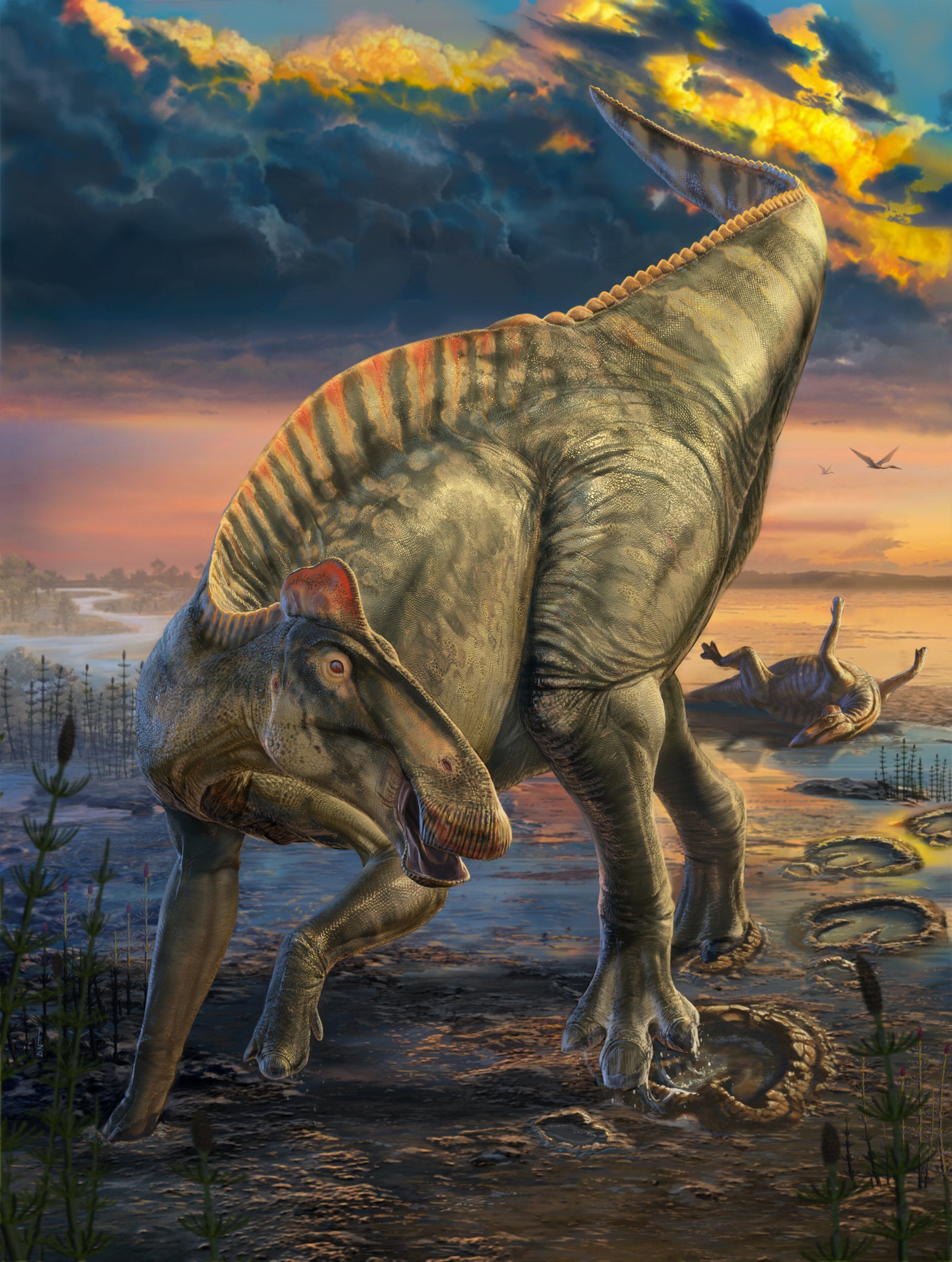
University of Chicago researchers have revealed that Edmontosaurus annectens—a 40 foot (12 meter) long duckbilled dinosaur—had hooves, a tall fleshy crest along its neck and trunk, and a row of spikes running down its tail. The preserved features aren’t actual tissue but rather a clay mask less than one-hundredth of an inch thick that formed on two sun dried dinosaur carcasses after flash floods buried them 66 million years ago. A biofilm on each carcass’s surface electrostatically pulled clay from wet sediment to create a thin template capturing the true surface in three dimensions before organic material decayed away. Amazing that we now know with such details what these animals looked like, and particularly fascinating that Edmontosaurus is now confirmed as having “the earliest hooves documented in a land vertebrate, the first confirmed hooved reptile.” (Phys.org)

Researchers have precisely dated fossils from New Mexico to between 66.4 and 66 million years ago—placing them in the final 380,000 years before the asteroid impact that ended the dinosaur’s reign. The fossil evidence shows that dinosaur populations across North America were divided into separate “bioprovinces” shaped primarily by regional temperature differences, rather than being one uniform population. These New Mexican dinosaurs, including the massive long necked Alamosaurus, were completely different species from the famous Hell Creek dinosaurs found in Montana and the Dakotas, yet lived at exactly the same time. The findings counter the idea that dinosaurs were already in gradual decline before the asteroid struck—instead, they were thriving in diverse, vibrant communities right up until the moment of impact. (Science Magazine)
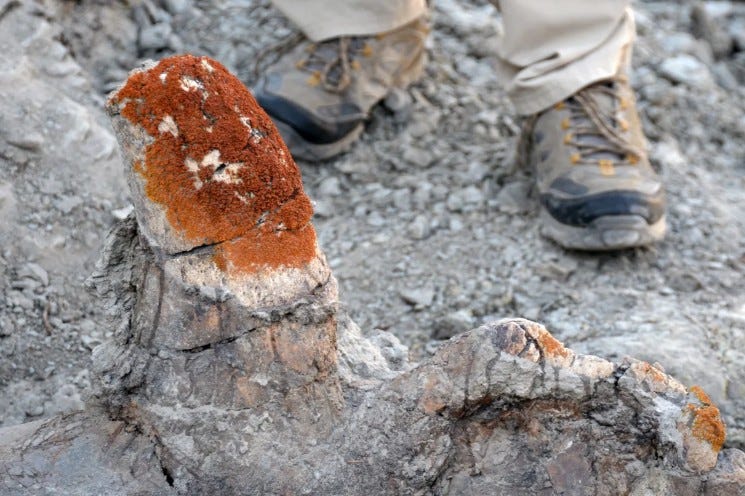
In Dinosaur Provincial Park, in Alberta, Canada, paleontologists have discovered that two lichen species preferentially colonize exposed dinosaur bones, covering up to 50% of fossil specimens while appearing on less than 1% of surrounding rocks. The vivid orange lichens create distinctive visual signatures that drones can detect while flying overhead, potentially revolutionizing fossil hunting in remote badlands terrain. Dinosaur bones provide the alkaline and porous surfaces these lichens prefer, and paleontologists often notice a “meadow” of orange lichen before spotting the bones themselves. (BBC Wildlife)
Have an excellent Thanksgiving, and don’t forget to check your email this Saturday for the 2nd AI Updates.
Thank you all for reading — and until next time, keep your eyes on the horizon.
-Owen