

Robot Updates #2
New and notable, household robots, and robots in the factory.

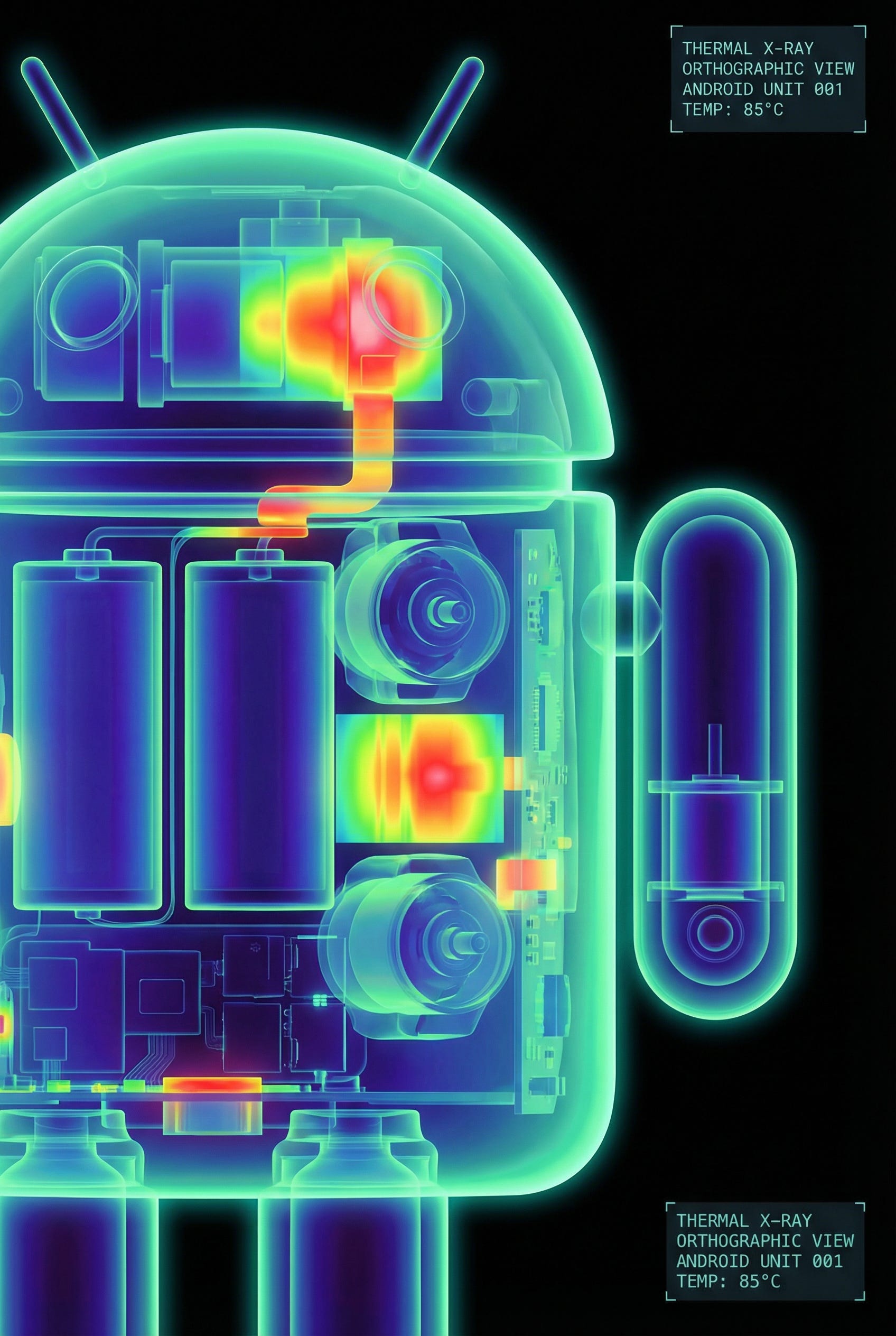
Welcome to Robot Updates #2, news on the machines starting to reshape the future of work, industry, and everyday life.
I’m starting to experiment with sections here now too, so let me know what you think or if you’ve got any suggestions.
Alright, let’s dive in.
First Law: A robot may not injure a human being or, through inaction, allow a human being to come to harm.
Second Law: A robot must obey orders given it by human beings except where such orders would conflict with the First Law.
Third Law: A robot must protect its own existence as long as such protection does not conflict with the First or Second Law.
—Isaac Asimov’s Three Laws of Robotics
New and Notable
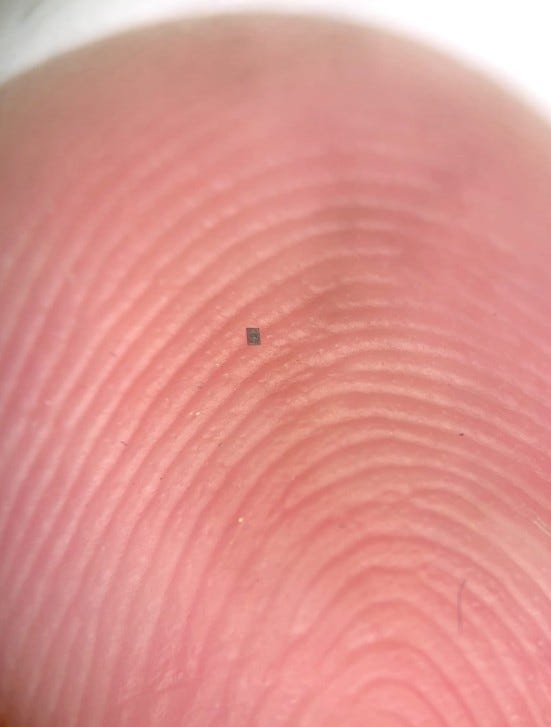
University of Pennsylvania and University of Michigan researchers have created the world’s smallest fully programmable, autonomous robots—microscopic machines measuring just 200 x 300 x 50 micrometers, smaller than a grain of salt, that cost only a penny each to produce. The robots can independently sense and respond to their surroundings, operate for months, sense local temperatures and adjust their paths accordingly, all while powered by light. The team developed a propulsion system that moves water using electrical fields to nudge ions in the surrounding liquid, solving the problem that for these small scales “pushing on water is like pushing through tar,” while creating computers that run on just 75 nanowatts of power—100,000 times less than something like a smartwatch requires. “This is really just the first chapter. We’ve shown that you can put a brain, a sensor and a motor into something almost too small to see, and have it survive and work for months. Once you have that foundation, you can layer on all kinds of intelligence and functionality. It opens the door to a whole new future for robotics at the microscale.” If anyone was wondering, this absolutely is huge news.
Tesla is going to be rolling out Optimus version 3 sometime this year. Elon Musk said that “It will have essentially the manual dexterity of a human, a very complex hand and an AI mind that can navigate and comprehend reality. Optimus will be the biggest product ever.” The plan is to have a 1 million unit production line up and running by the end of the year. It sounds like construction has also started on a much larger 10 million unit per year facility down in Texas.
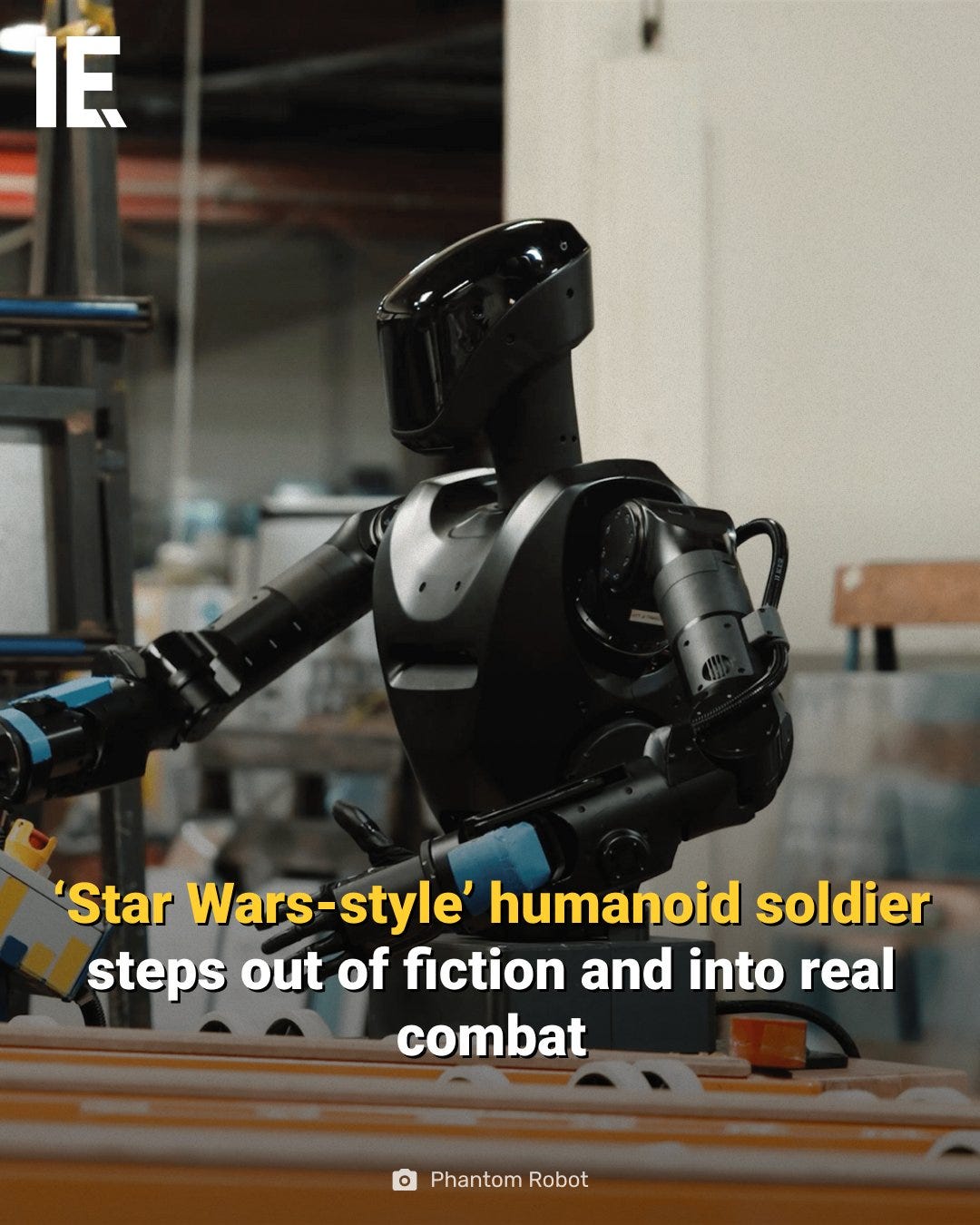
Here come the clankers! It was probably inevitable, but it looks like humanoid robots are being designed for combat by a company called Foundation. Their Phantom MK-1 is “intended to act as a ground unit, serving as a first line of defense rather than offense. The robot is designed to perform tasks such as reconnaissance and bomb disposal, reducing the risk to human soldiers in high-risk missions.” For now, a human operator will make the decision whether or not to fire a weapon, keeping humans in the loop for “mission critical decisions.”
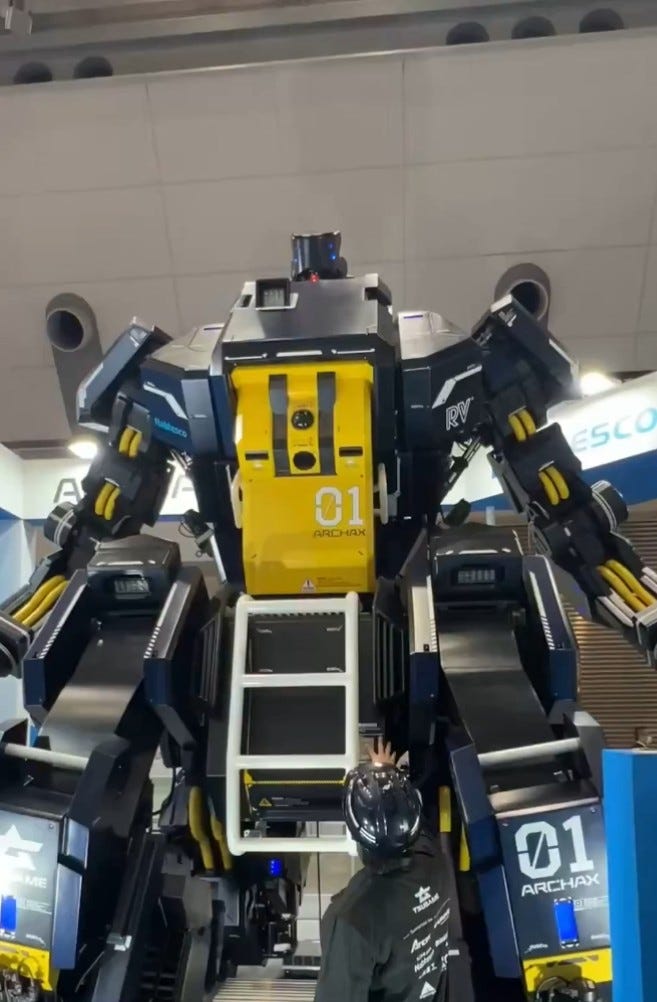
This is cool, Japan’s Tsubame Industries has built a giant mech suit robot designed to be piloted by a human riding inside (or remotely). It could be used for anything from construction, to search and rescue, to (and I’m sure this will happen eventually) deployment on a battlefield.
Chinese company EngineAI filmed an extremely impressive sequence with their T800 humanoid robot (yes, that appears to be a Terminator reference). The initial video was so good everyone initially thought it was AI enhanced at least, but this “behind the scenes” look shows that it was all very real. Definitely not CGI.
UBTECH Robotics (another Chinese firm) has become the first company to complete a mass delivery of humanoid robots. The plan is to use their Walker S2 robots in factories and other industrial settings. All I can say is, do not underestimate Chinese robotics.
Carrying on with the trend of Chinese excellence, robotics company AgiBot had their A2 humanoid trek 65 mile (106 km) without stopping, cross-province trek, setting a new Guinness World Record. It managed the feat by “hot swapping” it’s batteries, allowing it to keep going.
Another interesting development is that Chinese researchers have built a “neuromorphic robotic electronic skin that allows humanoid robots to sense touch, detect injury, and respond to harmful contact with rapid, reflex-like movements inspired by the human nervous system.”
This is a new one, five of Boston Dynamics Spot robots got into America’s Got Talent, and actually put on a pretty good performance. More humor than talent for now, but to all the modern dance artists who think your job is safe, the robots are coming!
A lot less cute are “wolf” quadruped robots used by the Chinese military to simulate an attack on a Taiwanese beach. “The 70-kilogram robots, capable of carrying up to 20 kilograms of supplies, were seen breaching obstacles and clearing a path for follow-on forces.”
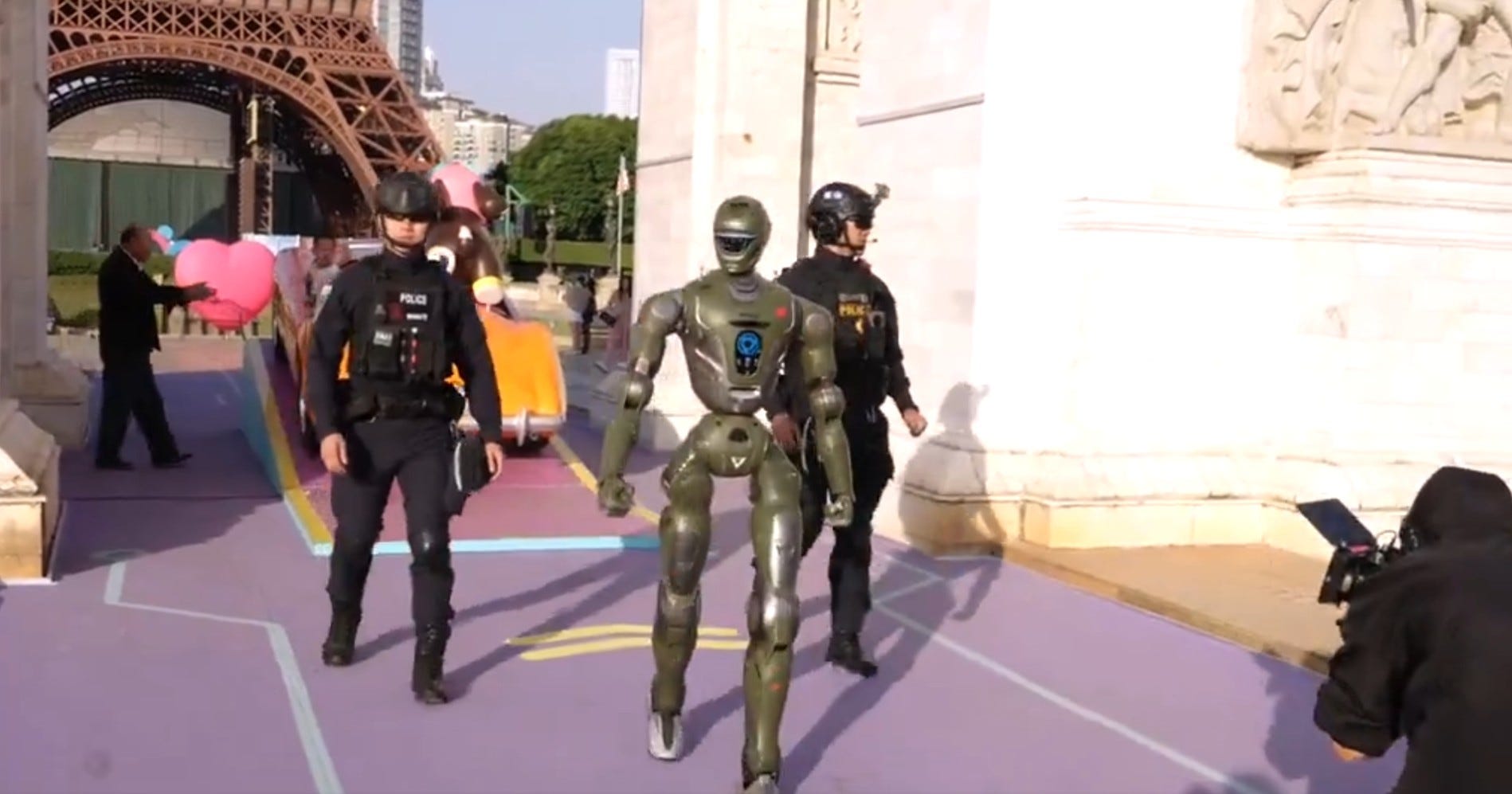
Also, a Chinese robocop is already on patrol in Shenzen. I’m sure that while this is for show, such things will rapidly become both useful and common. Here’s a different one working as a traffic cop over in the city of Hangzhou.
Lots of other crazy little demo’s for humanoid robots recently, including one from Unitree pulling a car, the XPENG IRON robot that looks like it’s got a (really skinny) human inside a suit but doesn’t, another robot (not sure of the company) shooting some hoops of basketball, a robot sewing, and one here playing badminton against a human.
Household Robots
American company Sunday Robotics recently introduced their household robot, Memo, which is designed to do various household chores. Live testing will begin in 50 households this year.
Another American company (are we maybe ahead of China on this?) called 1X released a 10 minute promotional video of their NEO household robot doing dishes, laundry, tidying up, and interacting with humans. To be honest, I don’t think any of these household robots have moved beyond novelties into the realm of truly useful yet—but they’re improving, fast.
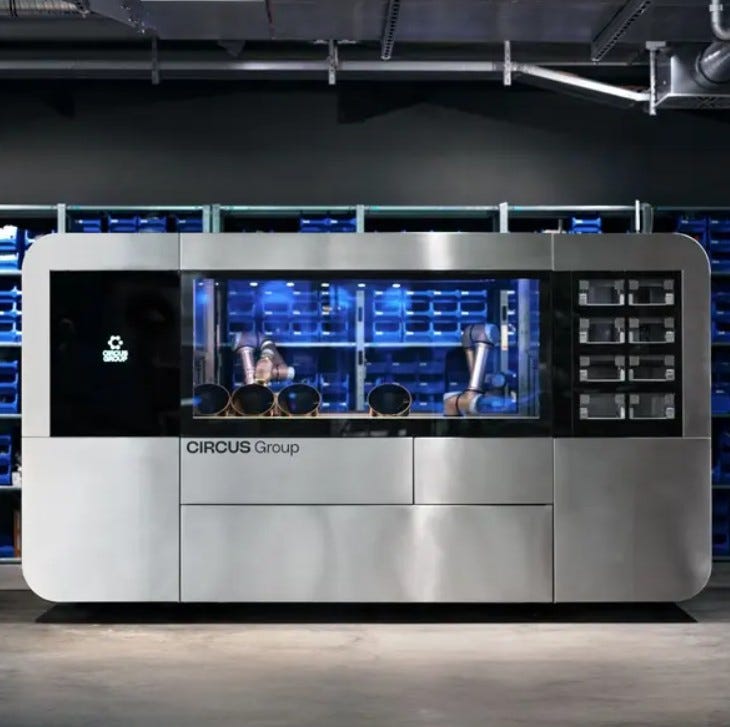
Not strictly a household robot, Munich-based Circus SE has launched the world’s first fully autonomous robotic kitchen in a Düsseldorf supermarket (Germany). The seven-square meter glass enclosed system handles everything—collecting ingredients from climate controlled silos, cooking, plating, and cleaning—without human intervention, producing up to 120 meals per hour or one meal every 30 seconds. Customers order restaurant quality dishes that are cooked live in minutes using dual robotic arms and real time AI sensors that adjust stirring speed and heat precisely based on meal type.
In the Factory
Figure Robotics announced back in November that their F.02 robots “have contributed to the production of 30,000 cars at BMW.” You can see a video of one working here. Watching it, you may notice in the background that robots in factories aren’t exactly new, but humanoid ones are, and there are some jobs done better by a humanoid form.
I agree with this article that the first place humanoid robots are going to make a real difference are in factories. Robots that can “pick up tools, hit torque specs, and work safely beside humans” are going to allow for an exponential expansion of what we can make. Household robots will come too, but in my opinion they’re still a few years away from being truly useful (by 2030 I expect that will have changed). But factory humanoids will start being useful this year, and likely make their presence felt in a big way starting in 2027.
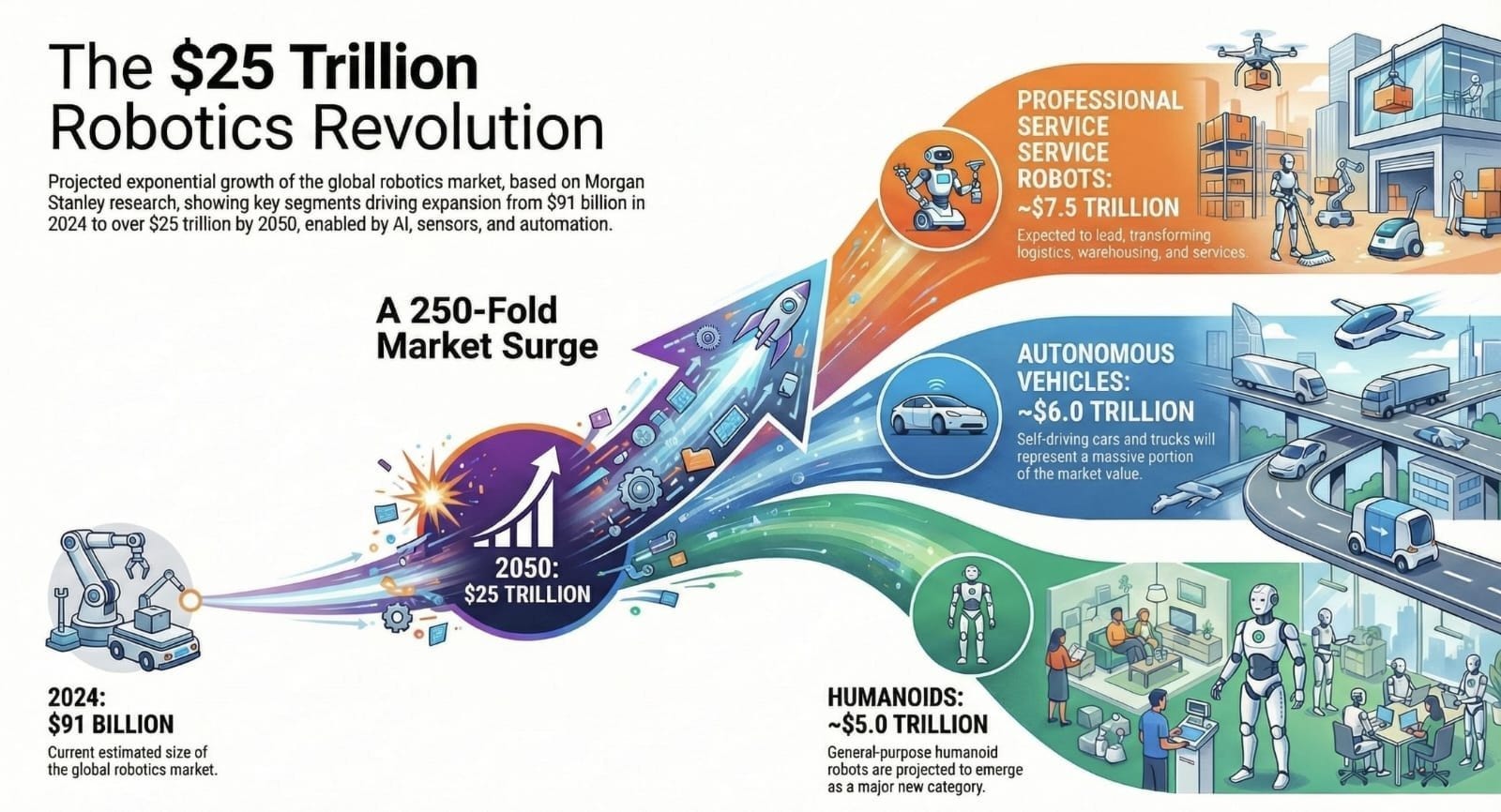
Morgan Stanley research now projects that the robotics industry could jump from $91 billion today all the way to $25 trillion by 2050. Now, they include autonomous vehicles in there with a $6 trillion value, but still. If they’re remotely correct, this will be one of the biggest growth industries of all time.
That’s all for this edition, but Robot Updates will be back four weeks from now.
Thank you all for reading—and until next time, keep your eyes on the horizon.
-Owen