

Techno-Optimist #3
Go forth and build!

Welcome to the third edition of Techno-Optimist, your go-to destination for all the latest updates and commentary on space, science, technology, medicine, energy, AI, and much more.
As I mentioned in the first edition, my mission here is to inspire a sense of possibility and hope, and to show that doomerism and antihumanism are not the path forward With that vision in mind, I want to broaden the reach of this newsletter to as wide an audience as possible.
Dear readers, I have a favor to ask: If you find value in what you’re reading and resonate with a techno-optimistic outlook, please consider sharing it across your social media platforms. The more people embracing a mindset of real progress and human flourishing, the brighter our future becomes.
Alright, let’s dive in.
"We believe that free labor, that free thought, have enslaved the forces of nature, and made them work for man."
–Robert Green Ingersoll (Indianapolis Speech)


Eyes on the sky, nova incoming. Sometime between now and September, a ‘new’ star will appear in the constellation Corona Borealis (the Northern Crown), visible in the northern hemisphere between Hercules and Boötes. T Coronae Borealis (T CrB) is a recurrent nova—one of only five such known in our galaxy. T CrB is actually a binary system, comprising a white dwarf and a red giant star. Due to their proximity, the white dwarf accumulates material on its surface ejected from the outer layers of its red giant companion. Eventually, this gas becomes hot and dense enough to generate a runaway thermonuclear explosion, causing the white dwarf to brighten dramatically over a few hours. This is the nova we see.
This particular nova erupts roughly every 80 years, with its last explosion recorded in February 1946. We know it will happen soon because of the drop in brightness just before the explosion, which is where we are right now. Normally shining at a magnitude of +10, T Coronae Borealis isn’t visible to the naked eye (unaided on a dark night, humans can see a +6 star). But once it goes nova, it’s expected to jump to a magnitude of +2—similar in brightness to Polaris, the northern star—and easily visible without magnification. When it happens, don’t wait; this spectacle will only be visible for a few days before it fades from view again for another eight decades. (NASA)

Interstellar travel and the Fermi Paradox. Check out this video from Kurzgesagt, There Are Thousands of Alien Empires in The Milky Way. It poses a rather interesting question: If you assume that interstellar space travel remains hard regardless of your technological level, could this explain the Fermi paradox (i.e., where are all the aliens)? An analogy was drawn between interstellar travel and the settlement of Polynesia—which happened by slow, perilous voyages. It envisions alien empires as chains of ‘good island’ star systems, often surrounded by far more numerous unsettled ‘bad’ ones. Perhaps we are in a galactic backwater, lacking many suitable nearby planets for colonization, which is why nobody has come our way.
Like just about everything Kurzgesagt does, this video is excellent and entertaining, but I find the notion that interstellar travel will always be so difficult unlikely (Sidebar: I do quite like the comparison of good star systems to good islands in Polynesia, with a far higher number of unsuitable ones perhaps not worth settling). Rather than a forecast of forever difficult voyaging between the stars, I think the epic Polynesian exploration and colonization serves as a useful proxy only for the initial interstellar journeys. In the Pacific, early voyages were extremely challenging, but over time technological advancements—like those possessed by Europeans of the late 16th and 17th centuries—made things easier. Now of course, getting around the islands of Polynesia is trivial, whether by boat, or more often by air. I suspect that interplanetary and eventually interstellar voyages will follow a similar trajectory: initially hard, then progressively easier, and eventually trivial.
Thoughts? Let me know in the comments. (Kurzgesagt)

AI designs new CRISPR to edit human genes. In a remarkable—though perhaps not unexpected—advance, a company has “successful editing of DNA in human cells with [CRISPR] gene editors fully designed with AI.” Profluent, leveraging Large Language Models (LLMs), which share the same underlying architecture as ChatGPT, generated millions of potential variations on CRISPR proteins that don’t exist in nature. Their news release states that “we demonstrate the world’s first precision gene editing using molecules designed from scratch with AI.” This groundbreaking work has already expanded the library of gene editing molecules, opening up new possibilities for different uses and more precise editors. In their initial experimental run, they developed several CRISPR variants that demonstrated similar or improved activity compared to the commonly used versions. Additionally, they created a base editor capable of precise A-to-G edits. They aren’t keeping these new molecules a secret either, freely releasing them under Profluent’s OpenCRISPR initiative. (@thisismadani) (Singularity Hub)
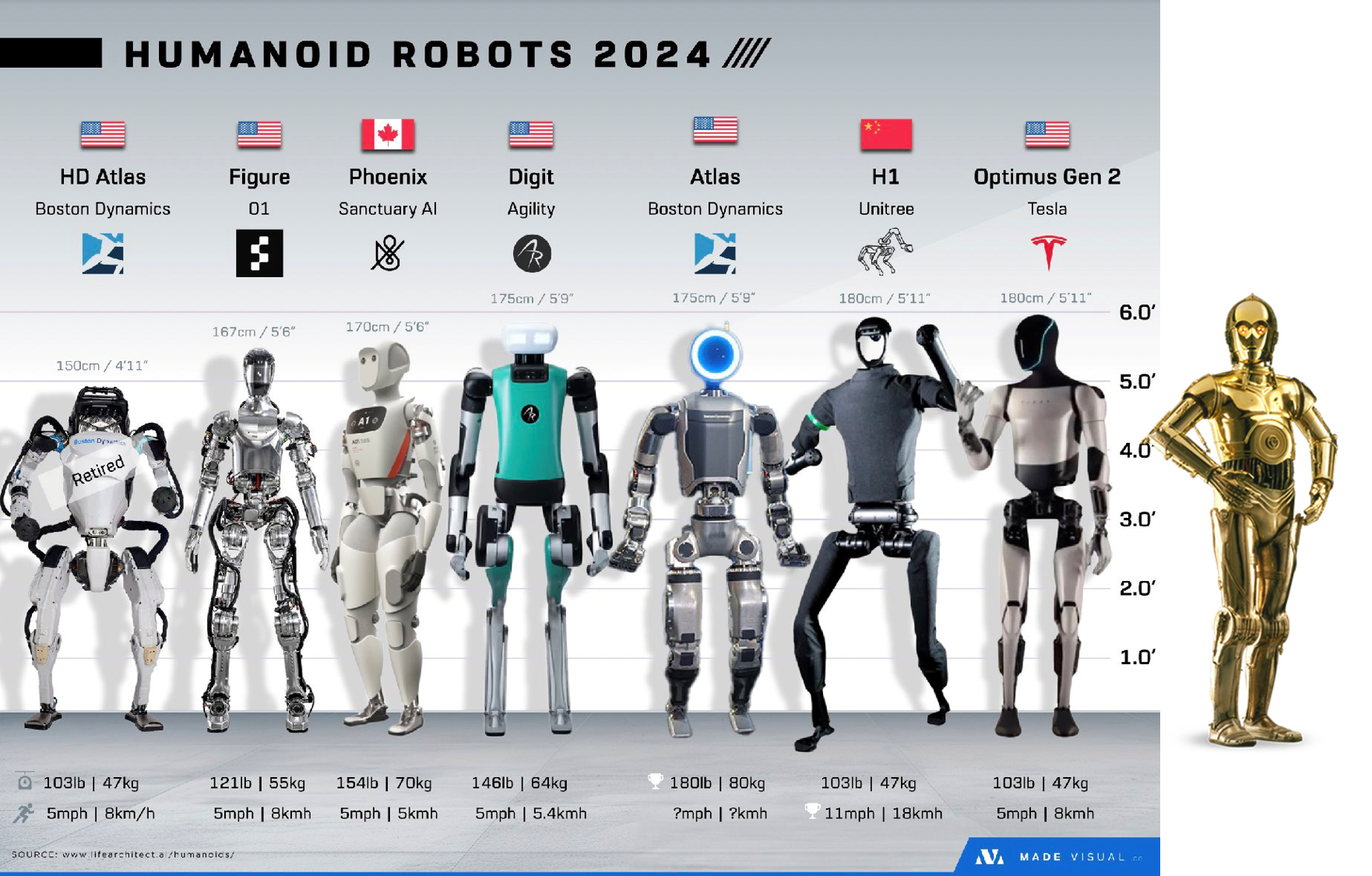
Household robots are (almost) here. Progress with engineering and algorithms for various tasks is starting to merge with AI. The result? We’re getting closer to those practically useful general purpose humanoid robots we’ve been promised for decades now. There’s been a lot of recent announcements, so let’s look at a few:

Boston Dynamics just announced the retirement of their old Atlas robot, the one that entertained us so much with jumps and backflips. In it’s place, a new fully electric version—the old one had lots of hydraulics— that “will be stronger, with a broader range of motion than any of our previous generations.” (Boston Dynamics)
Phoenix Gen 7 humanoid robot | Sanctuary AI
Canadian Sanctuary AI just unveiled the latest version of its Phoenix robot. AI-enabled, and designed to more closely mimic human behavior. Its added complexity enables Phoenix to learn a new task in 24 hours, instead of requiring weeks of training like previous versions. (Interesting Engineering)
S1 humanoid robot | Astribot
Not to be outdone, Chinese company Astribot released a video of it’s S1 humanoid robot, designed to eventually be an AI-powered robotic assistant. The video below shows it “doing household tasks at an unprecedented pace, which marks a significant advancement for a robot.” (Interesting Engineering)
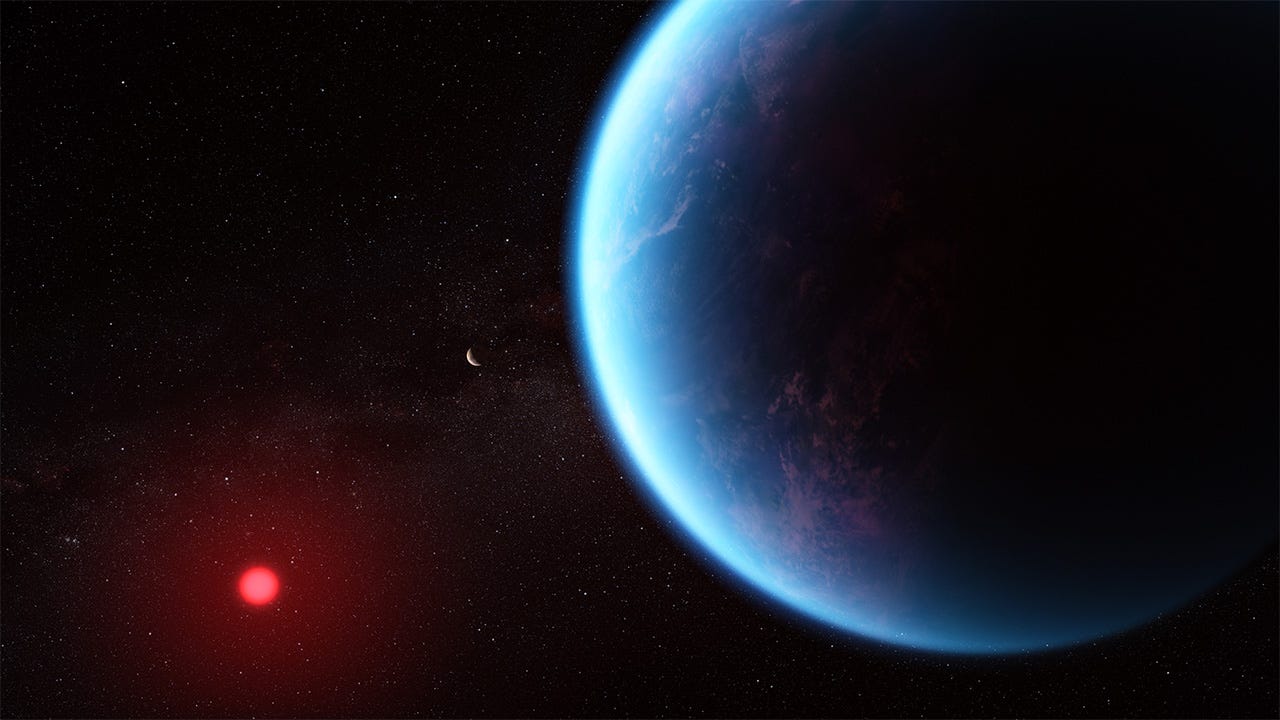
James Webb Telescope studies best candidate for extraterrestrial life. Last September NASA announced that the James Webb Telescope had spotted carbon dioxide and methane on a planet in the habitable zone of its star. That is interesting by itself, as together those molecules are potential indicators of life. But the most exciting discovery was the detection of dimethyl sulfide (DMS) in the planet’s atmosphere. As far as we know, it’s only produced by life. Here on Earth, it’s emitted by plankton, and contributes to that classic beach smell. Larger than our planet, K2-18b may be a Hycean world—with a hydrogen atmosphere and a deep, hot ocean of liquid water below. Not somewhere we would ever want to call home, but it might be perfect for plankton-like organisms that can take the heat.
Now the James Webb Telescope has taken another, longer look at it; spending a full eight hours staring at the planet. Early results could take 4-6 months to analyze, and I am waiting with great anticipation! If DMS is found in the planet’s atmosphere, it could be one for the history books. (The Byte)
Space
Several missions are being readied to visit the asteroid Apophis when it swings by Earth in 2029. About 1,100 feet (340 meters) across, it will zoom past at less than 10% the distance to the Moon. There’s no chance of it hitting us, but it will be a great opportunity for scientific study. NASA’s newly rechristened OSIRIS-APEX (formerly OSIRIS-Rex asteroid sample return mission) will also meet up with Apophis shortly after the 2029 flyby. Something very cool is that asteroid surfaces probably get resurfaced when they have a close encounter—like Apophis is about to—with a planet. We’ll find out! (Space News)
Boeing is finally ready to launch astronauts aboard its Starliner spacecraft. The test flight is scheduled for May 6th, with the two astronauts scheduled to dock at the International Space Station, and then return to Earth after a brief stay. Operational missions are planned for next year as part of NASA’s commercial crew program, where the goal is to have “two independent space transportation systems.” The other, already in operation, is SpaceX. (NASA) (Space.com)
Costs for NASA’s Mars sample return mission have ballooned to an estimated $11 billion, up from an original $2.5-3 billion. Another problem is the plan isn’t to return the rocks to Earth until 2040 (or later), around the time NASA might be seriously contemplating sending humans to the red planet. The space agency is looking for ways to reduce the cost and speed up the timeline, including soliciting ideas from private industry. Elon Musk has already spoken up, saying that “Starship has the potential to return serious tonnage from Mars within ~5 years.” (Space.com)
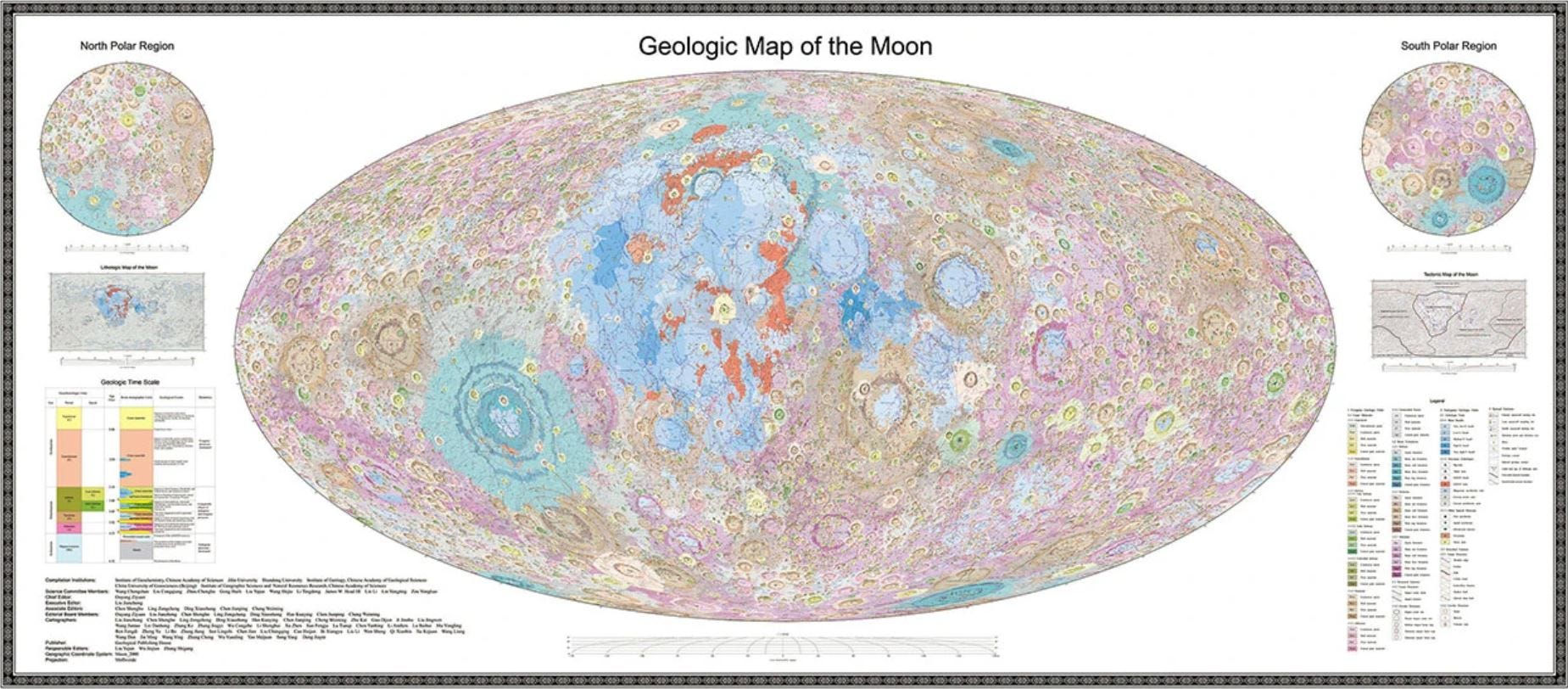
China is really ramping up both its activity and skill level in space. They just released the most detailed geological Moon atlas ever made, taking researchers over a decade to build. With resolution twice as high as the best existing map, this will be an important tool for every country as we start to explore and work on the Moon again.
On May 3rd China also launched its Chang’e 6 lunar mission, which if all goes according to plan will collect 4.4 pounds (2 kg) of samples from the Moon’s far side and return them to Earth. While lunar samples from the near side have been returned by the Apollo missions, and also by Chang’e 5, this will be the first time rocks the far side have been brought back.
I have to say, bravo to China’s space program. America & Co. should take this as a call to ramp up our own activity in space significantly. (@IterIntellectus) (Chinese Academy of Sciences) (Space.com)
Japanese SLIM lunar lander survives another night! Only designed to work a single lunar day (about 14 Earth days), it made it through another night on the Moon and is continuing to send back pictures and data. (@coreyspowell)
A 2016 paper titled ‘Affordable, Rapid Bootstrapping of the Space Industry and Solar System Civilization’ surfaced recently on X. While not recent news, I think it’s worth a look for its very techno-optimist outlook. It’s “about self-replicating robot space economies that lead to 100,000x the industrial output of Earth within a century. A post-scarcity civilization is possible and even conservative given Starship & self-replicating synthetic biology to aid industrial processes.” This is the way. (@DavidSHolz)
AI, Energy, Engineering, & Physics
Just a personal thought based on something I read recently on X: Anyone ever reflect on how the goal for artificial intelligence is essentially about getting sand to think? Moving on!
Invisibility cloaks have been a real thing for a while now, at least in the lab. But they tend to only be effective in concealing objects when viewed from a certain angle. Now researchers have created an omnidirectional cloak “capable of concealing large-scale objects in free space.” (Phys.org)
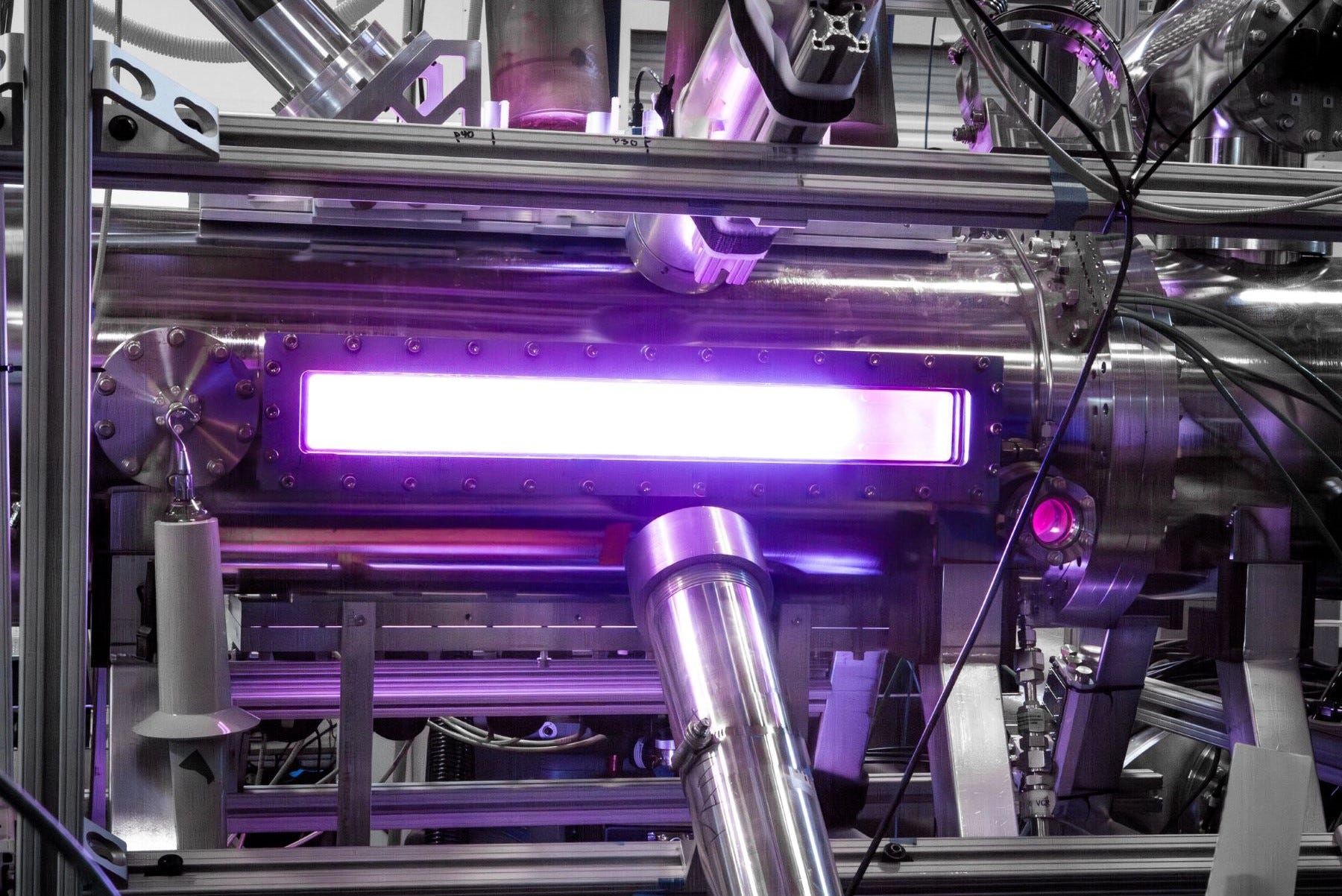
Private fusion company ZAP Energy has succeeded in generating plasma temperatures of about 37 million degrees Kelvin. It’s not the first fusion device to do so, but it is the smallest. (@Energy_Zap)
Another private fusion company, Commonwealth Fusion Systems, has now confirmed a field strength of 20 tesla from their high temperature superconducting magnets. “That’s the intensity needed to build a fusion plant producing more energy than it consumes.” I want to reemphasize how big this is, those are the requirements needed to build an economical fusion power plant. An abundant future of nearly limitless energy is coming, faster than we think. It can’t get here soon enough. (@is_fusion) (MIT Technology Review)
3D printing of entire homes is really starting to make progress, with a Portuguese company printing a house in just 18 hours. This model isn’t huge, at roughly 860 ft2 (80m2), but this sort of thing could help create cheaper starter homes for people looking to get into the market. As the technology matures, there’s no reason why much bigger homes more suitable for families couldn’t be build as well. (New Atlas)
Medicine
Enzymes in our guts have been found to successfully transform red blood cells of types A or B blood into the universal type O by stripping the antigens from their surfaces, a breakthrough that could potentially ease shortages of blood needed by hospitals around the world. The work is still in the lab for now, but shows great promise over previous attempts. (Science Alert)
A new immunotherapy is being worked on to target glioblastoma, an aggressive form of brain cancer. Chemotherapy and more traditional immunotherapy approaches are often ineffective, leading to a median survival time of just 14 months. The new approach takes natural killer cells (an important part of the immune system), and genetically engineers them to target and eliminate the brain tumors. Results in mice show a complete stop to cancer growth; human trials are being planned. (Science Daily)
Blessed thistle is a plant that has been brewed into a digestion aiding tea for centuries, but now scientists have found an entirely new use: when administered at the right dose during the correct time window, compounds in the plant accelerate the growth of damaged nerve fibers. Giving a daily dose to rodent models “helped improve paralysis and neuropathy much more quickly.” More work is being done to fine-tune this discovery, but it could have a positive impact on repairing damaged nerves in humans. (Science Daily)
Cancer vaccines are starting to hit their stride, with two big results recently announced. One is designed to target cancers generally, and is being tested against melanoma—a common type of skin cancer. The vaccine “triggers the immune system that hunts a patient’s unique cancer type.” When used in combination with another cancer therapy, it reduced mortality from skin melanoma by half. It’s currently being tested for effectiveness in treating other types of cancer, including lung, bladder, and kidney.
The other vaccine reprograms the immune system to attack glioblastoma, getting the brain tumors themselves to produce the vaccine inside the body. Human tests have only involved 4 patients so far, too small to get a definitive answer about effectiveness. But all “either lived disease-free longer than expected or survived longer than expected.” A larger Phase 1 trial is planed. (Interesting Engineering) (Medical Xpress)
Some Parkinson’s patients could soon have a new treatment to slow the progression of their disease, with a newly developed antibody drug showing the ability to slow down the development of symptoms such as stiffness and tremors. It’s not a cure, but it’s a step in the right direction. (Live Science)
Take your vitamin D! Getting enough of this important vitamin, either through exposure to the Sun or through supplements, is important for general health. Now a study has found that vitamin D “encourages the growth of a type of gut bacteria in mice which improves immunity to cancer…and improves responses to immunotherapy treatments.” (SciTechDaily)
Biotech & Agriculture
Kissing bugs, which spread Chagas disease, have been genetically edited for the first time. This could open the door to using gene drives to eliminate them completely, also wiping out the disease. Let’s do it! (Phys.org)
China’s Chang’e 4 landed on the Moon back in 2019, and carried a mini-farm with it. Out of the 4 plant species, only a single cotton seed germinated, causing some concern that growing food on the Moon could be difficult. Now, further results have finally been released showing some good news. It turns out that the low gravity actually sped up seed germination, and the higher radiation didn’t appear to be a problem for it. The plant also survived a lunar night, remaining green when light returned two weeks later, while seedlings on Earth deprived of light for that long died. One small step for a plant… (IFL Science)
On a somber note, this is what we have to fight against, and this is what opposition to human flourishing looks like. A Greenpeace led attack against golden rice—the genetically modified crop rich in vitamin A—has succeeded in convincing the Philippines Court of Appeals to ban golden rice from being grown there. The country was the first to start planting the crop, capable of preventing blindness and death in hundreds of thousands of vitamin A deficient children—growing and harvesting over 100 tons of it last year. A group of Nobel Laureates previously issued an open letter to Greenpeace, calling the deaths resulting from their opposition to Golden Rice a “crime against humanity.” I agree. (@AgBioWorld) (Reason)
Weird & Wonderful
AI has been used to decipher more carbonized scrolls of the Herculaneum papyrus, revealing the precise burial place of the Greek philosopher Plato. Back in AD 79 when Mount Vesuvius erupted, it buried two towns in pyroclastic flows. The more famous Pompeii, but also the smaller Herculaneum, where excavations have discovered a large library in a villa owned by a wealthy Roman named Piso. Most of the scrolls were thought to be impossible to read, as even touching them often caused them to crumble; but advanced scanning tools paired with AI have started to unearth their secrets, including now where Plato was buried. (Ars Technica)
Rocks in Greenland hold the oldest preserved evidence of Earth’s magnetic field. A new study shows that Earth had a magnetic field similar in strength to today 3.7 billion years ago, about 200 million years older than it was previously known to exist. As our magnetic field is important in making the planet habitable, that it existed this far back—not long after the first evidence of life—is an important discovery. (MIT News)
Photos & Videos

This piece doesn’t fit perfectly into my newsletter. But paleontology is a science, and thousands of people dressing up in dinosaur costumes is sort of related to paleontology, right? A new world record was made when thousands of people dressed up in dinosaur costumes and gathered in Drumheller, Alberta, Canada—the dinosaur capital of Canada. Check out the pictures and videos, they’re pretty funny. (City News)
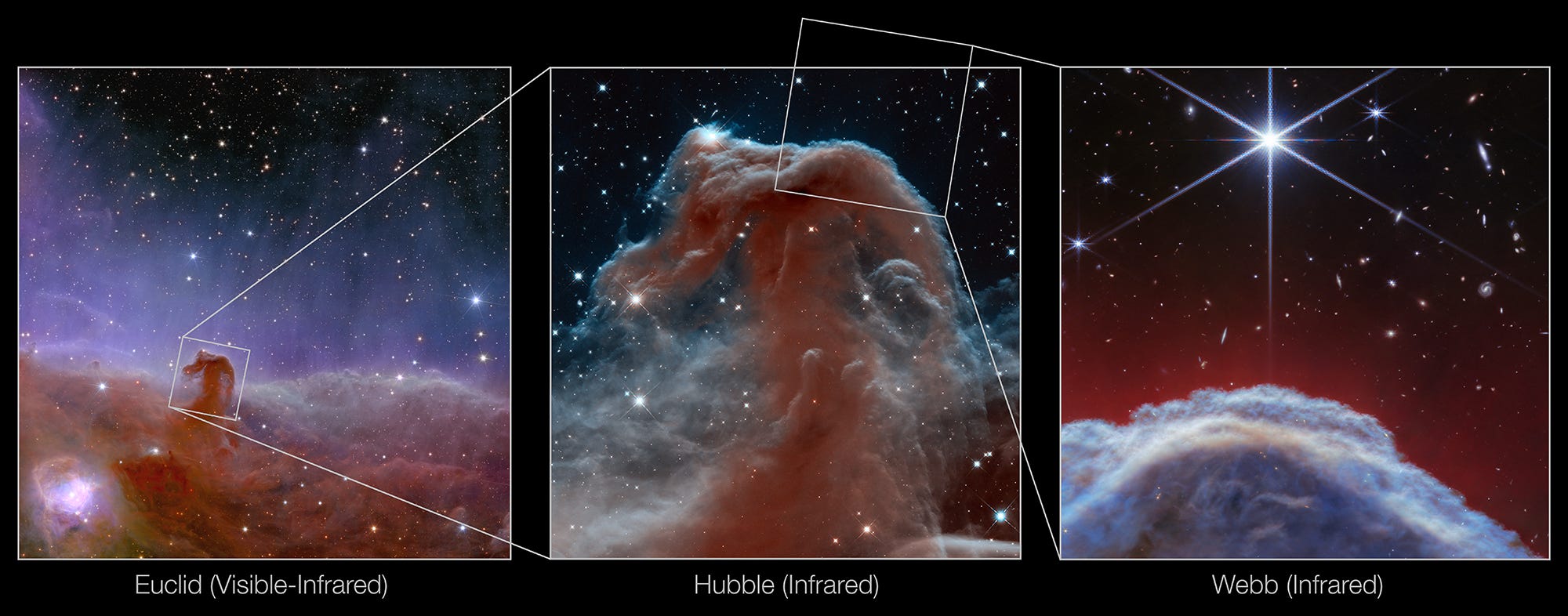
NASA’s James Webb telescope has captures the Horsehead Nebula in never before seen detail. (@NASAWebb) (NASA)
Check out this 22 year timelapse of the Crab Nebula, it’s pretty spectacular. (@coreyspowell) (Chandra X-ray Observatory)
Recommendations & Reviews
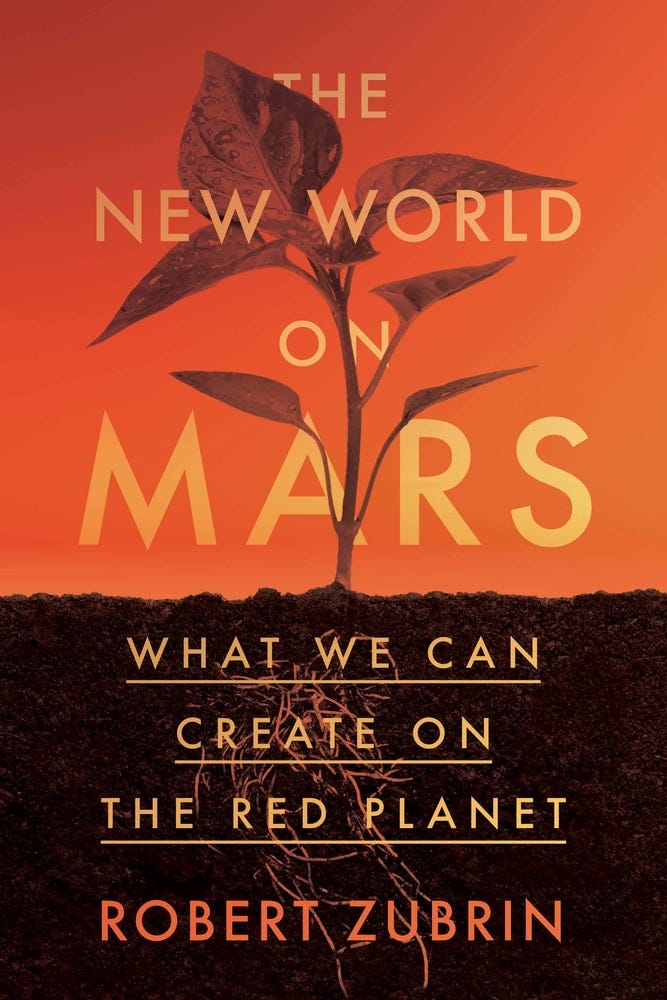
Today, I’d like to highly recommend Robert Zubrin’s latest book: The New World On Mars: What We Can Create On The Red Planet. The notion that humanity should become a spacefaring, multiplanetary species isn’t one that I believe many readers of Techno-Optimist would dispute. Contrary to the portrayal often seen in media and academia, humans are not a virus or a cancer on the Earth whose numbers and freedoms must be curtailed. Instead, we can serve as the transmitters of life, able to make dead worlds live—continuing the work of creation as it were. On Mars, we can showcase what the power of human ingenuity and creativity can do when coupled with freedom. The possibilities are endless.
I’d also encourage you to listen to the conversation between Robert Zubrin and Michael Shermer about The New World On Mars; it’s quite excellent.
That’s all for today, but Techno-Optimist will be back in your inbox a fortnight from now. Remember, as soon as this reaches 1,000 subscribers I’ll switch to weekly publication, so please do subscribe and share. Whether it’s feedback or discussion, the more comments the better, I’ll be sure to always reply.
Thank you all for reading — and until next time, keep your eyes on the horizon.
-Owen
Not happy about the golden rice news. Very happy about AI reading ancient texts. Waiting on household robot (hope it can climb stairs - fingers crossed).
Owen, this is a very good write-up. I really enjoyed the discussion on Fermis paradox, and though I didn't watch the video, this is a topic that his intrigued me for some time. As I discussed at Risk and Progress. My favorite solution is simply that we have arrived too early in the history of the universe. This seems paradoxical almost, impossible, but for civilized life to have emerged in this universe, certain materials needed to be available, like carbon and iron. Those elements had to be made in the furnace says of stars. Early stars did not produce enough of those elements. One day in the future, we may suddenly hear the radio transmissions of many other civilizations that emerged around the same time that we did.
In some it's highly doubtful that we are alone, just early.