

Techno-Optimist #17
"Planimal" cells, some thoughts on colonizing Mars, updates on robots and SpaceX, Iceland could get solar power from space, the human spliceosome project finishes...and a whole lot more.


Welcome to the seventeenth edition of Techno-Optimist, where we explore stories from the frontiers of science, space, technology, and a whole lot more. To my new readers who are excited about the future and tired of all the doomerism out there, welcome aboard.

While I generally strive to keep things here fairly non-political, I have to say I’m excited to have Elon Musk involved in the newly elected U.S. government, and especially that he has Trump’s ear. Someone is going to have it, so why not the guy who wants to streamline government operations and ensure Mankind becomes a spacefaring, multiplanetary species? There is going to be some serious technological progress. How much? Not entirely sure, but my gut says a lot.
About today’s quote below: it’s borrowed from American investor and entrepreneur Nat Friedman, who originally said “Pessimists sound smart. Optimists make money.” But I think it applies to most scientific and technological endeavors, where sticking with the known sounds safe and smart, but is often a bad idea. The problem is you’ll eventually plateau—getting you nowhere but places you’ve already been, ultimately leaving you with nothing but stagnation. There’s an excellent mini-blog on this by Jason Crawford, author of The Roots of Progress that’s well worth reading.
Alright, let’s dive in.
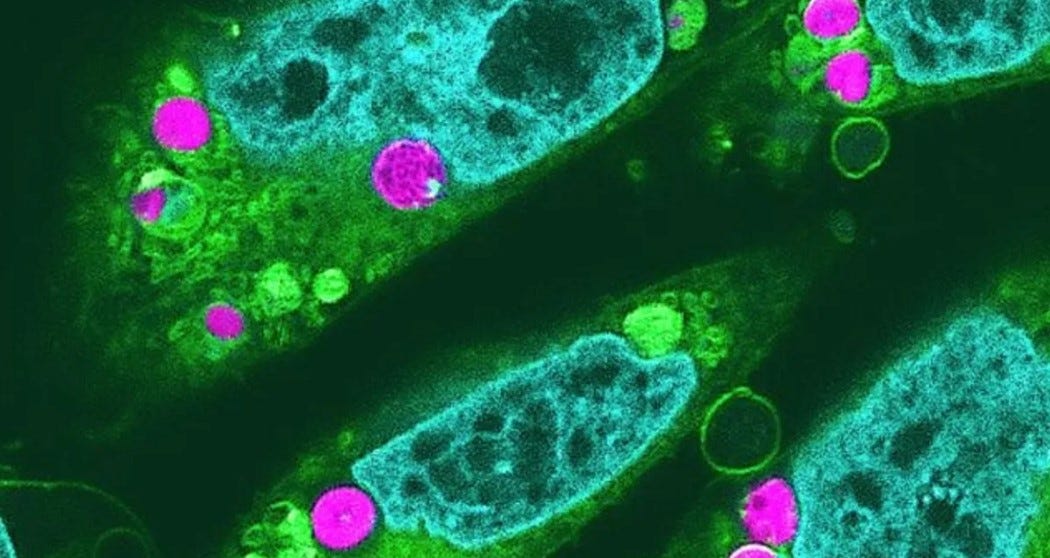
Planimal cells. Symbiosis of algae and fungi has probably existed in the form of lichen for billions of years, while coral and algae have been teaming up for hundreds of millions. Both of these partnerships with algae are in order to gain nutrients they produce by photosynthesis. Animal cells have no such arrangement however, at least until now. Researchers in Japan have succeeded in seeding hamster cells with chloroplasts, allowing them to photosynthesize. The main barriers to doing this before were immune system attacks, and the “relatively hot environment of an animal cell, where temperatures are typically around 37°C (98.6°F).”
To deal with the heat, a variety of algae growing in hot springs was used; and the chloroplasts were fed to individual cells instead of being forcefully injected, allowing them to be taken up without rejection. The plant organelles functioned for about 4 days, during which the mammalian cells “grew at an accelerated rate,” indicating “that photosynthesis was indeed occurring, with the chloroplasts potentially acting as a carbon source.” It’s very early days for this line of research, but it’s possible that eventually a way to stabilize chloroplasts in animal cells will be found, boosting agricultural production and making for some weird (and cool) creatures. (IFL Science) (Proceedings of the Japan Academy)
Colonizing Mars. There was a good take recently on X from Noah Smith (who writes Noahpinion) on how ‘Elon Musk should just lob a shit-ton of Earth microorganisms at Mars, so that the whole "ecosystem" will be hopelessly contaminated, and then humans can just go live there because there's nothing left to spoil buahahahahahaha.’ It’s a bit tongue in cheek, but the point was to criticize the insane ideology that we shouldn’t send human to Mars, and must definitely never, ever, EVER colonize it because it might disturb the lifeless—or nearly lifeless—planetary “ecosystem” there.
That particular dumb idea of leaving Mars alone actually originated in the science fiction Mars Trilogy (Red Mars, Green Mars, Blue Mars) by Kim Stanley Robinson. It’s not a bad read, but the “Red Mars” group who wants to preserve the planet in its natural state—unsullied as much as possible by humans—are kinda some of the bad guys. It’s more complicated than that in the books of course (it always is with humans), but let’s just say they’re misguided at best. We should nip this ridiculous ideology—which is taken seriously by some people with power and influence—in the bud, and send humans along with all our accompanying microbes to Mars asap. Any existing life there is certainly underground, and if the deep ecosystem here on Earth is anything to judge by, scientists will have thousands or even millions of years to study Martian microbes before any surface contamination from terraforming gets to them.
In terms of some organisms that might actually be able to live on Mars (with a bit of genetic modification perhaps) lichen are prime candidates. Researchers at sites in Utah in the American SW, and Nunavut in northern Canada that act as Mars analogs have suggested the hardy organisms—which are capable of resisting cold, dry conditions—might be ideal for Mars.
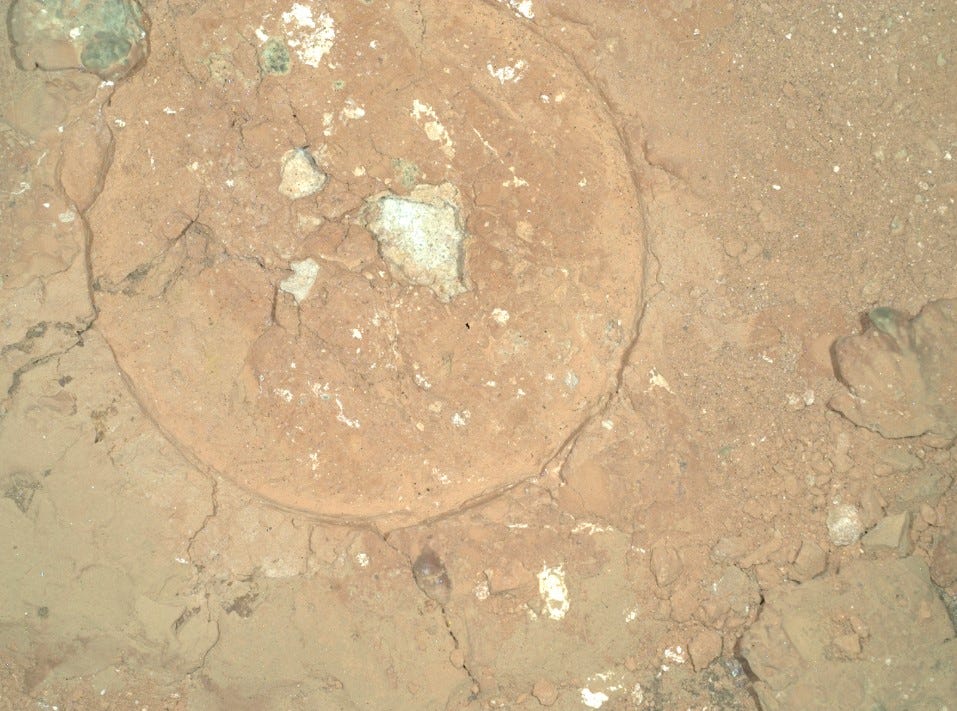
On the Red Planet right now, NASA’s Perseverance rover has made another discovery that could indicate past life: some multicolored patches on rocks that might have been from microbes who “kicked off a chemical reaction that transforms oxidized iron to its reduced (Fe2+) form, resulting in a greenish hue.” This is often caused my microbes on Earth, though it can also form via abiotic “interactions between sulfur and iron.” Conclusion: we need to get human biologists and geologists to Mars asap, where they can do more science in a week than all the rovers on Mars have done so far. (Noah Smith) (SciTechDaily) (NASA)
Robot updates.
They finally gave it hands! Boston Dynamics has given its humanoid robot ATLAS functional hands, allowing it to interact with the world more easily. It’s a human world after all, and the most useful robots in many cases will be humanoid, in order to more easily interact with us and work smoothly in the world we’ve built. (Boston Dynamics)
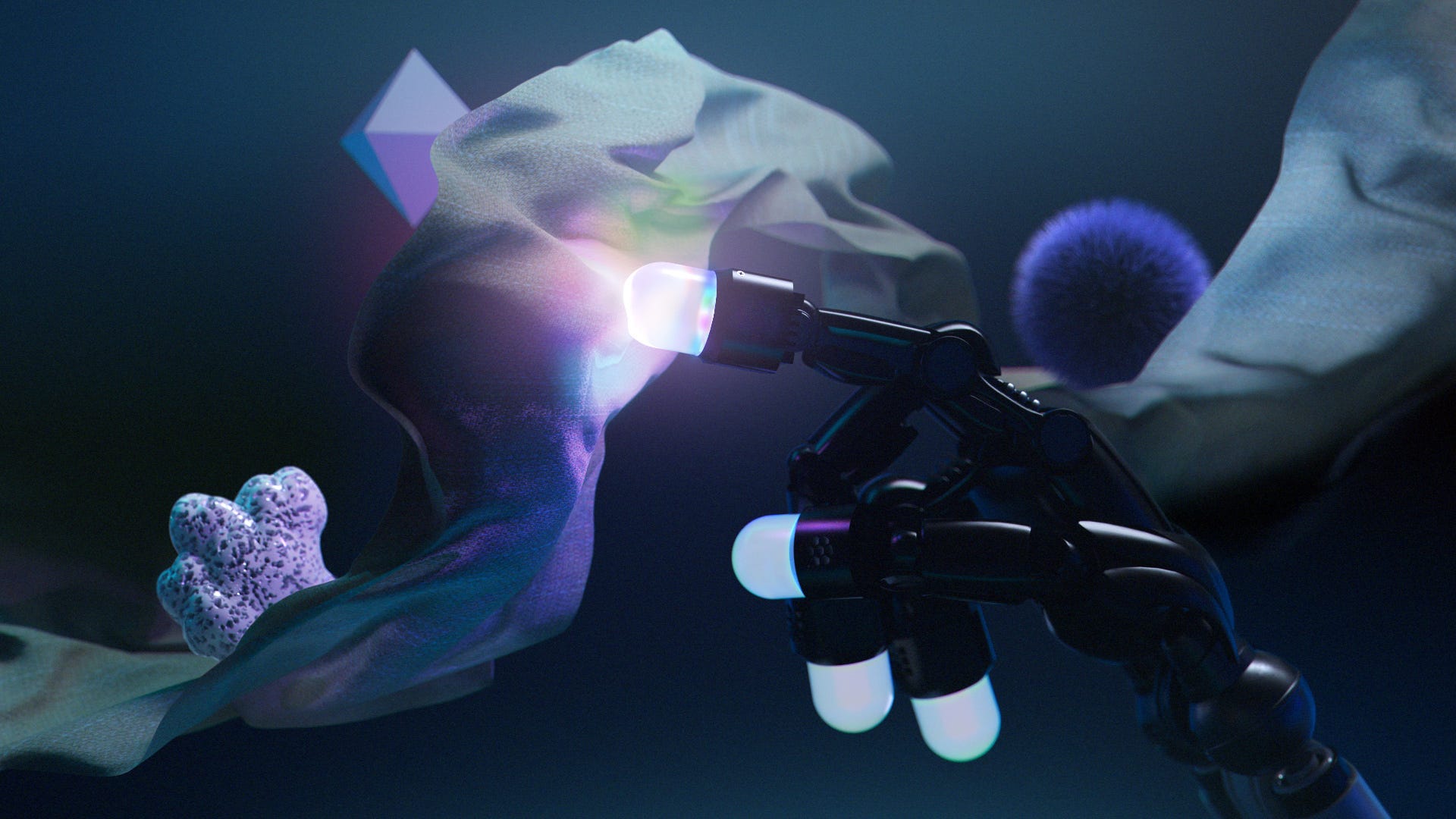
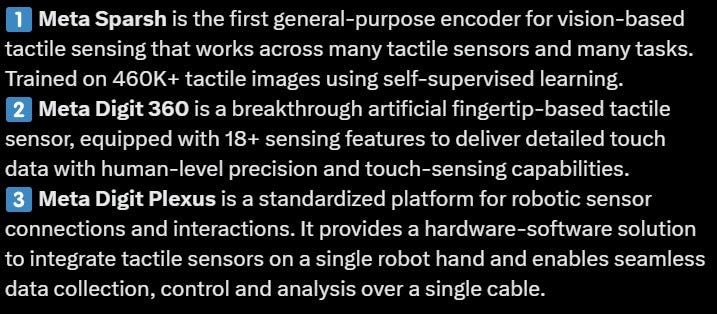
Meta, the parent company of Facebook, has announced new developments in giving robots the perception of touch. They say that these advances will allow breakthroughs “from medical research to supply chain, manufacturing and much more.” They’re all open source by the way, which is awesome. (AI at Meta) (Meta)
When it comes to training robots, some of it can often be done virtually. HOVER, a virtual robot, was trained using a simulation that “accelerates physics by 10,000x faster than real time,” allowing the robots to learn walking and movement in ~50 minutes of real time, which translates to a year of ‘intense training” in a virtual world. (Hover, via Jim Fan) ]
Space
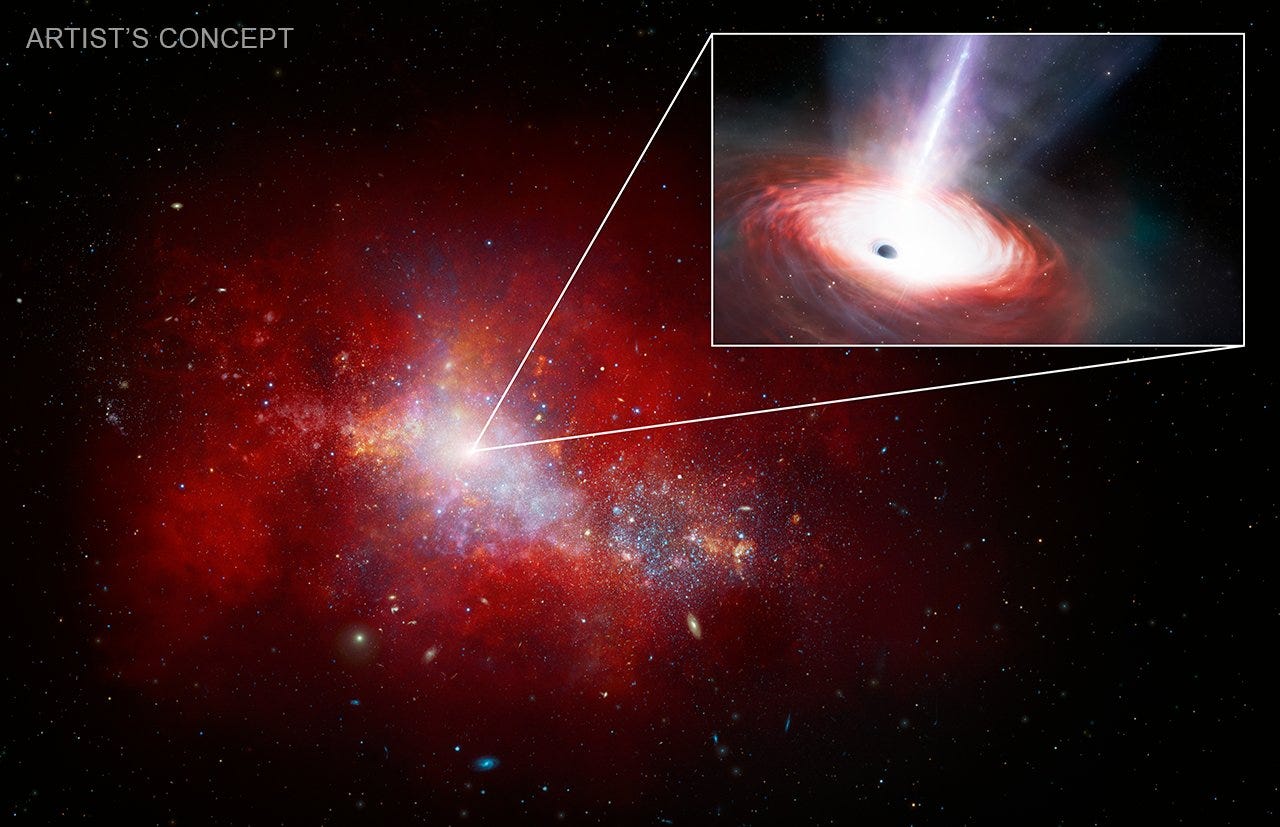
By combining data from the JWST and Chandra X-ray Observatory, astronomers have discovered a black hole nestled in the center of its galaxy, a mere 1.5 billion years after the Big Bang. What’s interesting about it is the black hole (named LID-568) is feeding—pulling in matter—more than 40x faster than was thought physically possible. This rate, called the Eddington limit, is different for each black hole, and relates to “how fast it can absorb matter, such that its inward gravitational force and outward pressure generated from the heat of the compressed, infalling matter remain in balance.” There’s no answer yet, but when there is it could help explain how supermassive black hole appeared so early in the history of the universe. (Chandra X-Ray Observatory)


Vega is a type A star 25 light years away, and about 40 times brighter than our Sun. It has a massive disk of dust surrounding it, almost 100 billion miles in diameter, and until the JWST looked at it everyone assumed it must have large planets circling it as well. But the new view showed a “ridiculously smooth” disk, with no obvious gaps indicating the presence of Jupiter type planets. There is a small gap around 60 AU (astronomical units) out; apparently its size suggests that there are no planets larger than Neptune around the star. (NASA)
Analysis of grains from the asteroid Ryugu, brought back by the Japanese space agency JAXA in 2020, suggest the presence of a weak magnetic field when the grains originally formed. It was already known that a magnetic field was present early on closer to the Sun, but this is the first evidence for it in the outer Solar System. This field “would have been enough to pull together primordial gas and dust to form the outer solar system's asteroids and potentially play a role in giant planet formation.” (Phys.org)
Iceland could be the first country in the world to get electricity from space at a commercial scale. British company Space Solar is partnering with Icelandic companies to build “a space-based solar power plant that can deliver about 30 megawatts of electricity;” enough to power 1,500 – 3,000 homes. The plan is to convert solar power to radio waves, sending them down to a ground station where they will be converted back again into electricity—with the lights hopefully turning on by 2030. If successful, the company intends to expand their system to supply gigawatts of electricity. (IFL Science)
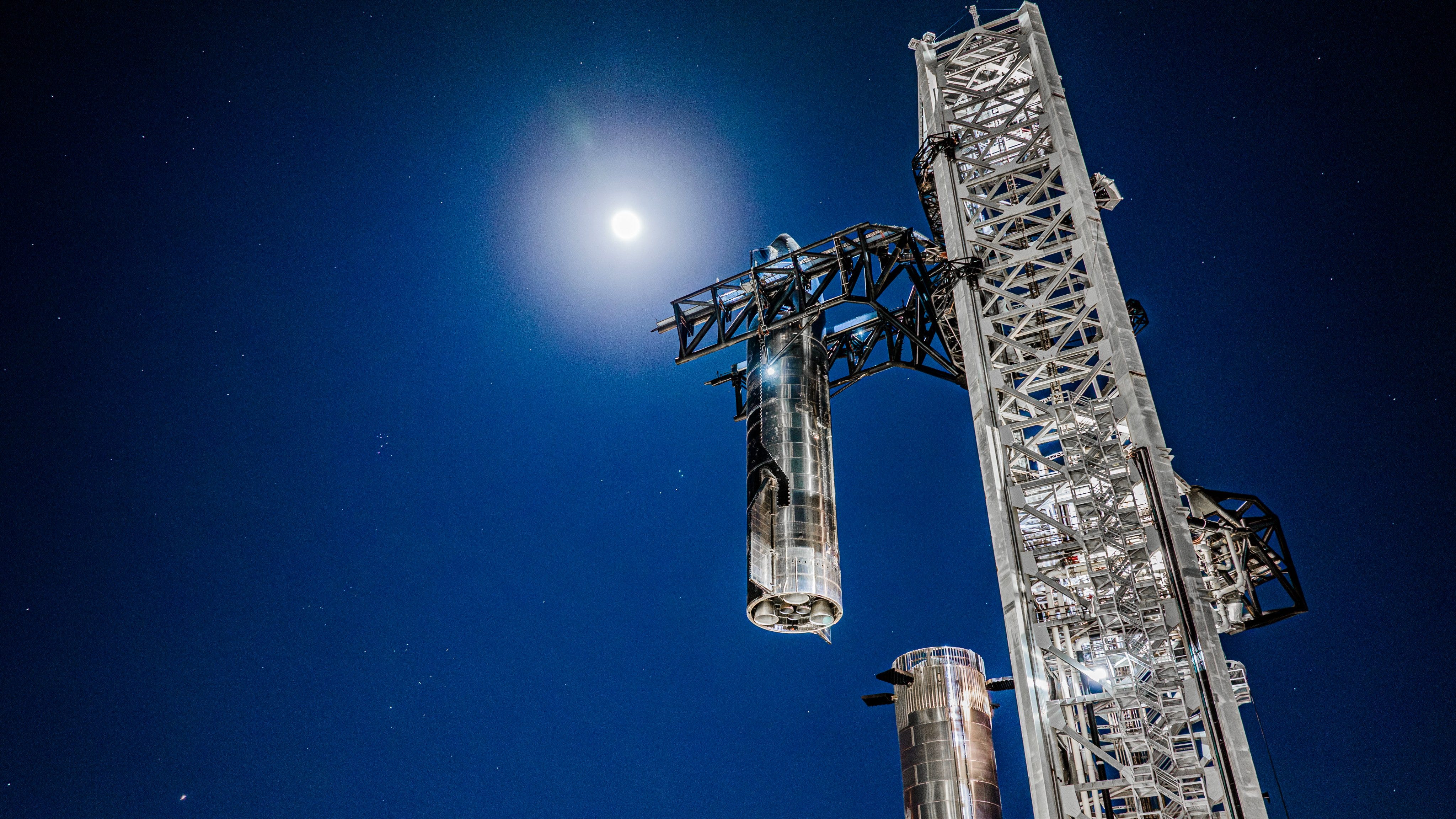
A few SpaceX updates for you: the 6th Starship launch is scheduled for next Tuesday, with the launch window opening at 4pm Central Time. It’s a ~5 week turnaround from the last flight—the cadence is increasing! A recent interview suggests that in-space tests of propellant transfer will likely start next spring and summer. It was also announced that SpaceX will eventually set up ‘Marslink,’ a version of Starlink around Mars to allow communications and internet on the planet, as well as between Earth and Mars. The funny part is NASA commented that SpaceX’s proposed Marslink satellites “exceed requested capability,” and have “extra ability.” (SpaceX) (@Space_Time3) (Sawyer Merritt)
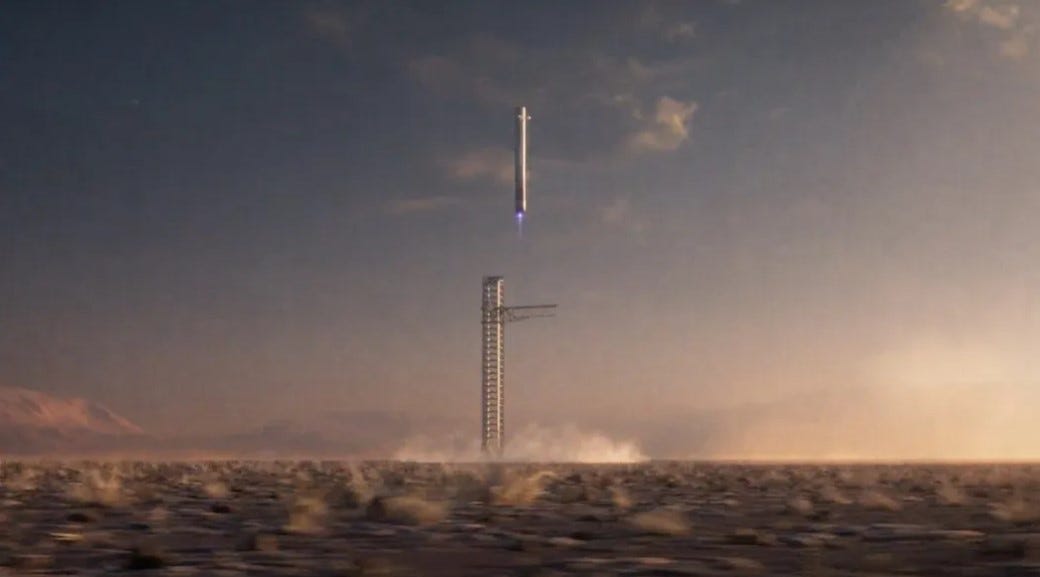
Speaking of SpaceX, a Chinese startup called Cosmoleap has secured funding for its plans to build a reusable medium launch vehicle that will be caught by a launch tower. Now what does this picture remind you of? They do say that imitation is the sincerest form of flattery. The Chinese Space Agency has also rejigged the design of their planned super heavy lift rocket called the Long March 9 to essentially copy Starship in design and size. They plan to fly it for the first time in 2033. (SpaceNews) (Ars Technica)
AstroForge has secured an FCC spectrum license for deep space—defined as “greater than 2 million kilometers from Earth”—the fist company to do so. What does that mean and why is it important? AstroForge wants to mine asteroids, and has plans to send their Odin spacecraft on a survey mission of their chosen asteroid before the end of this year. To do that it needs to be able to “phone home” to transmit data and receive instructions; that’s what the approval is for. I hope this is the fist of many companies to send their craft into deep space, it’s an exciting time for space development! (AstroForge)


The Initiative for Interstellar Studies has as their long term goal the “robotic and human exploration and colonization of nearby stars.” As part of that, they’ve launched Project Hyperion, a design competition for an interstellar generation ship capable of making a 250 year mission from launch to arrival at a new world. The competition is open to anyone, but your team does need at least one architectural designer, an engineer, and a social scientist (psychologist, anthropologist, etc.) in order to compete. (Project Hyperion) (Space.com)
AI, Energy, Engineering, & Physics

The FAA has finally approved flying cars. More specifically, what it approved are “powered-lift” aircraft. Things like the electric vertical take-off and landing (eVTOL) vehicles being developed by numerous private companies “for everything from air taxi services to short-haul cargo transport and even air ambulances.” It’s the first time since the 1940s the FAA has approved a new type of aircraft—back then it was helicopters. Looks like we might just get that Jetsons future after all! (Singularity Hub)
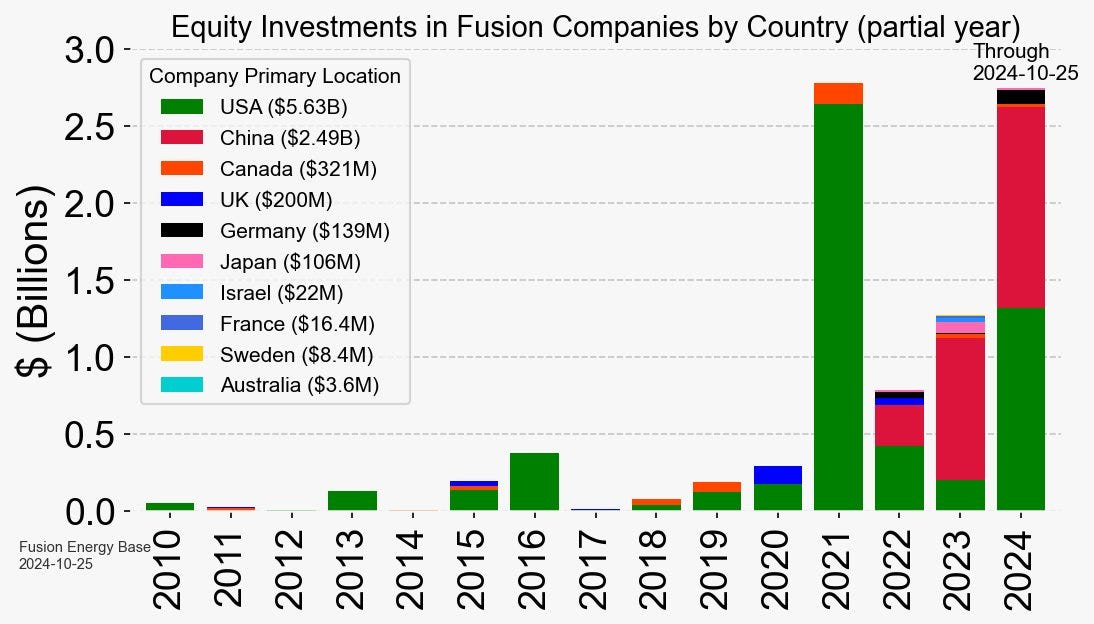
“The Global Fusion Race Is On,” according to former ARPA-E employee and founder of Fusion Energy Base, Sam Wurzel. Right now the U.S. and China are neck and neck in terms of funding to fusion companies in 2024, with China coming out on top last year. The U.S. still leads overall, but China has made it very clear it’s determined to catch up—and if possible, surpass—the United States in commercializing fusion energy. (Fusion Energy Base) (Sam Wurzel)


Infinite Machine just announced a successful $9.3M seed round that will enable them to bring their electric P1 scooter “cyberscooter” to market. The company says this is the foundation of their “broader mission to make the best non-car vehicles on Earth.” (Infinite Machine) (TechCrunch)
Ulysses Ecosystem Engineering has just left stealth, announcing Ulysses: their “autonomous underwater drones for ocean stewardship.” Their plan is to “restore seagrass ecosystems in the US and Austrailia,” which are important marine habitats—speeding up planting by 100x over humans doing it by hand. (@UlyssesEcoEng) (Tech Crunch)
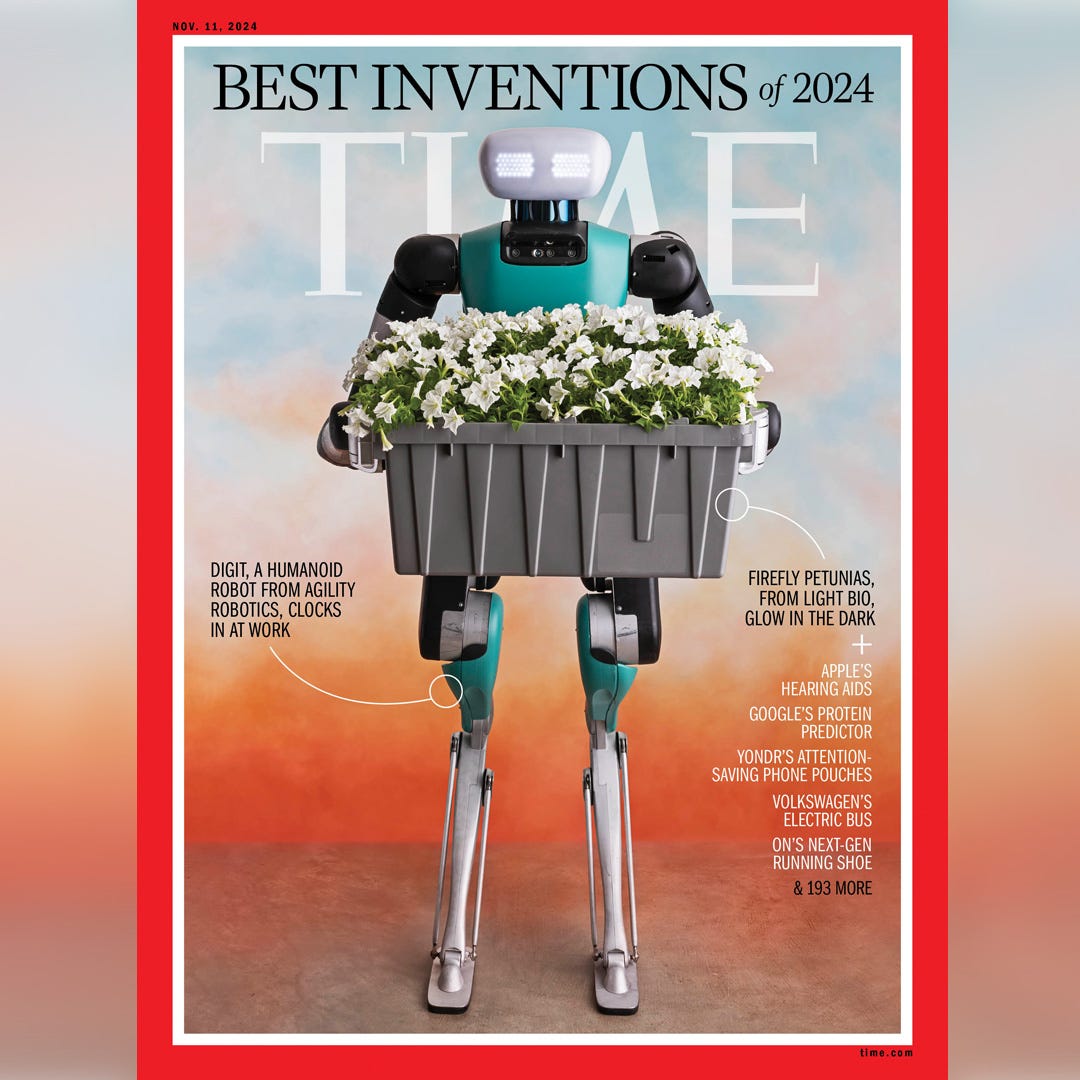
TIME has released their THE BEST INVENTIONS OF 2024 (200 innovations changing how we live) list. Categories and inventions include Consumer Electronics (a transparent TV), Food & Drink (a library of over 7 million small molecules from plants), Experimental (an artificial heart, lab grown cotton, unspoofable navigation), and Medical Care (therapy for spinal cord injuries). Three of NASA’s inventions made it onto the list as well: Their new solar sail, NASA’s Deep Space Optical (laser) Communications tech, and the suit of instruments aboard the recently launched Europa Clipper. (TIME) (NASA)
Medicine
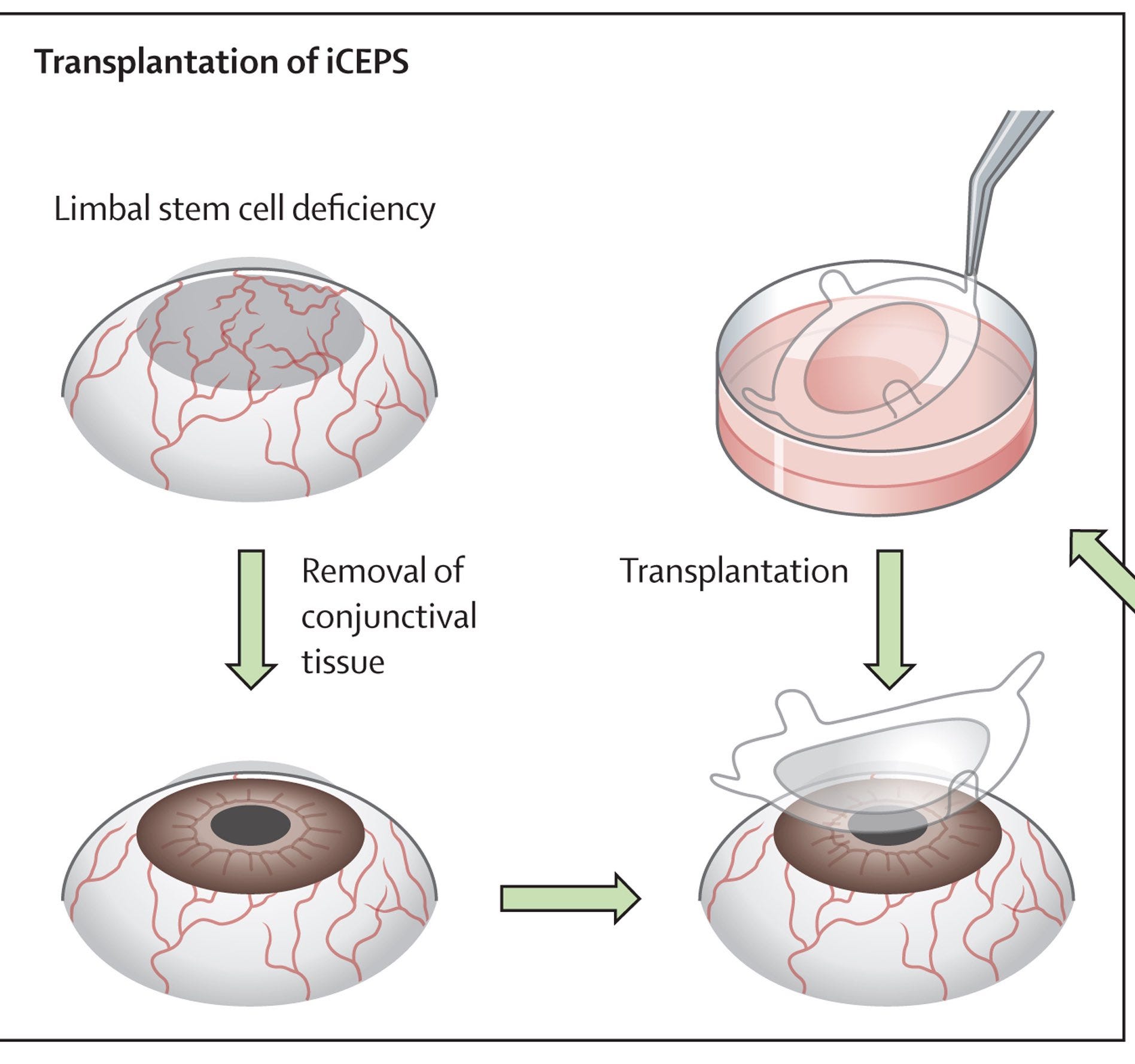
Researchers in Japan just used induced pluripotent stem cells—meaning they were normal cells which were then artificially turned into stem cells—to treat blindness caused by limbal stem-cell deficiency, which “destroys the cornea’s stem cells and leaves people unable to regenerate the corneal surface,” ultimately causing serious visual impairment or blindness. No serious side effects were observed, and the eyesight of all 4 patients has significantly improved one year out from the treatment. (The Lancet, via @IterIntellectus)
Under certain conditions bacteriophages (viruses that specialize in attacking bacteria) “form flower-like structures that are highly efficient in targeting bacteria.” These new structures are both beautiful and potentially useful for detecting and treating bacterial illness. (SciTechDaily)
Ozempic can add another feather to its cap: the drug improved physical functioning while reducing pain “on a par with opioid drugs,” and stiffness for people with knee osteoarthritis. 407 participants took part over 61 sites spread across 11 countries, so the finding seems to be pretty robust. (The New England Journal of Medicine) (Samuel Hume) (@IterIntellectus)
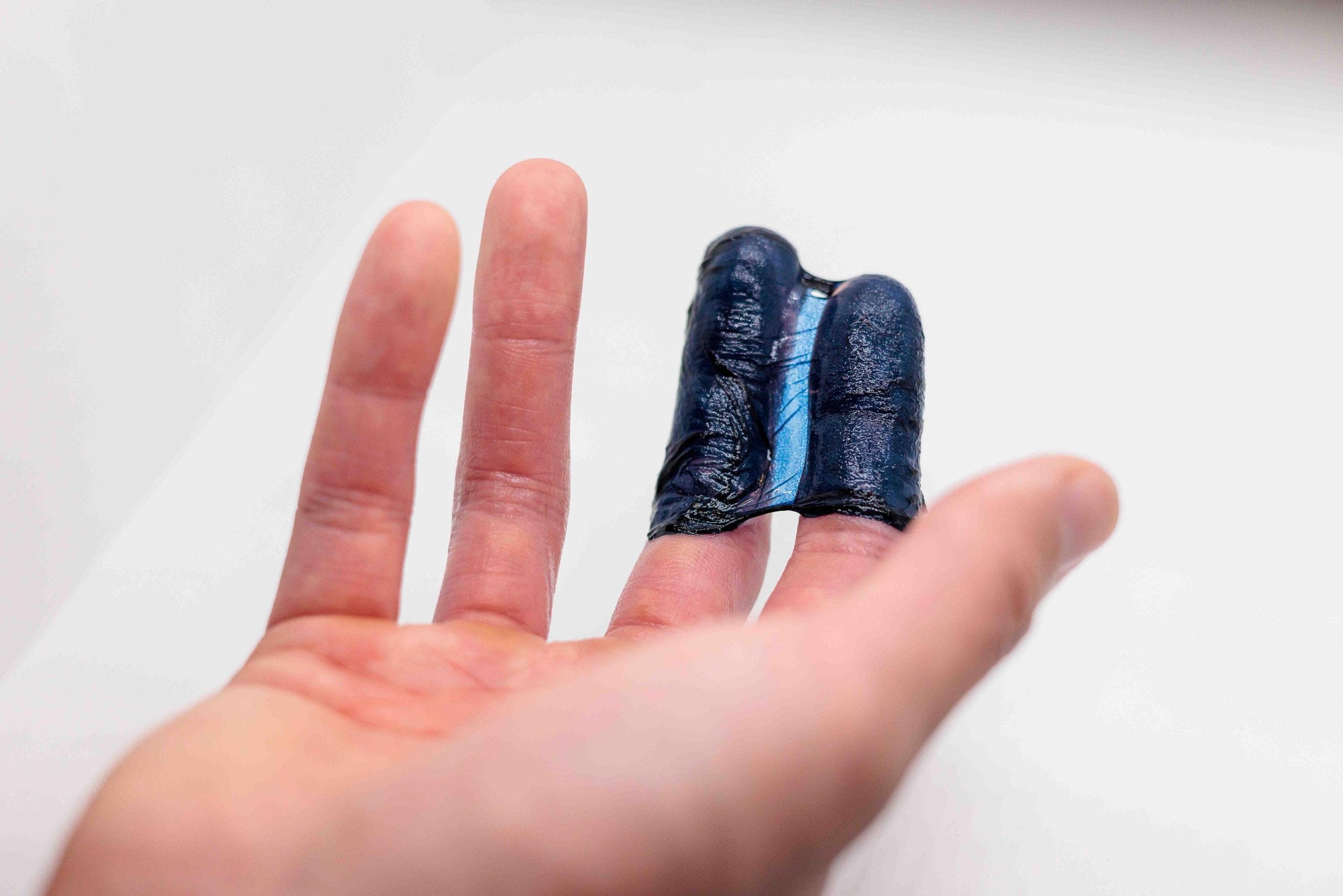
One of the biggest problems with implanted medical devices is that they aren’t very much like the body—hard and ridged in most cases—which often makes long term integration and use difficult. Researchers from the University of Chicago might have a solution in the form of a hydrogel semiconductor, “blending tissue-like properties with high electronic functionality, enhancing medical device integration and effectiveness.” (SciTechDaily)
Past 3D bioprinters have attempted to construct tissue by depositing cells one layer at a time. But in addition to being slow, it can damage cells and tends to set a limit on how complex a structure one can create. A new approach from the University of Melbourne in Australia plans to change that with a “high-speed 3D bioprinter” that uses sound waves to get cells into position, allowing more complex tissues to be printed. It’s about 350x faster than older approaches, opening the door to personalized medical treatments, maybe even printing complete organs. (Interesting Engineering)
A decade long study looking at the human spliceosome, “the most complex and intricate molecular machine inside every cell,” is now complete. The spliceosome takes the messages transcribed from DNA and edits them, “allowing cells to create different versions of a proteins from a single gene.” Most human genes are in fact edited by the spliceosome, allowing our cells to produce about 100,000 different proteins even though we have only around 20,000 genes that code for proteins. Errors in this system can lead to numerous diseases, so understanding it is important for moving medicine forward. Besides that, it’s pretty mind-blowing that we now know the spliceosome consists of “150 different proteins and five small RNA molecules which orchestrate the editing process.” (Phys.org)
Biotech & Agriculture
Heat waves have always been a problem since agriculture began, stressing plants and reducing yields. A Chinese and American group of horticulturalists has discovered that spraying rice plants with a solution of zinc oxide nanoparticles helps them better weather heat waves. Zinc oxide is part of plant metabolism, and has been used as fertilizer by rice farmers before—but this approach allows rice to absorb it more efficiently. Results from the experiments showed that plants sprayed with the solution had 22.1% better yields than plants which weren’t. It also improved yields irrespective of heat waves, suggesting this might be a worthwhile practice to adopt. (Phys.org)
Weird & Wonderful
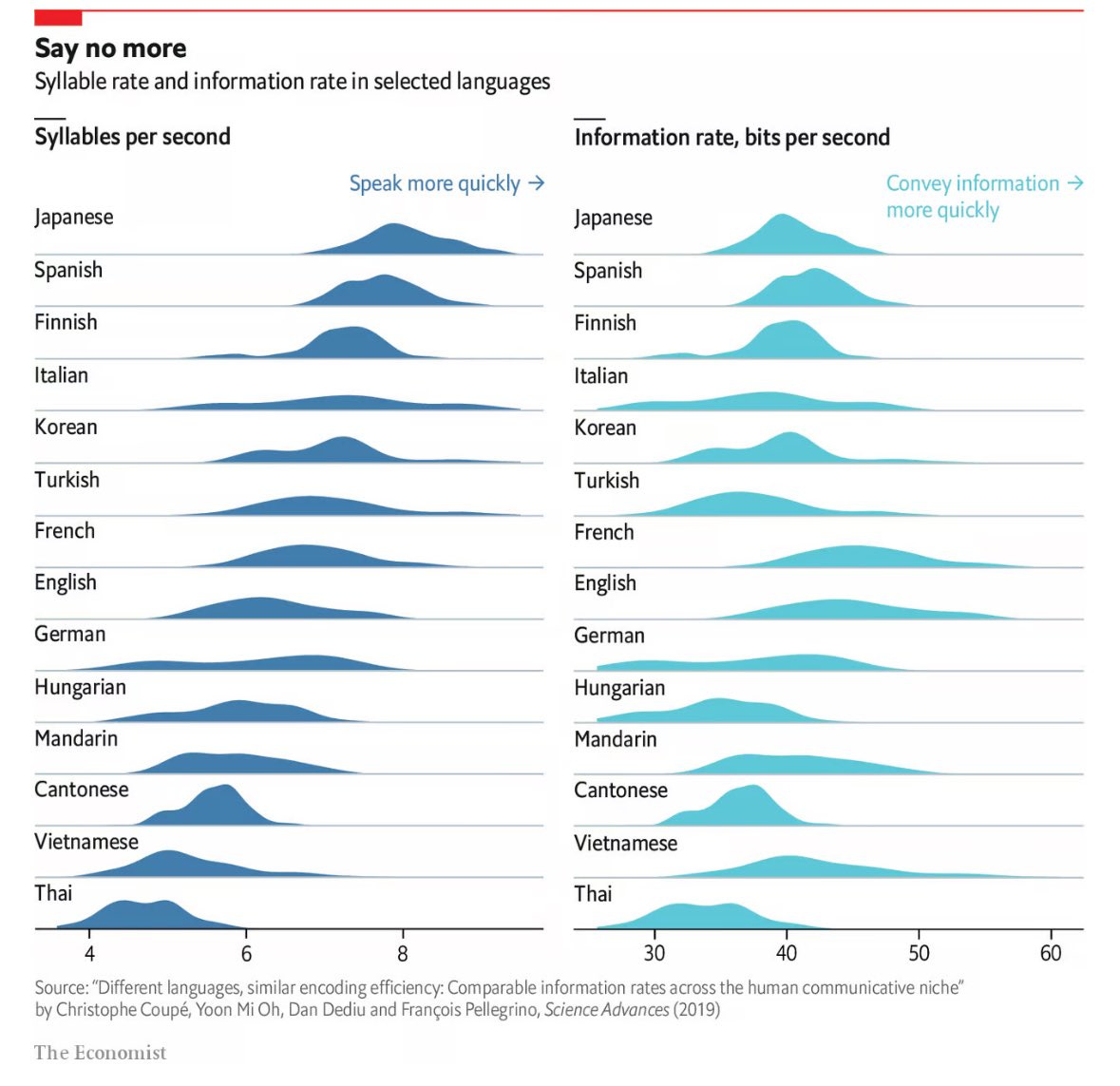
This is actually news from back in 2019, but I just saw it on X and couldn’t help but share it with you all. Turns out that languages which are spoken more quickly have less information density per syllable, as measured by bits of information conveyed per second. The average rate of information conveyed by spoken language was 39 bits/second. As you can see from the chart, there is a bit of variability, but not as much as you might expect. The fastest language surveyed in terms of information conveyed per second (French) only manages to convey around 1.38x more bit per second than the slowest (Thai). Interestingly, the fastest spoken language they looked at in terms of syllables per second (Japanese) was almost exactly on the average in terms of information rate. (@deedydas)
Humans, it seems, can use echolocation too. A ten week class was able to instruct both blind and sighted to echolocate, restructuring their brain and proving that echolocation is a learnable skill. And yes, this went exactly how you’re probably imaging it, people made clicks with their mouth and used them to do things like judge “the size and orientation of objects.” After the ten weeks, “Participants from both groups also showed greater visual cortex activation in response to audible echoes.” (IFL Science)
Photos & Videos
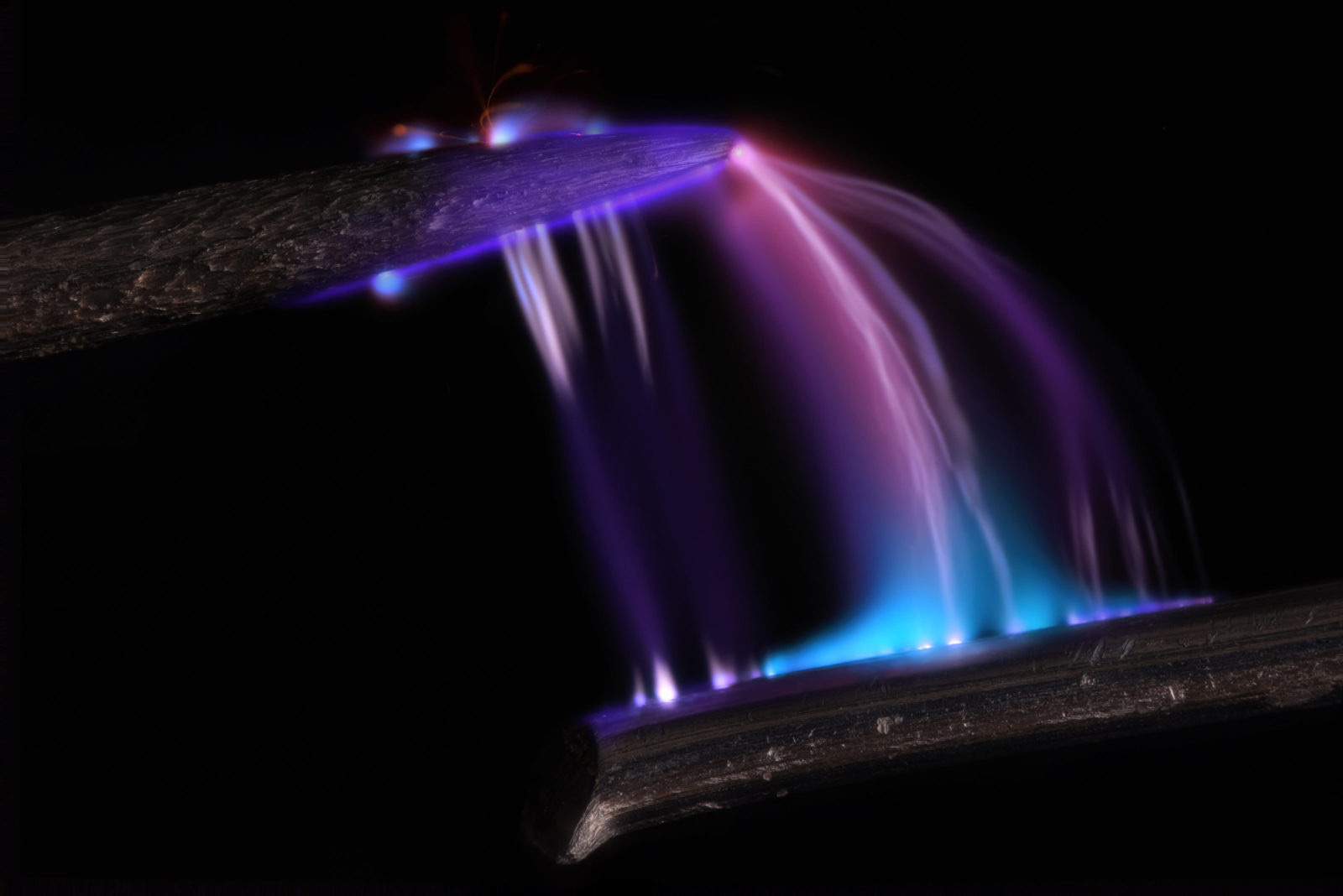
Nikon’s Small World, 2024 Photomicrography Competition has its winners, check out the Top 20 in particular. This one might be my favorite. (Nikon Small World 50)


The Weather Photographer of the Year results are out now too, they’re pretty spectacular. A couple of my favorites here. (Standard Chartered Weather Photographer of the Year)
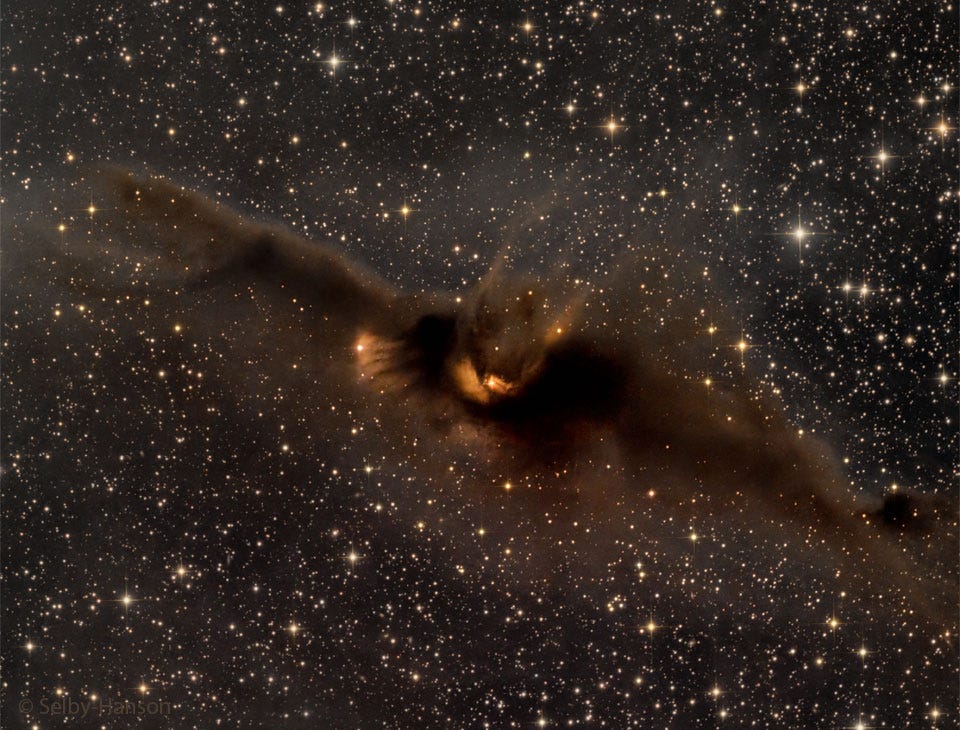
The molecular cloud LDN 43, located about 1400 light years from Earth. That looks like a bat to you all too, right? (Astronomy Picture Of The Day)
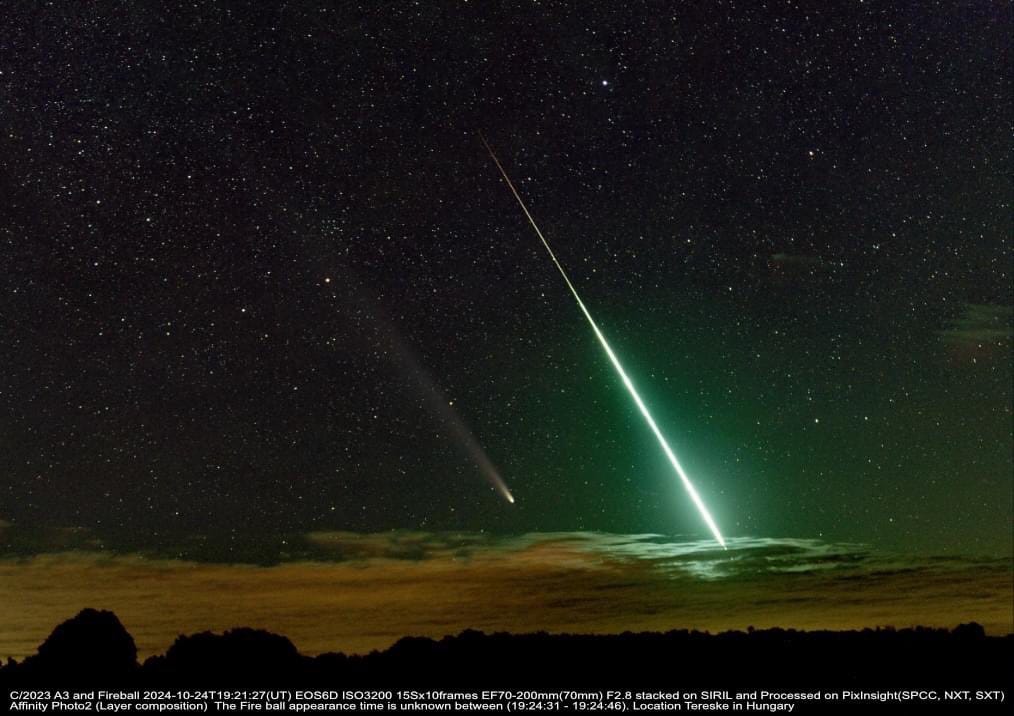
Spectacular greenish fireball in the foreground photobombed a shot of Comet Tsuchinshan-ATLAS in the background. (Yasutaka Saika via Corey S. Powell)

Seems I never get tired of Easter Island, so here’s another beautiful one for you. Seriously, I’d love to see all three corners of the Polynesian Triangle one day. (Josh Dury, via Astronomy Picture Of The Day)
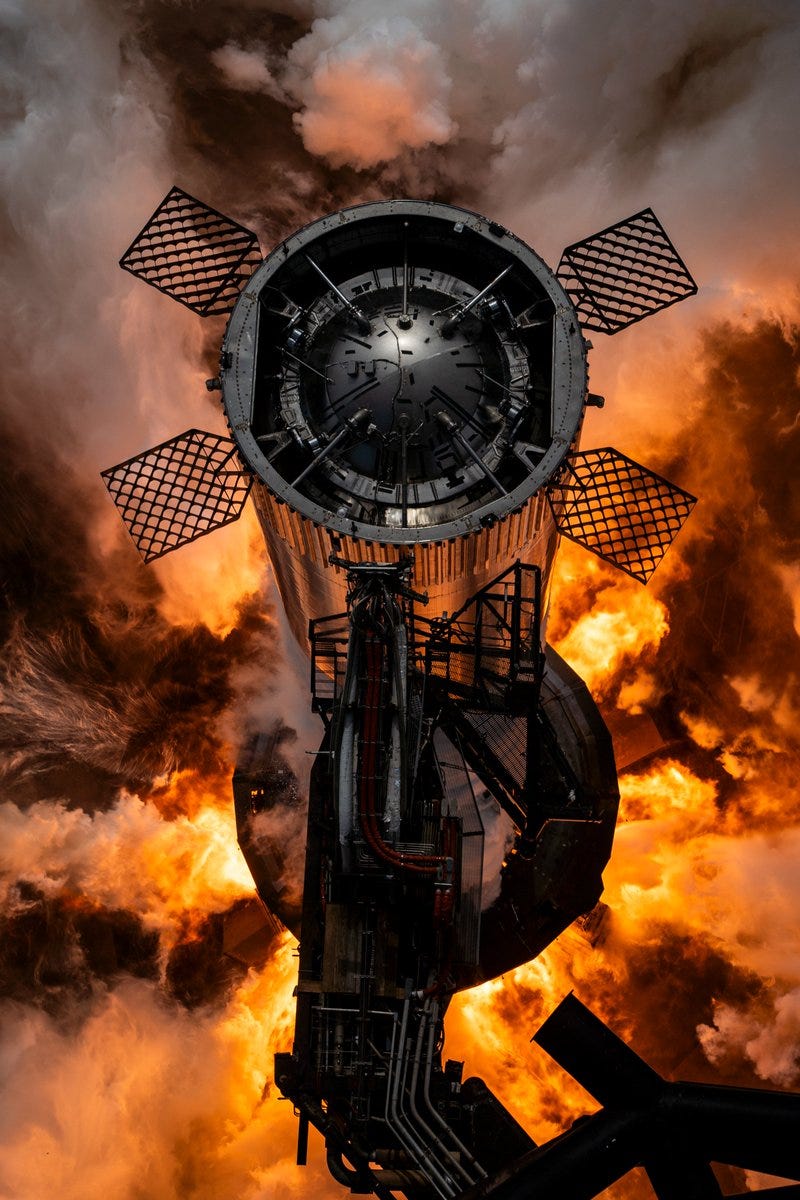
Can’t you just feel Mars getting closer? This is a recent static fire of SpaceX’s Super Heavy Booster in preparation for next Tuesday’s launch. (SpaceX, Dima Zeniuk)


What do these look like to you? The roiling atmosphere at the top of a gas giant perhaps? It’s actually a couple of Chinook sunset photos I took last week.
Recommendations & Reviews

Today I’d like to share with you a previously unpublished essay that I came across by famous author and professor Isaac Asimov, called On Creativity. A friend of his found a copy decades later while clearing out some old files, recognizing “that its contents are as broadly relevant today as when he wrote it. It was published by MIT Technology Review back in 2014, but I’m not sure it’s been given the circulation it deserves. The essay describes not only the creative process and the nature of creative people but also the kind of environment that promotes creativity.” In a nutshell, Asimov tackles the question of how people get new ideas, specifically the “’creation’ of a new scientific principle or the application of an old one.” It’s well worth a read, let me know what you think of it—hope you all enjoy. (MIT Technology Review)
That’s it for today, but Techno-Optimist will be back in your inbox a fortnight from now. Thank you all for reading—and until next time, keep your eyes on the horizon.
-Owen
Great article, as always. Also, I think many of us are quietly optimistic about Elon Musk being involved in government. The US feels like a coiled spring ready to boom.
I like number 18 the best.