

Techno-Optimist #28
Signs of life on K2-18b, Rocket Lab moving up, Mars carbonate mystery partly solved, real life Rock'em Sock'em Robots, we might soon talk to dolphins...and a lot more.


Welcome to the twenty-eighth edition of Techno-Optimist, your destination for all the latest updates and commentary on space, science, technology, medicine, energy, AI, and much more. To the 46 new readers since last time, welcome aboard.
We’ve got a lot to talk about, so let’s dive right in.
"Never in human history have we discovered something useful and then chosen not to use it."
–Persepolis Rising (James S.A. Corey)

K2-18b: Growing Evidence for Extraterrestrial Life. Using the James Webb Space Telescope (JWST), a team led by the University of Cambridge has detected the chemical fingerprints of dimethyl sulfide (DMS) and/or dimethyl disulfide (DMDS) in the atmosphere of exoplanet K2-18b. Molecules that on Earth are only produced by living organisms (phytoplankton). I actually first mentioned K2-18b back in Techno-Optimist #3. At that point there was a possible detection of dimethyl sulfide in the planet’s atmosphere, but the level of certainty was fairly low. Now that the JWST has taken a better look the evidence is much better.
If the detection is confirmed, it would be by far the strongest evidence to date of a biosignature outside the Solar System. The findings haven’t hit the gold standard for scientific discovery yet though—the current signal is at a three-sigma level of statistical significance, meaning there’s about a 0.3% chance it’s a fluke. But the researchers estimate that just 16 to 24 more hours of JWST observation time could push them past the crucial five-sigma threshold, the point at which results are generally considered confirmed in physics and astronomy.
K2-18b orbits in the habitable zone of a red dwarf star 124 light years away, in the constellation Leo. It’s a sub-Neptune planet, around 2.6 times larger than Earth and 8.6 times more massive. Earlier observations already revealed methane and carbon dioxide in its atmosphere—a big deal in themselves when it comes to biosignatures. These findings fit with the idea that K2-18b is a “Hycean” world: an ocean covered planet with a thick, hydrogen rich atmosphere, theoretically capable of supporting life. Not a planet where complex organisms like plants and animals would be likely to survive. So if life is confirmed, it won’t be little green men, but it could definitely be little green algae—which would still be incredibly exciting and historic.
The earlier hints of DMS came from JWST’s near infrared instruments. This time, the team used its MIRI (Mid-Infrared Instrument) to scan a different part of the light spectrum—and again, they found strong evidence of the molecules. The fact that the same signal appears independently using different instruments and wavelengths is what makes this such a compelling result. What’s even more striking is the concentration. On Earth, DMS exists in tiny amounts, usually less than one part per billion by volume. But on K2-18b, it’s estimated to be over 10 parts per million—that’s thousands of times stronger. This lines up with earlier theoretical models that predicted high levels of DMS and DMDS might be present on Hycean worlds.
Still, the researchers are cautious. While the results are in line with life, unknown non biological processes need to be ruled out. As Professor Nikku Madhusudhan, who led the work, put it: “It’s important that we’re deeply skeptical of our own results…that’s how science has to work.” I for one will be waiting for more detailed observations with great anticipation. Can’t say for sure of course, but I’ve got a strong feeling that this is the real deal—this is the first planet outside our Solar System where we find life. (Cambridge University) (Space.com)
(Other) Exoplanet updates. Astronomers have found the first strong evidence of a “polar planet,” an exoplanet orbiting at a 90-degree angle around a pair of brown dwarfs. Discovered using the European Southern Observatory’s Very Large Telescope, the planet—named 2M1510 (AB) b—orbits perpendicular to the plane in which its two host stars orbit each other. While such orbits have been theorized as stable, this is the first confirmed example. This rather lucky find broadens our understanding of how planets can form and orbit in extreme configurations.

A new machine learning algorithm has identified 44 star systems likely to host Earth-sized planets in their habitable zones. The model wasn’t trained on existing exoplanet data (which is sparse and uneven), but on 53,000+ simulated planetary systems. The algorithm learned to detect key patterns, such as the presence of a rocky inner planet paired with an outer gas giant, or the absence of hot Jupiters (which disrupt inner rocky planets). When applied to real systems, it zeroed in on the most promising candidates for Earth-like worlds. Astronomers say the tool will help focus future planet hunting efforts, and provide targets for upcoming exoplanet finding missions.

New observations from NASA’s James Webb Space Telescope have upended previous ideas about a star that was believed to have engulfed a planet. Rather than swelling into a red giant and consuming the planet in dramatic fashion, the star appears to have remained relatively stable while the planet’s orbit slowly decayed over time, spiraling inward until it was finally swallowed. The star in question is located 12,000 light-years away, was first flagged in 2020 as a bright optical flash, but infrared data from the NEOWISE telescope had already shown it brightening a year earlier. Researchers originally thought the star was evolving into a red giant, but new data from Webb revealed that the star hadn’t actually expanded. Instead, the Jupiter-like planet orbiting it gradually drew closer until it grazed the star’s atmosphere and eventually plunged in. The process released gas and dust, forming a circumstellar disk (yes, the star now has rings). (ESO via Corey S. Powell, 2M1510 (AB) b) (Space.com, AI for finding habitable zone planets) (NASA Webb Telescope, planet destroyed)


Rocket Lab. Lots of news from Rocket Lab recently. First off, the company has been selected for “two multi-billion dollar government development programs for the United States and the United Kingdom.” The American one is broad in scope and allows the Air Force to “quicky procure services and technologies across various domains.” Across the pond, Rocket Lab will be helping the UK develop and test advanced hypersonic capabilities. To clarify, this means the company is eligible to bid for these contracts, not that it’s won any yet.
Another big announcement, Rocket Lab just introduced STARRAY, it’s new design for modular solar arrays. STARRAY is a “pre-engineered solution, providing customizable solar array solutions to meet the diverse power needs of satellites operating in any orbital condition.” The largest configuration can provide over 1.8 kW of power to satellites in either LEO or geosynchronous orbits. This standardized design is a big step towards making space cheaper. Instead of having to design and integrate custom solar panels for each new mission, a company can just look at their power requirements and pick the amount and configuration they need.
Lastly, the company has filed for a launch permit for their Neutron Satellite Network—with the launch coming as soon as this September. While there are no other details right now, it could mean the first flight of their bigger and better Neutron Rocket could be this fall. It also suggests that Rocket Lab could be starting in on their own satellite constellation, something they’d previously hinted at. (Rocket Lab – contracts) (Rocket Lab – STARRAY) (Lukas C.H.)


Brain-Computer Interfaces (BCI) are progressing in leaps and bounds. Researchers have developed a new type of BCI that works even during intense movement—by embedding thin sensors between hair strands. These motion resistant, high conductivity sensors capture brain signals for up to 12 hours with low impedance, allowing for continuous, accurate communication. The system even supports hands free AR video calls using brain signals alone. This breakthrough brings BCIs a step closer to practical, everyday use—merging physical and digital interaction without bulky gear, brain implants, or constant recalibration.
Elsewhere, Precision Neuroscience has received FDA clearance for its Layer 7 cortical interface, a “minimally invasive” BCI designed to read and stimulate brain activity. The device has 1,024 electrodes and can be implanted through a tiny incision and used for up to 30 days. It's already been tested in 37 patients and will now be available for clinical use in brain mapping during surgeries. This is the first FDA green light for a wireless BCI platform—and a major milestone for Precision.
Swiss scientists have constructed a soft, flexible auditory brainstem implant (ABI) that could restore hearing for people who can’t use cochlear implants. Traditional ABIs are rigid and often cause side effects like facial twitching or dizziness. This new design conforms to the brainstem’s curves, improving contact and reducing unwanted stimulation. In macaque tests, the animals responded to the implant's signals almost like they were natural sounds—without signs of discomfort. This is a promising step toward more precise, side effect free hearing restoration for patients with severe cochlear nerve damage. (PNAS via @IterIntellectus – wearable BCI) (Fierce Biotech – Precision Neuroscience) (SciTechDaily – hearing)
Fusion and Fission News. Fusion first. Colombia University department of Engineering has launched the Columbia Fusion Research Center, which “aims to accelerate the development of fusion energy science and technology to provide a sustainable and scalable energy source for the benefit of society.” They’ll be working extensively with private sector fusion companies, and already have a track record of success with Commonwealth Fusion Systems. It will also support early career researchers and work to get K-12 students interested in fusion and engineering.
That’s not the only fusion R&D hub going up either, with Seattle fusion company Avalanche Energy planning to break ground on a new facility for testing fusion tech in Eastern Washington later this summer. The center will is called FusionWERX, and will be a “public-private partnership offering shared resources to universities, companies, and government labs in an effort to support fusion power producers and the sector’s supply chain.” It also intends to become expert at handling tritium, a mildly radioactive isotope of hydrogen used in the most common fusion fuel mix (deuterium – tritium). In other news, the company is also prepping for a $100M raise to help fund this and the development of their compact fusion power plant.

A couple good article on fusion companies in TechCrunch recently. The first was on Hexium, a company that just exited stealth mode, and plans to create fusion fuel that other companies will use to run their power plants. Here’s their plan:
Hexium tunes its lasers to interact with lithium-6’s wave function alone. ‘It’ll just blow right by a lithium-7 atom.’ To separate lithium-6 from lithium-7, the company will shine its lasers into vaporized clouds of the metal. When the laser hits a lithium-6 atom, it’ll become ionized. The ionized atom will then be drawn to an electrically charged plate where it will condense into a liquid and run down into a trough, like beads of water on the outside of an icy glass. Hexium can then package the lithium-6 and sell it to fusion companies, which will use the metal to both breed tritium fuel and protect their pilot and commercial reactors from harmful radiation. As for the remaining lithium-7? It’ll get sold to operators of conventional nuclear reactors, which use that isotope as a protective additive in cooling water.
I wonder if this low powered laser tech could be used to separate out deuterium from regular hydrogen for CANDU type fission reactors that use heavy water? Possible business idea.

Pacific Fusion has released its plans for building a fusion power plant that it says will “let us get 100x the gain of what the [National Ignition Facility] can do at about one-tenth the cost.” The company is using a similar approach similar to what was done at NIF, except that instead of lasers, they’ll use an intense pulse of electricity, which will generate a magnetic field to “cause a shell encasing the fuel to compress in about 100 nanoseconds.”
TAE Technologies has just published a major milestone in its quest for commercial fusion power by developing a simplified, more efficient method to create and stabilize plasma using only neutral beam injection. This breakthrough dramatically reduces the size, complexity, and cost of TAE's fusion devices by up to 50%. The result shows that TAE's machine “Norm” can generate and sustain plasma without the complex startup systems used previously. This streamlining not only enhances performance but also paves the way for their next reactor, Copernicus, expected to demonstrate net energy by decade’s end.
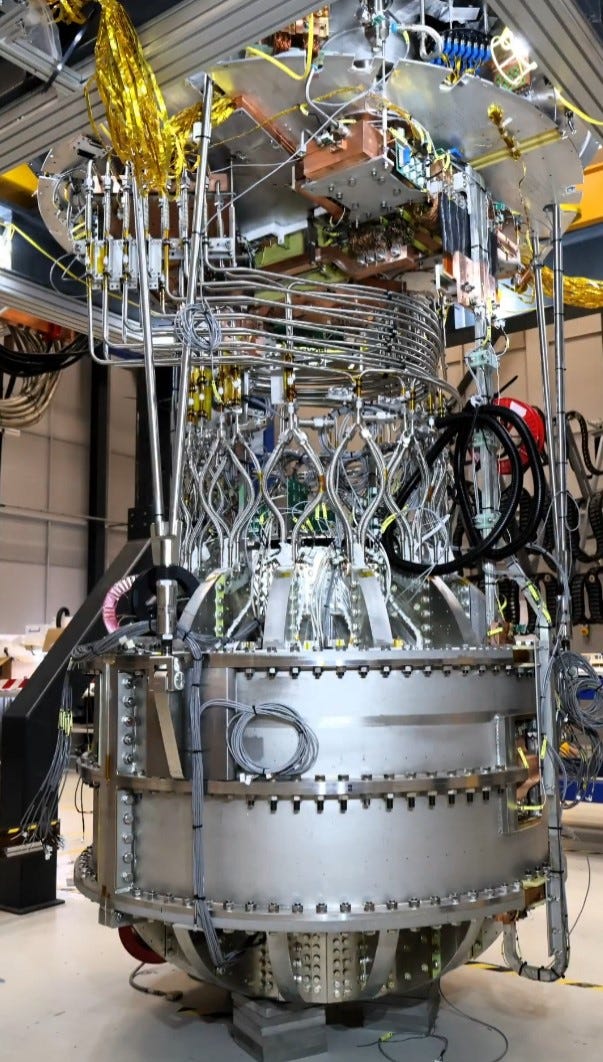
Across the pond, Tokamak Energy is almost finished their Demo4 magnet system that they’ll use for making progress towards a fully functional fusion machine. Testing will start soon.
Lastly, government and academic support for fusion continues to pick up. The group Clean Air Task Force recently published a report saying that “Fusion energy can make the US energy surplus permanent.” I agree. We can, and we must. Over in Germany the new government is looking to ramp up support. There are currently 4 private fusion companies in Germany, and the country is aiming to be the first to commercialize the technology. America (or maybe China) is going to win, but Germany should absolutely be pushing forward to develop and commercialize fusion technologies. That way they can use and export it themselves, instead of being dependant on other countries. State governments are turning to fusion too, with researchers and lawmakers in Wisconsin hoping to turn it into the “Silicon Valley” of nuclear (fusion) energy.
(Columbia University, Bob Mumgaard – Columbia) (GeekWire, Axios Pro – Avalanche Energy) (TechCrunch – Hexium) (TechCrunch, Pacific Fusion) (TAE Technologies) (Tokamak Energy) (Clean Air Task Force, CFS Energy) (Fusion Industry Association – Germany) (Milwaukee Journal Sentinel –Wisconsin nuclear ‘Silicon Valley’)

On to fission. Alberta could be going for nuclear power in a big way, with private company Energy Alberta submitting a proposal for their ‘Peace River Nuclear Power Project.’ The site would be located in the Peace River area of Northern Alberta, and would house up to 4 of the new MONARK reactors—an upgrade to the existing CANDU design being worked on now. Fully functional, the facility would produce 4.8GW of electricity, with a planned life of at least 70 years. In my opinion, this is a great idea, and I hope it makes rapid progress.
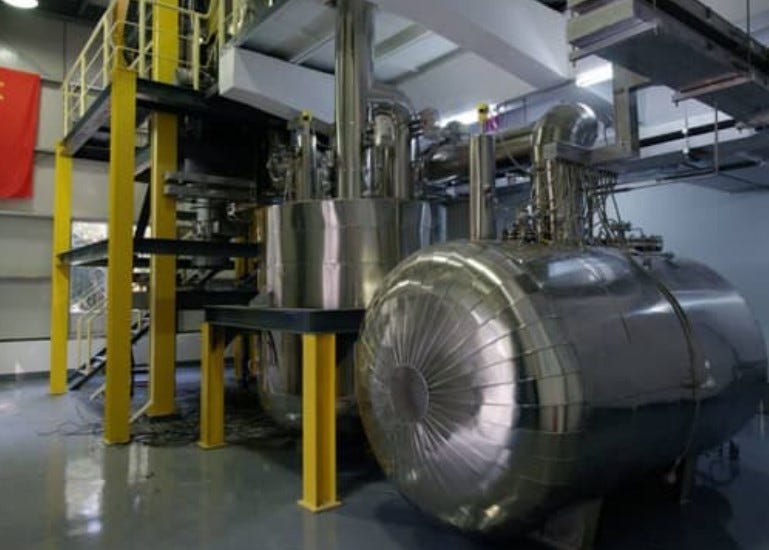
China has successfully started up and then loaded fuel into their new thorium molten salt reactor while it remained in operation—a world first and a major leap in nuclear energy innovation. The reactor is located in the Gobi Desert, and generates 2 megawatts of thermal power using molten salt to circulate thorium, a more abundant alternative to uranium. The technology was based on declassified U.S. research from the 1960s, and as chief scientist Xu Hongjie said, “The US left its research publicly available, waiting for the right successor. We were that successor…We mastered every technique in the literature – then pushed further.” He also commented that “Rabbits sometimes make mistakes or grow lazy. That’s when the tortoise seizes its chance.” Come on America, don’t be a lazy rabbit. China is already scaling up, with a 10-megawatt thorium plant expected by 2030, signaling a potential shift in the global energy landscape.

All isn’t lost, the Palisades nuclear plant over in Michigan will restart sometime this year, the first time a fully shuttered plant has done so in America. Once it’s up and running, that will serve as a great template for other sites in the U.S. and elsewhere in the world.

The US Department of Energy will supply specialized uranium to TRISO-X’s fuel fabrication plant under construction in Oak Ridge, Tennessee—helping fill a key gap in the U.S. advanced nuclear fuel supply chain. TRISO-X is a subsidiary of X-energy (which is backed by Amazon), and will use the uranium to produce TRISO fuel for small modular reactors, starting up operations in 2027. [Sidebar, TRISO fuel stands for tri-structural isotropic fuel. ‘Each particle of TRISO fuel, around the size of a poppy seed, has its own containment through layers of carbon, oxygen and uranium. Companies load the particles into different fabrications, like pebbles, pellets or rods. The fuel "cannot melt" in a reactor and is the "most robust nuclear fuel on earth," according to the Department of Energy’].
Another American company is working on nuclear fuel enrichment: General Matter will be the only company enriching uranium for the US. Nobody is doing it, so the company was created by CEO Scott Nolan to fill the gap. They plan to start shipping by the end of the decade. (WNN, Energy Alberta) (Interesting Engineering – China thorium reactor) (@ParisOrtisWines – Palisades power plant) (Knox News – X Energy) (General Matter, Scott Nolan)
Mini AI roundup. Google released Firebase Studio, a way to build apps without any knowledge of coding. It’s free, you can log in here with your Google account. Google also released Veo 2, a video generator capable of creating 8 second videos. They’re pretty cool actually, and it’s a preview to the not so distant future where you’ll be able to create full length movies with AI.
Grok had an important upgrade, and “can now generate documents, code, reports, and browser games.”
OpenAI just launched three new models: o3, o4-mini (their “smartest and most capable models to date”), and GPT-4.1, which is apparently great at coding. If their naming system confuses you, you’re not alone. They’re worse than astronomers. If any of my readers work for Sam Altman, please ask him to do something about it.
ChatGPT also got another upgrade, it’s now able to “reference all your past conversations.” This may be good or bad depending on if you’re concerned about privacy, or appreciate ChatGPT will not be more useful. (Alex Finn – Google Firebase Studio)
(Google DeepMind – Veo 2) (Grok) (OpenAI – o3o4) (OpenAI, GPT-4.1) (Sam Altman – ChatGPT upgrade)
Space

NASA’s Curiosity rover just found something that helps explain what happened to Mars’ ancient atmosphere. It drilled into rock layers in Gale Crater and turned up siderite—an iron carbonate that earlier missions and satellites hadn’t detected. Scientists always expected to find more carbonates on Mars if it once had a thick, CO₂ heavy atmosphere. This new find suggests they were there all along, just hidden beneath the surface or masked by other minerals. (Curiosity Rover)
Trump’s pick to lead NASA, billionaire astronaut Jared Isaacman, told the Senate he’s aiming straight for Mars. “We will prioritize sending American astronauts to Mars,” he said in his confirmation hearing. Isaacman said he also backs the Artemis program, but suggested it’s not the long term goal for American spaceflight. The current plan is getting astronauts around the moon by 2026, then land them in 2027 using rockets and landers still in development. China is aiming for a moon landing by 2030 (possibly 2029), and some U.S. lawmakers, like Sen. Ted Cruz, warned against changing goalposts: “An extreme shift in priorities... would almost certainly mean a red moon.” Isaacman says NASA can do both—return to the moon and aim for Mars—without handing over the lunar frontier to China. (Space.com)

It’s no secret that China has big plans in space. The Middle Kingdom’s plans to dominate the exploration—and eventual resources and settlement of—include a Mars sample mission to launch in 2028, exploring Jupiter and it’s moon Callisto, a Venus probe, Mars research station, and a “nuclear-powered mission to Neptune.” Not a great time for NASA to lose funding for planetary science missions. Now instead of 2030, China is targeting a manned Moon landing a year earlier in 2029. It won’t take much for NASA’s target of returning to the Moon in 2027 to slip—China could easily get there first at this rate. Likely in service of this, China has successfully established the “world's first three-satellite constellation in the Earth-moon region of space” to improve communication for future missions. (Space News via Corey S. Powell) (A. Pettit) (Global Times CN via John Gedmark)
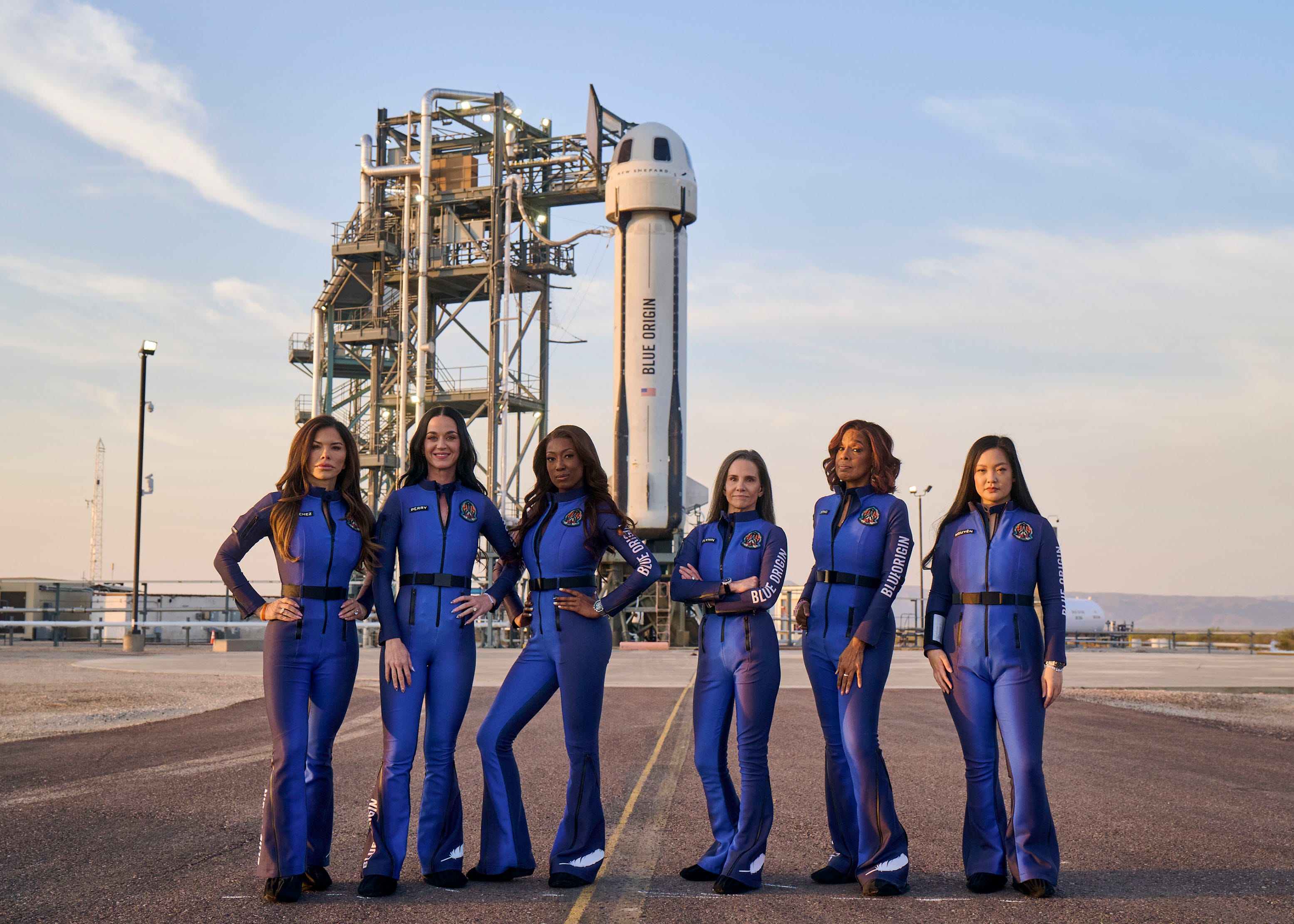
On April 14th Blue Origin completed their 11th human spaceflight mission, bringing the total to 58 people flown to space aboard its New Shepard rockets. Nothing unusual you’d think, just another short tourist hop up above the Karman line into space for a few minutes of weightlessness and an out of this world view. This time though, the passengers (there are no crew on these flights) were all women—the first time that’s happened since cosmonaut Valentina Tereshkova make a solo flight in 1963. The odd thing has been the vitriol directed at the women since they got back, criticizing everything from space tourism to (I kid you not) their hair looking “too nice” in zero-g. Jeff Bezos, who’s rocket it is, sent his fiancé and her girlfriends on a nice trip. Glad the gals enjoyed themselves, and made it into a historic flight to boot. Why all the hate? I suspect a fair bit of it is just plain old jealousy. (Blue Origin 1) (Blue Origin 2) (Peter Hague 1 & 2)

NASA is building the first quantum gravity sensor for space—a device that uses ultra-cold atoms to detect tiny changes in Earth’s gravity from orbit. Called the Quantum Gravity Gradiometer Pathfinder, it works by comparing how two clouds of rubidium atoms fall in microgravity. Any difference in acceleration reveals a gravitational anomaly, which could be things like an underground aquifer, oil field, or mineral deposit. Because the atoms behave like waves when cooled near absolute zero, the sensor can make these measurements with extreme precision over long periods. The instrument is smaller and lighter than traditional gravity sensors, and could be up to 10 times more sensitive, allowing for smaller anomalies to be found. It’s scheduled to launch later this decade as a technology testbed, with future uses in both Earth science and planetary exploration. (SciTechDaily)

A team from Japan’s Nagoya University studied the motion of about 7,000 massive stars in the Small Magellanic Cloud (SMC), a satellite galaxy to our Milky Way. Their findings suggest that the Large Magellanic Cloud (LMC) is gravitationally tearing its smaller neighbor apart, with movement of stars in the SMC suggest significant disruption by the LMC’s gravity. (Nagoya University via Corey S. Powell)
Astronomers may have uncovered a hidden population of dusty galaxies quietly flooding the universe with far-infrared light. Using archived data from Europe’s Herschel Space Observatory, a team stacked 141 “dark field” images—originally taken just to calibrate one of Herschel’s instruments—and identified 1,848 faint sources. These likely aren’t massive galaxies, but smaller ones in early, intense phases of star formation, buried in dust. If these galaxies exist all over the sky, they could account for much of the hitherto unaccounted for far-infrared background glow of the universe. Further observations are planned to try and confirm the findings. (Space.com)
AI, Energy, Engineering, & Physics

Rock’em Sock’em Robots. It looks like once again science fiction (do toys count?) accurately predicted the future. There’s two versions of real life robot battles coming soon. The first is from robot maker Unitree: the plan is to start “livestreaming robot combat in about a month.” The second is from REK, which stands for Robot Embodied Kombat—where robots piloted by humans battle each other. The plan is for fights to start up later this year. I don’t know about you, but I’m looking forward to seeing some robots knock each other’s heads off. (The Humanoid Hub) (Unitree) (CIX 1) (CIX 2)
American company Zipline is launching its drone delivery service in Dallas, marking the start of a broader U.S. rollout by year’s end. These aren’t hobby drones—they’re FAA cleared, automated aircraft that fly beyond visual line of sight and deliver small packages with high precision via tether drops. The company has two aircraft types that handle different jobs. Their P2 can transition between forward flight and hovering, then lower a drone to gently release a package. The P1 is fixed wing aircraft that parachute drops its cargo. Zipline actually started operations in Rwanda in 2016, mostly delivering medical supplies, and now it’s setting its sights on U.S. retail and healthcare. Walmart is its first big partner here, with more expected. (Ars Technica) (Keenan Wyrobek)


Some chips news for you. Taiwanese chip maker TSMC has unveiled the world’s most advanced microchip. Measuring only 2nm, mass production is set for later this year, with promised boosts of up to 15% in speed or a 30% cut in power use compared to the current 3nm standard. This matters because smaller, denser chips mean faster devices with longer battery life—key for everything from smartphones to data centers to AI systems.
Google just unveiled Ironwood, its newest and most powerful chip built specifically for running AI. Slated for release later this year, Ironwood comes in two sizes: a 256-chip cluster and a massive 9,216-chip setup. Each chip delivers up to 4,614 TFLOPs of compute, with 192GB of RAM and bandwidth close to 7.4 Tbps. Google says Ironwood will slot into its AI Hypercomputer architecture and help run large-scale AI apps with more speed and less power. (Science Alert – TSMC microchip) (TechCrunch – Ironwood)
U.S. anti-drone maker Epirus has unveiled a weapons platform: the Leonidas H2O, a new microwave weapon that can disable boat motors, drones, and unmanned surface vehicles with a single energy blast. In recent U.S. Navy testing, Leonidas H2O successfully shut down multiple vessel motors at ‘operational ranges,’ despite being run at only half its potential output. The system is scalable, and is built to counter swarms of electronic threats. It can zap multiple drones or vessels simultaneously and keep doing it over extended engagements. (Interesting Engineering)
Chinese researchers have made stainless steel up to 10,000 times more resistant to metal fatigue. The team introduced a new internal structure into a standard type of stainless steel, creating tiny “dislocation cells” just nanometers wide. These act like internal springs, absorbing stress evenly and preventing the kind of microscopic damage that usually leads to failure under repeated pressure. The result was a 2.6x boost in yield strength (the max stress that can be applied before permanent shape changes occur), and a huge reduction in strain from repeated stress. This breakthrough could extend the lifespan of parts used in extreme environments—including engine components, pipelines, or spacecraft. (Interesting Engineering)
ElevenLabs just released the ability for anyone to make a “Professional Voice Clone of your own voice allows you to produce high-quality voiceovers that sound exactly like you.” Just upload a recording of your voice, or something like an interview or podcast you were a part of, to train it, and there you go. It’ll save endless time for anyone who wants to have their published writing read by themselves, authors who maybe want to do an audiobook, or even people who may be facing health issues that could affect their voice. (ElevenLabs)
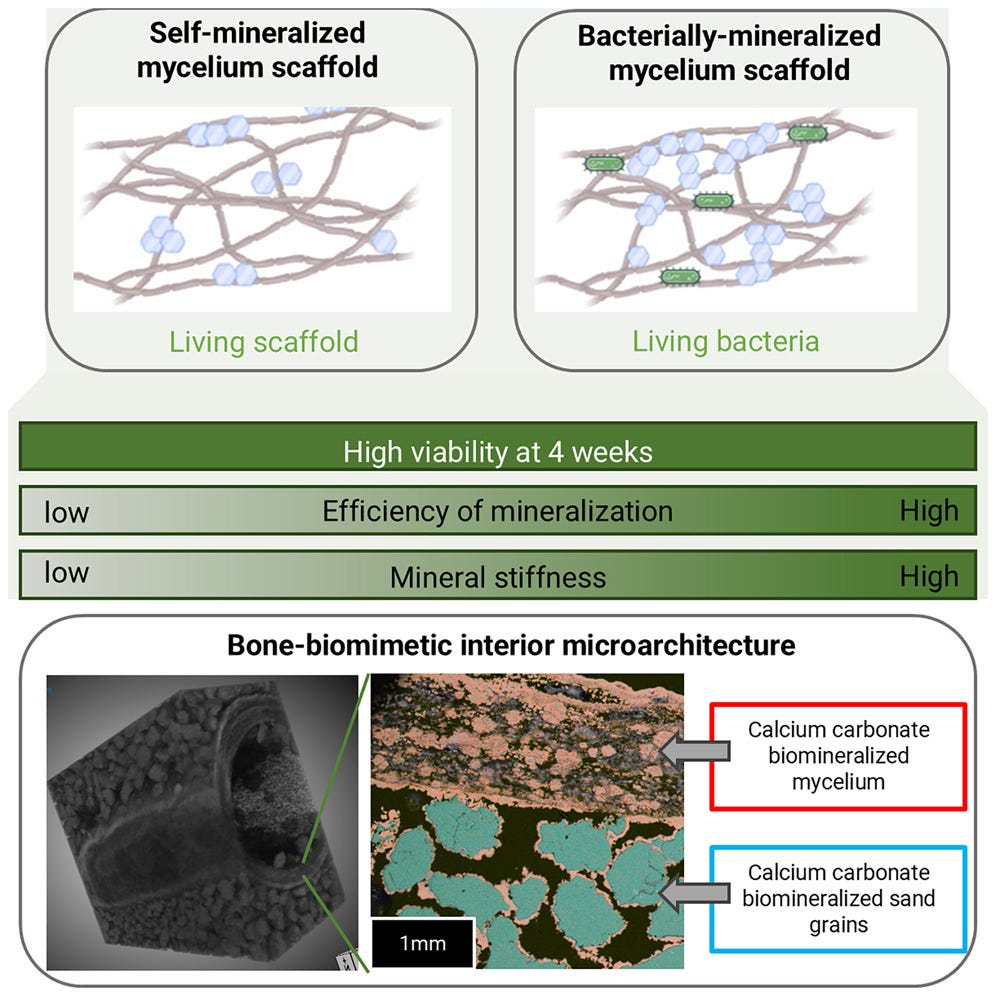
Scientists have created a living building material using fungi and bacteria—one that could eventually repair itself like bone or coral. The material stays alive for up to a month and forms bone like structures through biomineralization, a natural process where microbes convert calcium into hardened calcium carbonate. Unlike traditional biocements, which become inert after a few days, this mix of fungi and bacteria stays viable longer, opening the door to self healing structures. The team hopes to scale it up into larger, more complex structures that stay active even longer, opening the door to living buildings. Done right, this could be really cool. (Singularity Hub)
Medicine & Biotech
Researchers in Japan have discovered that 100 Hz sound that can reduce motion sickness by stimulating the inner ear and improving balance—no medication required. Just one minute of exposure to the sound, nicknamed “sound spice, significantly reduced dizziness and nausea in people reading while they were in motion. The sound activates the inner ear’s balance system, specifically the otolithic organs, which detect movement and gravity. It’s perfectly safe too, the sound level being well below any workplace safety noise limits. The team now hopes to adapt their discovery for use in cars, planes, boats, and maybe even spacecraft—offering a simple fix for millions prone to motion sickness. (SciTechDaily)
In a study where patients couldn’t tell if they were chatting with a doctor or an AI, the AI came out well ahead—scoring higher in diagnostic accuracy, patient confidence, and even empathy. The system is a Google medical chatbot called AMIE (Articulate Medical Intelligence Explorer), and was tested using 159 clinical scenarios with trained patient-actors and compared against interactions with real primary care doctors. Does this mean AI will be replacing human doctors soon? Probably not (at least for now), but this highlights the huge potential for AI to assist in medial care—especially in front line triage, early diagnosis, and improving access to family doctors. (Samuel Hume)
Scientists at Brown University have developed a new way to partially restore vision using gold nanoparticles and infrared light, with no surgery or gene editing required. The approach involves injecting nanoparticles into the eye, then stimulating them with a low power infrared laser. In tests on mice with retinal degeneration the particles successfully activated retinal cells and triggered visual signals in the brain, all without damaging tissue or causing inflammation. In the future the team envisions smart goggles that convert visuals into infrared patterns to stimulate these particles—essentially letting the brain "see" without functioning photoreceptors. Early results are promising, and the treatment could offer a minimally invasive alternative to other alternatives being developed like implants. (Interesting Engineering)
A new study from the University of Waterloo suggests that boosting potassium intake may be more effective at lowering blood pressure than just cutting sodium. Using a mathematical model, researchers found that the ratio of potassium to sodium in the diet plays a key role in regulating blood pressure. Particularly for men, who are more prone to high blood pressure but also respond more strongly to increased potassium. The model also highlighted sex based differences in how the body regulates blood pressure. The findings support a shift in dietary focus from simply reducing salt to increasing potassium rich foods like bananas, sweet potato, and broccoli. The model helps explain previous findings that showed increasing potassium in the diet can help control blood pressure. (Medical Xpress)
Pharmaceutical company Eli Lilly has figured out how to put a GLP-1 drug (like Ozempic) into a pill—meaning no more injections. The daily weight loss pill is around 55% of Ozempic’s efficacy, but that not a bad trade for doing away with needles. In related news, GLP-1 drugs may actually halt the progression of Parkinson’s disease, according to a new study out in the New England Journal of Medicine. (Eli Lilly) (Crémieux)
Researchers at Israel’s Weizmann Institute have discovered a “master switch” gene, Zeb2, that flips macrophages from helping cancer grow to fighting it. Tumors hijack these immune cells to block other immune defenses and support their own growth—but silencing Zeb2 turns that off. Using CRISPR and AI to analyze over 100,000 macrophages, the team identified Zeb2 as the key regulator of pro-tumor behavior. In mouse models of bladder cancer, silencing the gene with a targeted RNA therapy reprogrammed macrophages and significantly shrank tumors. (MedicalXpress via Dr Singularity)
“It is no use asking for the impossible, such as, say, the exact wiring diagram for a cubic millimeter of brain tissue and the way all its neurons are firing.” –Francis Crick (1979)
Challenge accepted and met! After 9 years of work, an international team of researchers have created the most detailed map ever of a mammalian brain circuit, charting the roughly 200,000 cells and over 500 million connections within a cubic millimeter of mouse visual cortex. What makes this dataset groundbreaking isn’t just the dense anatomical detail, but that it’s matched to real time functional data from 75,000 neurons—captured while the mouse watched dynamic scenes, like clips from The Matrix. The result is a connectome picture that links brain structure directly to behavior. It’s a massive leap forward for neuroscience, offering a foundation for realistic brain simulations and the study of diseases like autism and schizophrenia. And yes, the entire dataset is public. (Princeton University) (Nature) (Allen Institute)
For the first time, scientists have built an interactive map of a human cell, showing how over 5,000 proteins are organized and work together. The team used high resolution imaging, protein interaction data, and AI tools like GPT-4 to identify 275 protein assemblies, and uncover nearly 1,000 previously unknown protein functions. The map offers a new way to understand disease—not by isolated mutations, but by seeing how those mutations disrupt core cellular machinery. This map will change how we study biology, giving us a bigger and more complete view, and it could have a huge impact on how we treat diseases. (U2OS Cell Map) (SciTechDaily)
A new study supports the idea that aging may be more about information loss than just wear and tear. Researchers found that as we age, the entropy—or disorder—of DNA methylation patterns increases, and that this “epigenetic noise” can predict age just as accurately as traditional epigenetic clocks. This work suggests that aging might be tracked, and possibly even reversed, by restoring lost epigenetic order to our cells. (David Sinclair)
Agriculture

Scientists at the Salk Institute have discovered a plant molecule called CLE16 that boosts symbiosis between crops and beneficial fungi—boosting growth. CLE16 is a small peptide that helps plants form stronger, longer lasting partnerships with a particular fungus, which delivers key nutrients like water and phosphorus in exchange for carbon. Adding CLE16 to soil made fungal networks more robust, enhancing nutrient exchange and encouraging further colonization of plant roots by the fungi. Even more promising, fungi produce their own CLE16-like peptides that mimic the plant version, amplifying the effect. (Science Daily)
Researchers at Japan’s Nagoya University have discovered a completely new plant tissue—the first in over 160 years—that could help boost global crop yields. Named the Kasahara Gateway, this apparently rabbit shaped structure acts as a nutrient switch inside developing seeds. If fertilization fails, the gateway stays shut, blocking nutrients. But if fertilization succeeds, the gateway opens, letting in nourishment needed for seed growth. By identifying a gene that controls this process, scientists were able to keep the gateway permanently open, increasing seed size in crops like rice by up to 16.5%. It’s a major breakthrough in plant biology, and could help increase crop yields. (Interesting Engineering)
Engineers at the University of Maryland are using robotics and AI to modernize oyster farming in the Chesapeake Bay—promising a 10% boost in yields and less environmental damage. Traditional methods rely on guesswork: planting oysters without knowing if conditions are right, and dredging blindly, which can harm the surrounding ecosystem. The new system uses underwater robots with cameras and sonar equipped surface bots to map oyster beds and seafloor conditions in detail. AI then analyzes the data to guide planting and harvesting routes via a phone app. This allows for smarter and more targeted oyster farming. (Interesting Engineering)
Weird & Wonderful
Google and researchers from Georgia Tech and the Wild Dolphin Project have developed DolphinGemma, an AI model trained to analyze and generate dolphin vocalizations. Built from Google’s Gemma AI architecture, the model processes sequences of dolphin clicks, whistles, and pulses—helping researchers identify patterns and possible meanings in their communication. Trained on decades of underwater audio from wild Atlantic spotted dolphins, DolphinGemma runs directly on smartphones in the field, cutting down on the amount of equipment needed. It’s already helping scientists uncover structured patterns that were once only accessible through years of manual analysis. The team hopes this technology could someday let humans and dolphins share a basic vocabulary—bringing us closer to actually talking to them. (Google blogs) (Sundar Pichai) (Google DeepMind)

Bonobos (a.k.a. pygmy chimpanzees), combine vocal calls in ways that reflect structured meaning—similar to how humans use words—according to a new study. By analyzing calls from wild bonobos in the Congo, scientists found clear signs of something called compositionality—the ability to combine sounds where the meaning depends on both the parts and their structure. Some combinations even showed nontrivial compositionality, where one call modifies the meaning of another, similar to how we form complex phrases like "bad dancer." Looks like we’ve got a lot left to learn about animal communication. (Interesting Engineering)
Scientists have discovered a new bacterial phylum, which they creatively named CSP1-3, thriving deep underground in nutrient poor soils. In some samples, it made up over 60% of the microbial community—a far higher number than expected based on studies of other groups of bacteria. Despite low levels of nutrients, they’re active and slowly growing, using trace gases like carbon monoxide and hydrogen for energy. The part that really floors me is that there was an entire unknown phylum out there under our feet. The animal equivalent would be just realizing that insects or molluscs were a thing. Of course, bacteria are a little harder to differentiate, but still, the implication is there’s a lot of diversity there we have yet to uncover. (Science Alert)
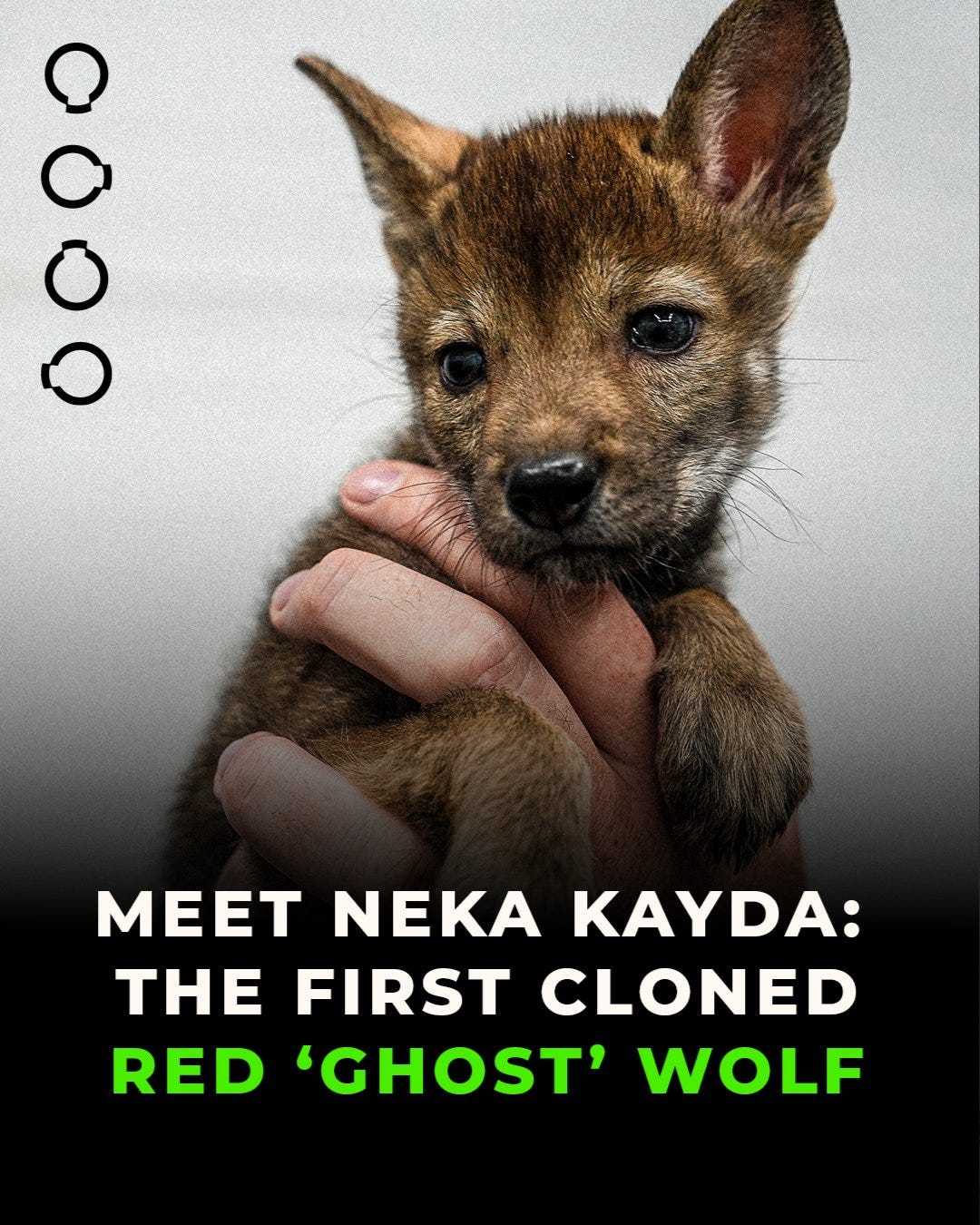
I mentioned last time that Colossal Biosciences had also cloned some endangered red wolves. Let me elaborate a bit: the company discovered a population of red wolf + coyote hybrids, carrying red wolf genetic diversity that was thought to be lost, hence their being called red ‘ghost’ wolves. Preserving those genes in their newly created animals is an important step to restoring genetic diversity to the very small surviving red wolf population. (Colossal Biosciences 1) (Colossal Biosciences 2)
Photos & Videos
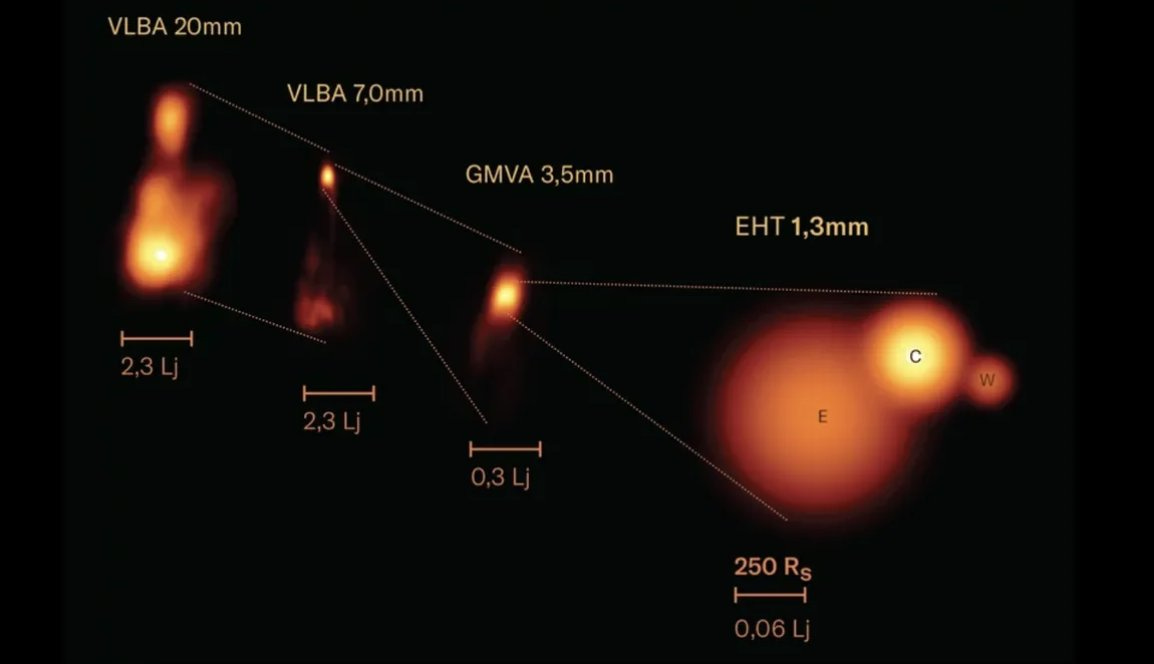
Astronomers using the Event Horizon Telescope (EHT) have captured new images of a ‘nearby’ (230 million light years away) supermassive black hole—Perseus A—launching jets of matter at close to the speed of light. The EHT observations revealed powerful, ordered magnetic fields near the black hole that appear strong enough to overcome gravity and drive the jets outward. (Space.com)

This rather stunning planetary nebula (NGC 1514) looks to me like two connected rings. The JWST was able to get this shot, giving a far clearer view than previous pictures taken by other telescopes. (NASA Webb Telescope)
For the first time ever, a live colossal squid has been observed and filmed in the wild, 600m down near the South Sandwich Islands. Colossal squids are bigger (i.e., more massive) than the more famous giant squids, though giants squids are longer. This specimen wasn’t a giant though, at just 30cm (~12 inches) long it’s most definitely a juvenile. (Science) (The Conversation)
There’s a great documentary NASA just put out called Planetary Defenders. It’s exactly what it sounds like, showing how NASA finds, tracks, and mitigates the risks from asteroids. (NASA)
Have a walk through Vast’s Haven-1 space station. It’s on the ground for now, but it looks pretty impressive. The planned launch date is currently set for May 2026. (Vast)
Recommendations & Reviews
Louis Anslow, who writes the Pessimists Archive (Exploring technophobia and moral panic through the ages), has published an excellent article critiquing the ‘pessimism porn’ common these days in media and art.
Perhaps nowhere exemplifies it better than the popular show Black Mirror. While Black Mirror is considered by many to be great TV, its dystopian lens has become a kind of cultural reflex—a knee jerk pessimism that clouds how we think about the future. It’s not just entertainment anymore; it’s a worldview. Every new technology gets cast as a threat: drones become weapons of mass surveillance and warfare, VR isolates, AI replaces, brain chips enslave. While technology can be abused and misused, the show rarely asks “what if this actually helped people?”
This pessimism isn’t harmless, and often helps fuel policy paralysis and stifle innovation in the real world. Countries banned GMOs and watched malnutrition rise. They ran from nuclear power straight into the arms of coal. They outlaw vapes while selling cigarettes. We let fear of small or unknown risks kibosh massive upside. Dystopia makes for good drama, but it’s bad guidance. Not every robot dog is designed to serve authoritarian states; some detect landmines. AI isn’t just deepfakes and layoffs — it’s better cancer screening and supercharging scientific research. Black Mirror’s worldview tells us the future can only get worse. We need new stories that remind us it doesn’t have to, and that technology often ends up making things better. (Louis Anslow)
That’s all for today, but Techno-Optimist will be back in your inbox a fortnight from now. Thank you all for reading — and until next time, keep your eyes on the horizon.
-Owen
I look forward to all of these wonderful things. Thank you.
Great issue of the Techno-optimist!
I had missed RocketLabs solar power announcement, one more innovation, albeit a small one, on our way to millions of people living and working in space!
The launch market is about to get crowded. SpaceX being a clear leader, but Blues New Glenn will soon be in the mix alongside Neutron.
Neutron is unique. While SpaceX has developed a Rube Goldberg approach to failing reuse, RocketLab attached the fairing to the first stage for easy landing and reuse.
The trick will, however, figuring out how to reuse the second stage. SpaceX is trying one approach, while Stoke is trying a very different approach.
The next five years will be very informative on that front.